Border patterns solve a different design problem than all-over repeats — they're built to run along a single edge rather than fill a whole field, and that constraint changes how they're drawn and where they're used.
Greek key and geometric meander borders
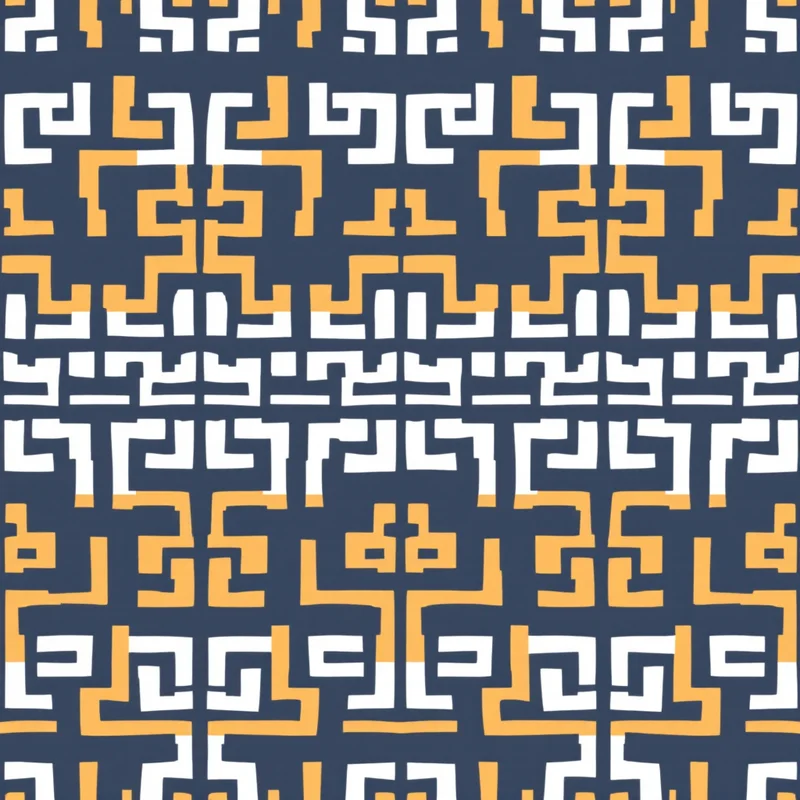
Greek key is the most recognizable border pattern in commercial use — an interlocking rectangular meander that reads as classical and formal at almost any scale, from a fine stationery trim to a large architectural rug border. Other geometric meander borders follow the same logic: a repeating unit designed to run in one direction along an edge rather than fill a field.
Scalloped borders
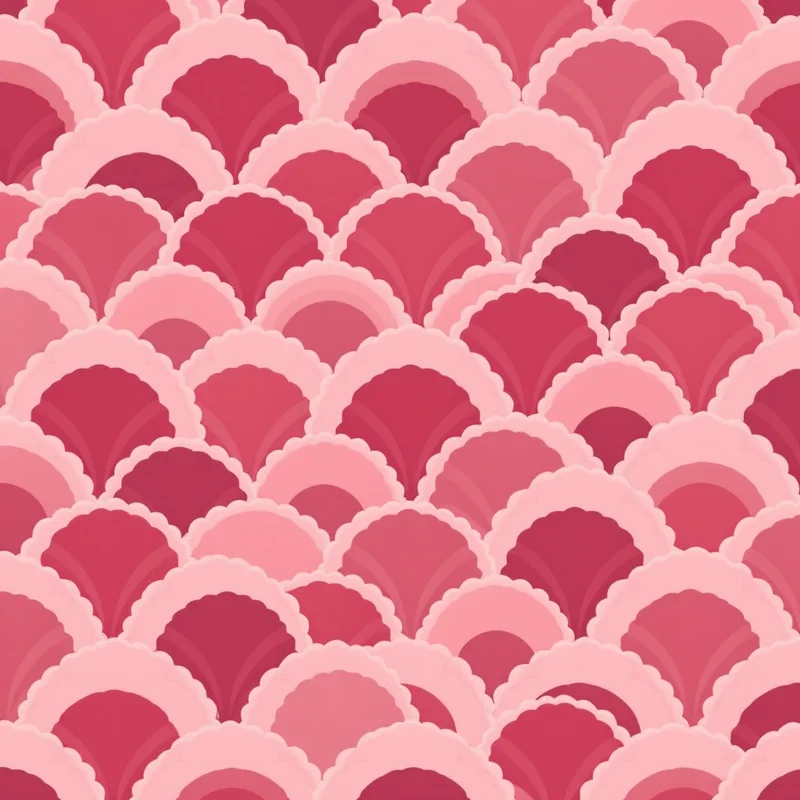
A repeating series of half-circle or shell-shaped curves along an edge. Scalloped borders read soft and decorative, and they're common on plate rims, tablecloth edges, and stationery trim where a hard geometric border would feel too severe against a softer overall design.
Floral and vine borders
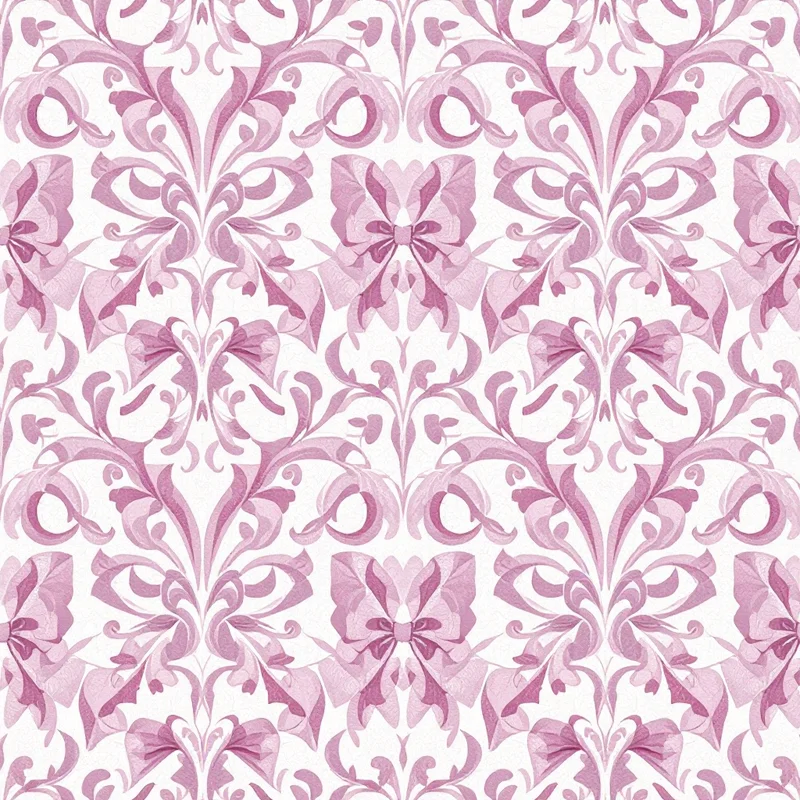
A trailing vine, ribbon, or chain of small botanical motifs running along an edge — common on formal stationery, china patterns, and fabric hems. Vine borders work especially well framing a busier botanical all-over pattern, since the border's more structured, directional repeat gives the eye a clean resting edge against the fuller field pattern inside it.
Ric-rac and zigzag borders
A simple, playful zigzag trim, most associated with craft sewing and children's product design. It's the least formal border style covered here, and it rarely appears outside casual or handmade-feeling contexts.
Why border and all-over patterns get paired
The most common real-world use of a border pattern isn't on its own — it's framing an all-over pattern. A busy field pattern paired with a calm, structured border gives a composition a defined edge and a resting point for the eye, which is why so many formal china, stationery, and rug designs use exactly this two-layer structure rather than a single uniform pattern edge to edge.
Border and all-over patterns can both be generated and paired directly, with full control over scale and color for each layer. Start in the free pattern maker with 3 free credits, or browse pattern styles for the full range.
Explore related pattern styles