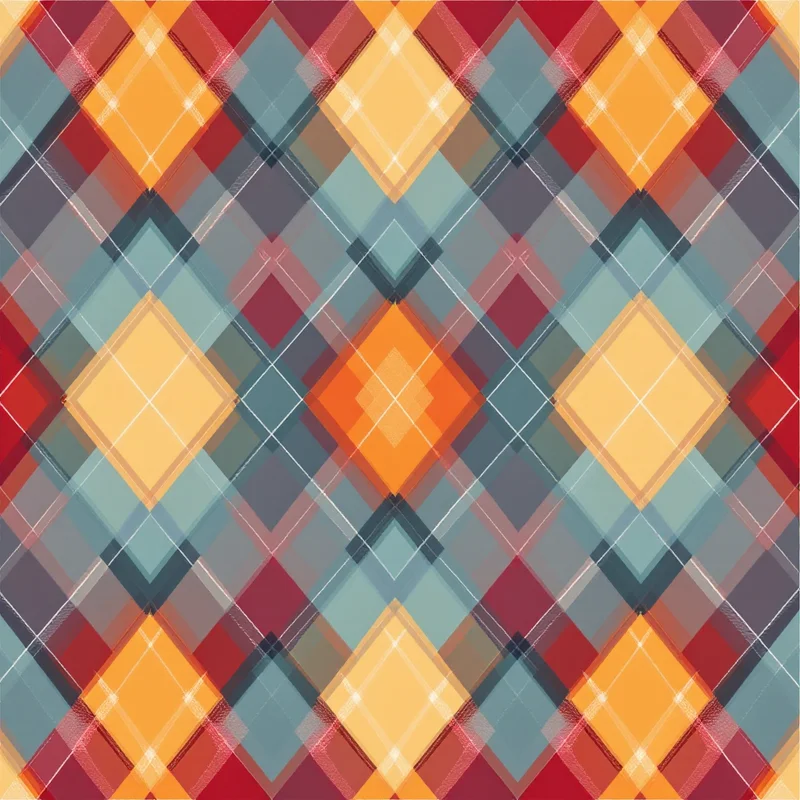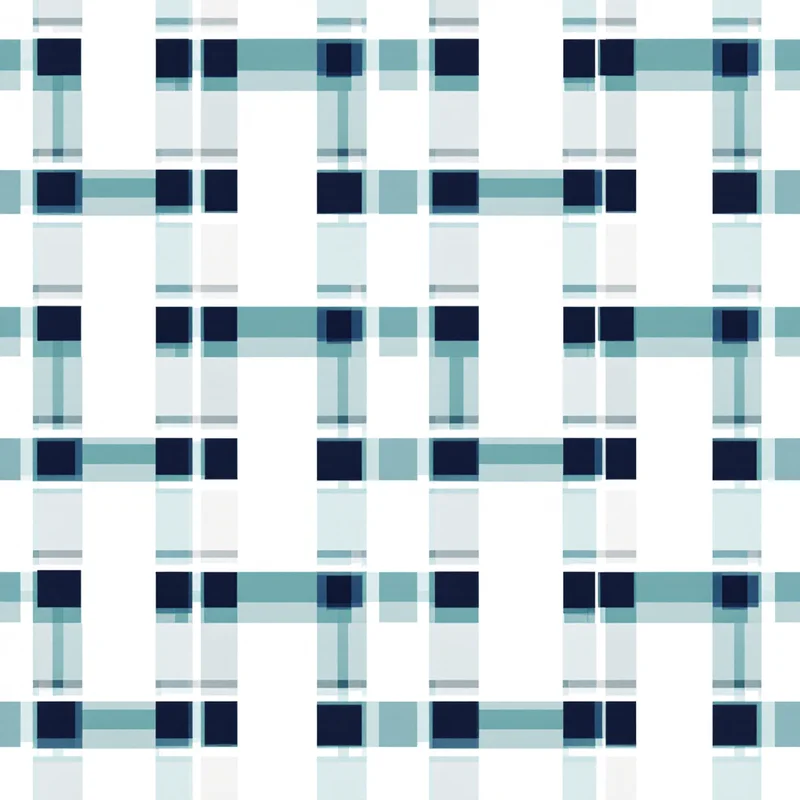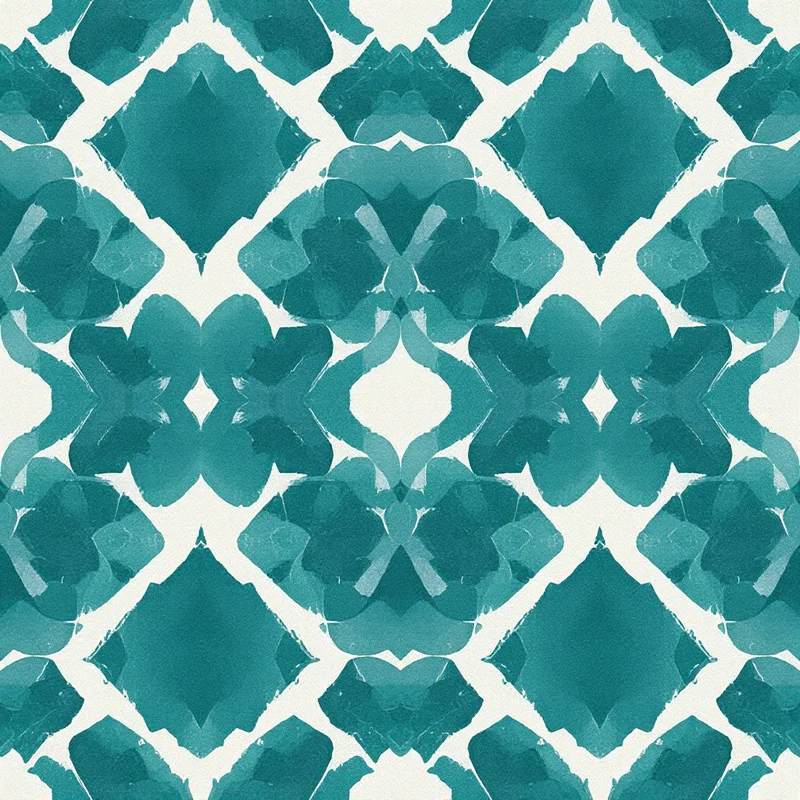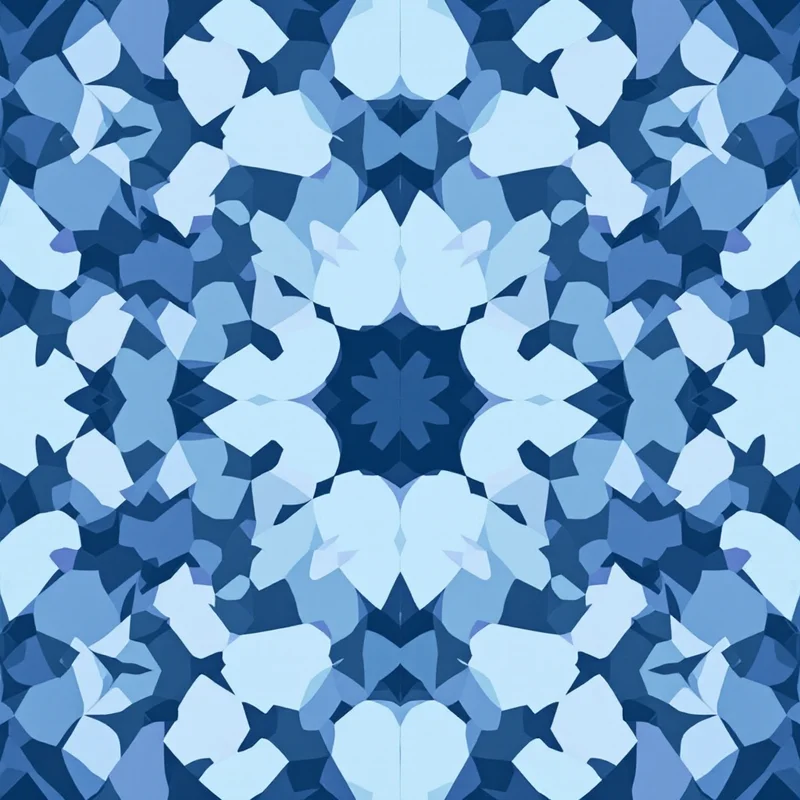
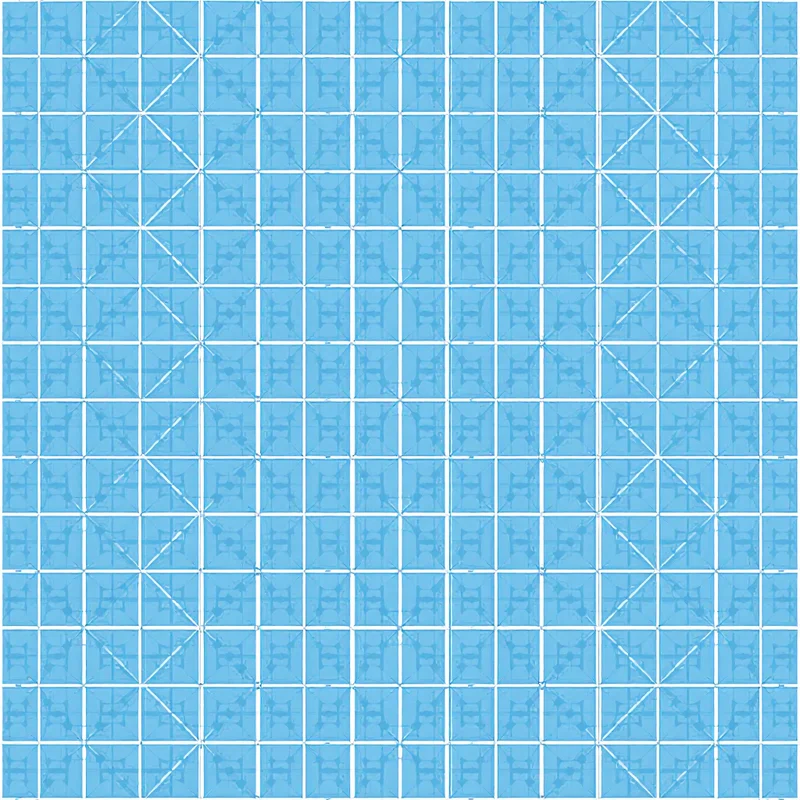
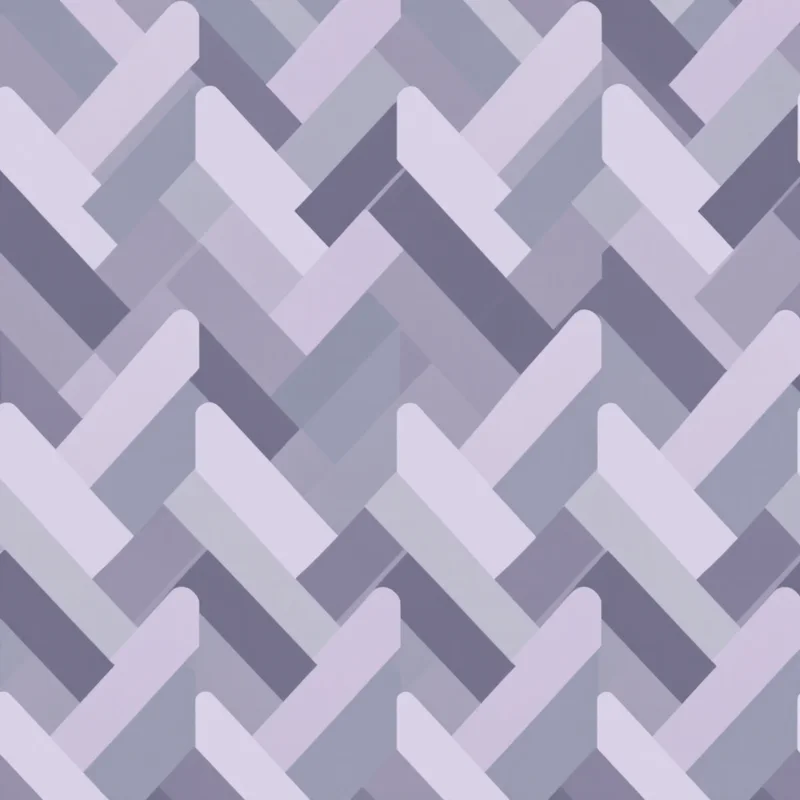
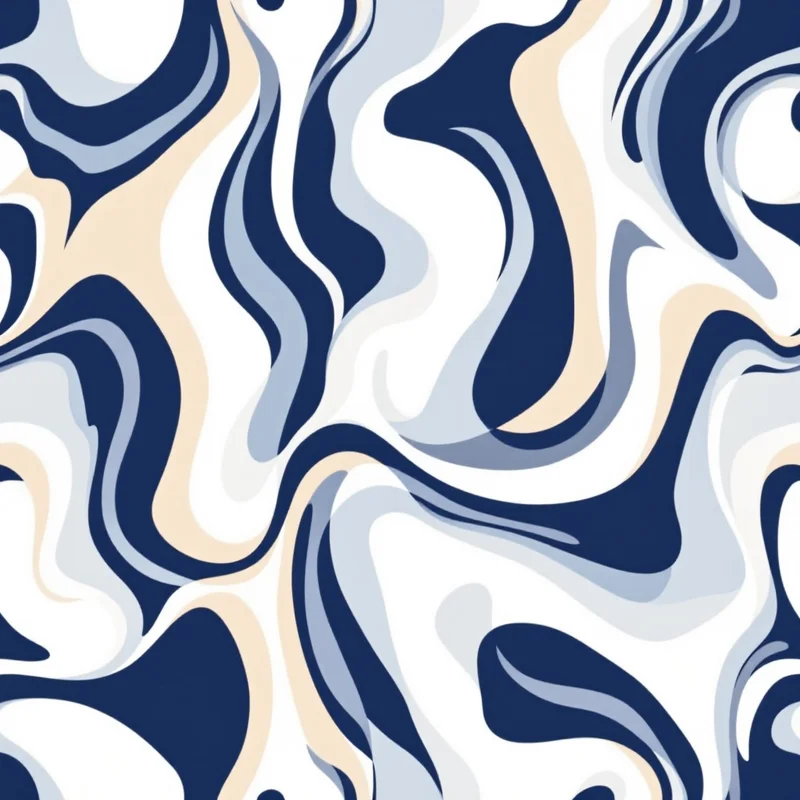
The same motif can look completely different depending purely on how its tile repeats across a surface — this is the layer of pattern design that has nothing to do with color or subject and everything to do with geometry. Here's every major repeat format explained side by side.
Straight match (full-drop)
The simplest and most common format: the tile repeats directly beneath and beside itself, with no offset in any direction. It's the easiest format to design, test, and troubleshoot, which makes it the right default starting point for almost any new pattern before considering whether an offset would actually improve it.
Straight match's main weakness is with strongly directional motifs — a single bold diagonal element can create an obvious, distracting line running across the whole repeated surface. That's exactly the problem the offset formats below solve.
Half-drop repeat
Half-drop offsets each column by half the tile's height, so the second column starts halfway down where the first column starts at the top. This breaks up the vertical "striping" effect a straight match can produce with strongly vertical or diagonal motifs, and it's especially useful for florals and other organic shapes that look too rigid and grid-like in a straight repeat.
Brick repeat
Brick repeat offsets each row by half the tile's width rather than offsetting columns vertically — named for its resemblance to a running-bond brick wall. It suits horizontally-oriented motifs the way half-drop suits vertical ones; choosing between the two often comes down to which axis your motif's strongest visual line runs along.
Mirror repeat
Mirror repeat reflects the tile at each boundary rather than translating it directly, so adjacent tiles face each other like a reflection rather than repeating identically. It's a useful rescue technique for artwork that doesn't tile cleanly any other way, since a mirrored edge always matches itself by definition — the tradeoff is that mirrored tiling can read as an obviously mirrored kaleidoscope effect if the motif isn't drawn with that reflection specifically in mind.
How to choose
Start with straight match by default, and only move to half-drop or brick if a directional motif is creating an obvious unwanted line when tiled. Reserve mirror repeat for artwork that genuinely won't tile cleanly any other way, since it's the format most likely to visibly announce itself as a repeat rather than reading as one continuous surface.
Every repeat format covered here — straight, half-drop, brick, and mirror — is available directly when generating a pattern, with the tiling handled automatically so the format choice is a style decision, not an engineering problem. Start in the free pattern maker with 3 free credits, or browse pattern styles for the full range.
Explore related pattern styles