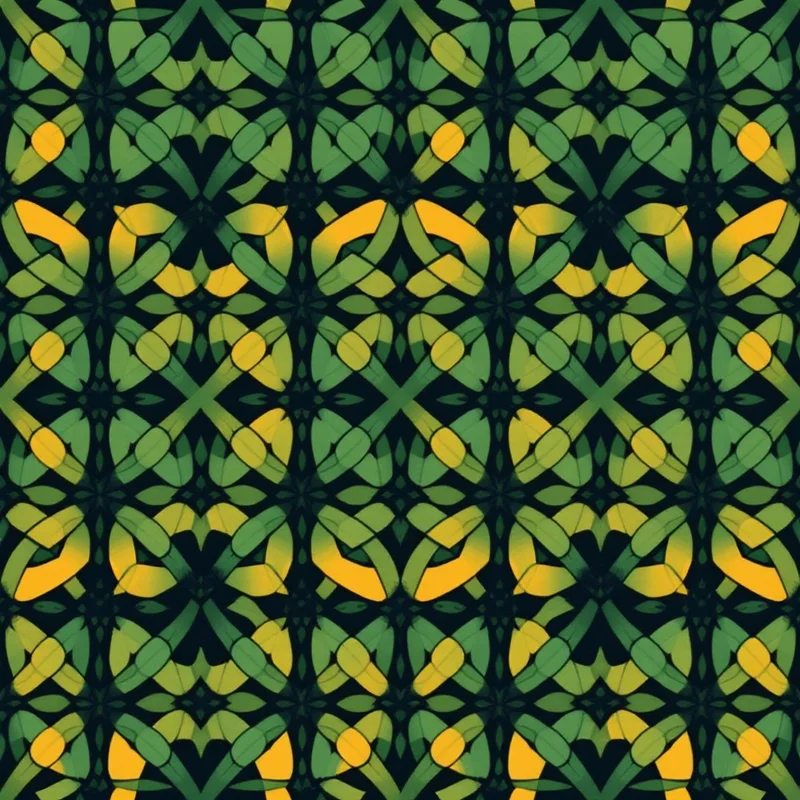
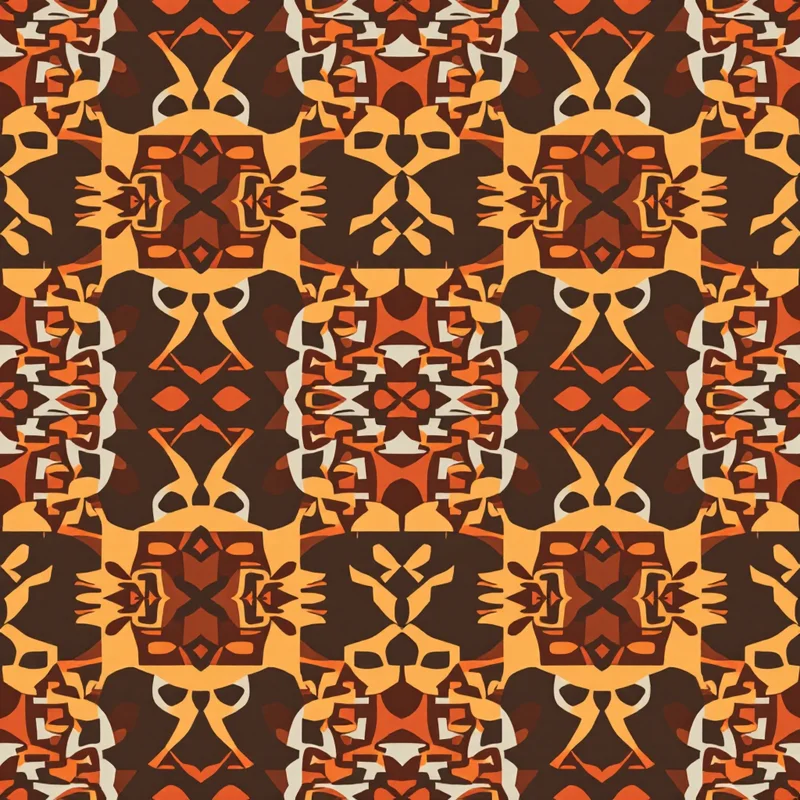
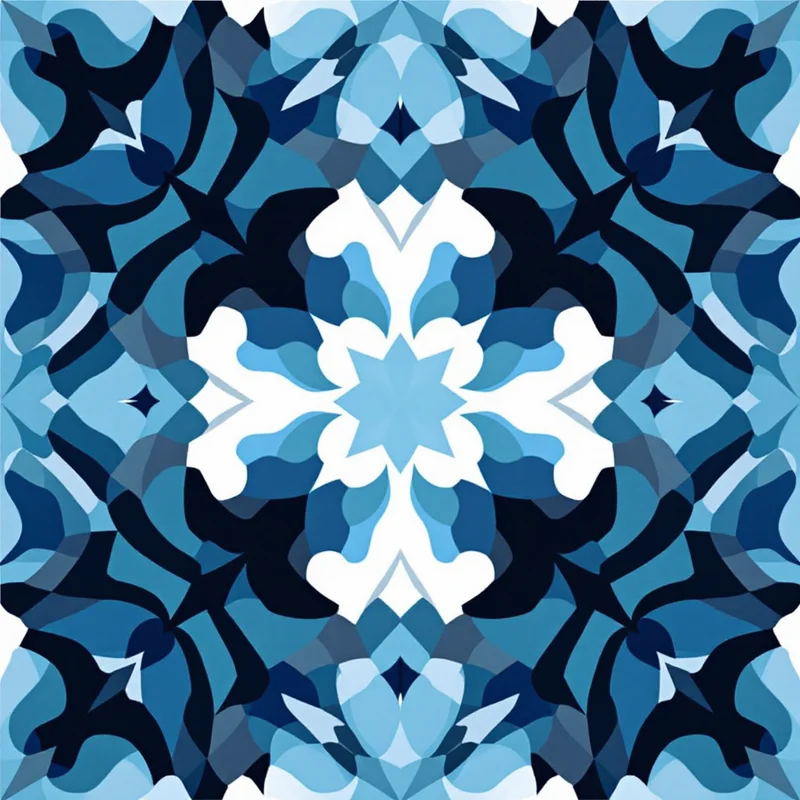
Kente is woven in strips about four inches (10 cm) wide, and that single fact explains most of how it looks. The strips are made on a narrow horizontal loom, traditionally by men, and then sewn edge to edge into a wide cloth. The name is commonly traced to the Twi word kenten, meaning basket, a reference to the woven look.
Kente belongs to the Asante and Ewe peoples of Ghana. Bonwire and Adanwomase are well-known Asante weaving towns, and Ewe weaving is centered in the Volta Region. Kente has long been associated with royalty and important occasions. Today it is worn at weddings, naming ceremonies, festivals and graduations, and it is widely understood as a symbol of Ghanaian and African identity.
How kente is built
An Asante kente strip alternates stretches of simple striped weave with blocks of decorative patterning, created by extra weft threads floated over the base cloth. Ewe kente often includes more pictorial and figurative motifs. When the strips are sewn together they are often offset, so that the blocks step diagonally across the cloth in a checkerboard rhythm. The bold geometry is a consequence of the loom, not an arbitrary choice.
Many cloths have names, drawn from proverbs, historical events or people. Adwinasa, often translated as "all designs are exhausted," is one of the best-known names for an especially dense design. Fathia fata Nkrumah is a name given to a cloth honoring the wife of Ghana's first president. The existence of such names is a reminder that a kente design can be a message, a signature, even a record.
Colors and what they are commonly said to mean
| Color | Commonly given meaning |
|---|---|
| Gold | Wealth, status, royalty |
| Green | Growth, renewal, harvest |
| Blue | Peace, harmony, love |
| Red | Blood, sacrifice, political and spiritual strength |
| Black | Maturity, spiritual energy |
| White | Purity, healing, festivity |
| Maroon | Earth, healing |
Treat this as a guide, not a rule. Meanings change with the weaver, the region and the specific cloth, and a color on a named cloth may carry a meaning chosen by the person who commissioned it.
What you can learn from the structure
You can study the principles without reproducing any particular cloth.
- Narrow strips. Design a motif in a tall, 4-inch-wide column and repeat it with an offset. Making the strip the unit of your tile is the most honest nod to the loom.
- Stepped geometry. Squares, triangles, diamonds and zigzags set in blocks, not scattered.
- Banded color. Broad stripes of plain color alternate with dense patterned blocks.
- Balance, not uniformity. Colors are bright, but the proportions are planned so that no single hue shouts.
A starting palette: gold #D4A017, green #1E7A3C, red #C1272D, blue #1F4E9C, black #111111, white #F5F1E8.
Respectful use, in practice
- Say what it is. Call a printed design kente-inspired, not kente. Hand-woven kente is a livelihood and a craft with a name.
- Do not copy named or ceremonial cloths. Some designs are tied to families, chiefs or specific events. Create an original motif instead.
- Choose context carefully. Avoid placing kente-style imagery on items where it would be trivializing, such as novelty products.
- Support the source. If you can, buy, commission or credit work by Ghanaian weavers.
Kente is one of several West African traditions with their own meaning and history. Our broader African pattern design guide covers them side by side; the stamped Akan symbols known as adinkra are covered in the adinkra symbols pattern guide, and the Malian dyed cloth in the mudcloth pattern guide. The wax-printed cloth sold across the region is a different story, told in Ankara wax print pattern design.
Designing an original, kente-inspired tile
- 1Draw a vertical strip 4 inches wide and 12 to 24 inches (30 to 60 cm) tall.
- 2Alternate three plain bands with two dense geometric blocks.
- 3Repeat the strip with every other copy shifted up by half a block.
- 4Choose colors for a reason, and note what they mean to you.
The kente patterns, cultural patterns and geometric patterns categories offer a place to start. In Pattern Weaver, Describe It lets you write a prompt in your own words, such as "original striped geometric strip weave, gold, green and black, inspired by narrow-loom cloth", and you can refine from there.
Explore related pattern styles