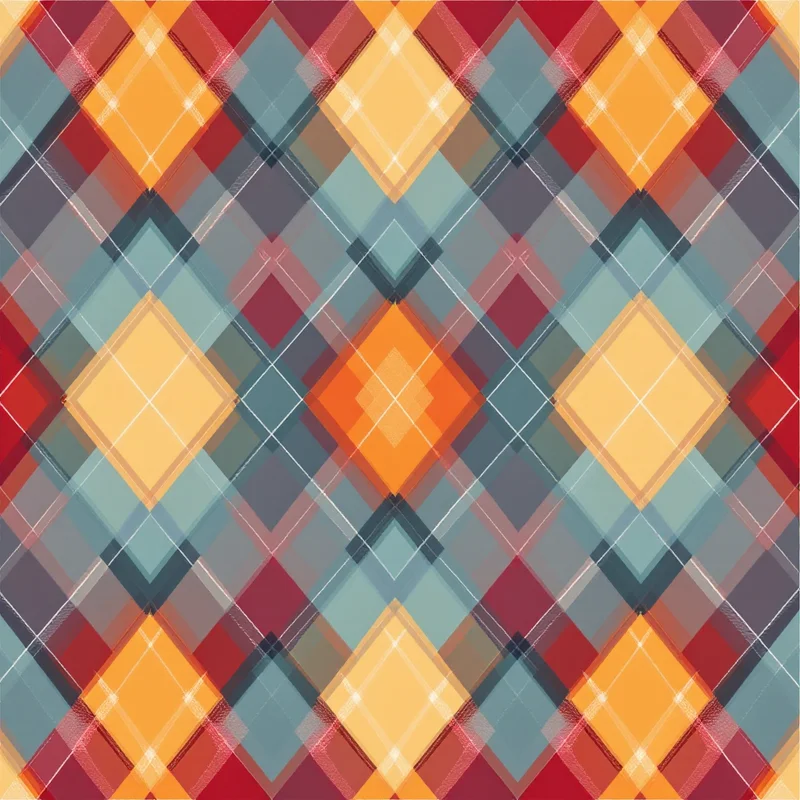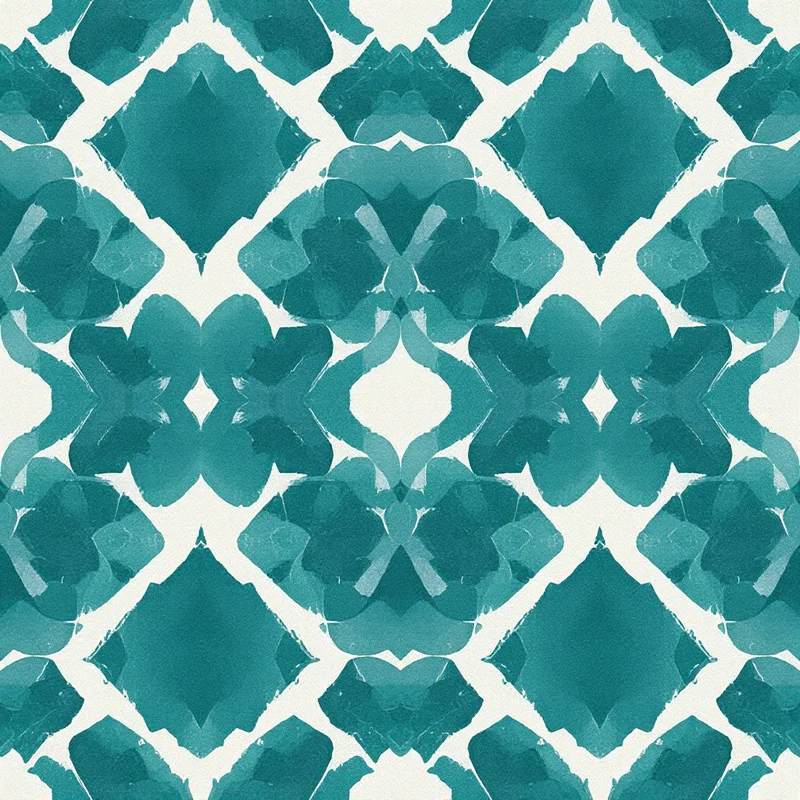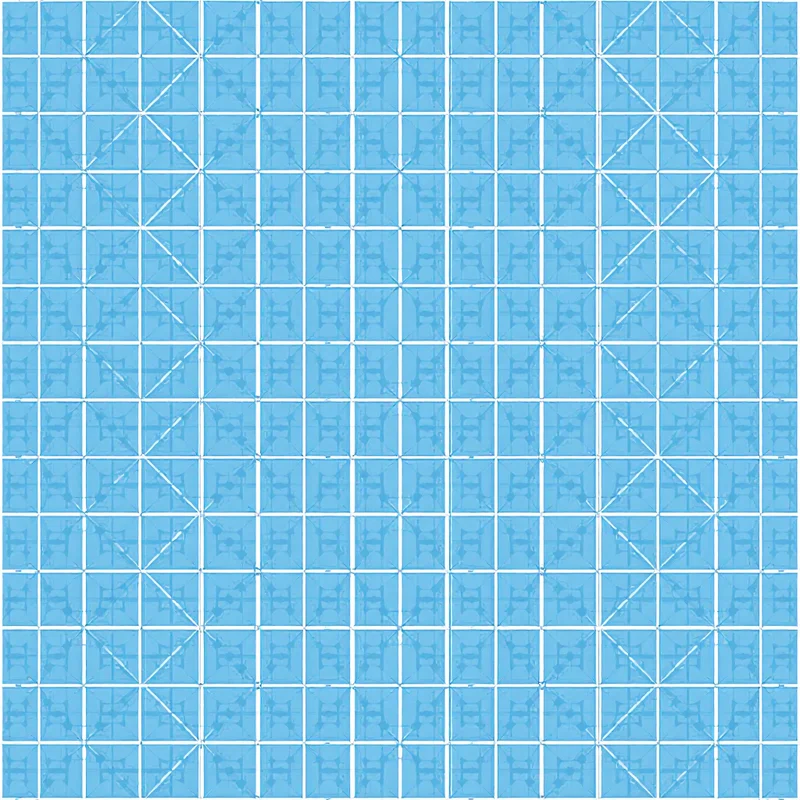
Lattice is the purest, most stripped-down member of the crisscross-grid pattern family — no botanical addition, no curved elaboration, just clean intersecting lines. That simplicity is exactly what makes it so broadly versatile.
The structure
A lattice pattern is built from straight diagonal lines crossing each other at a regular interval, forming a repeating grid of diamonds or squares. It's the geometric baseline that trellis and ogee both build on by adding organic or curved detail to the same underlying crossing structure.
Lattice versus its more elaborate relatives
Trellis takes the lattice grid and adds a vine, leaf, or floral motif woven through the crossing points, producing a garden-inspired read. Ogee takes the same interlocking logic and replaces straight lines with a curved, pointed-oval shape, producing something more ornate and historically referential. Plain lattice keeps neither addition — it stays purely geometric, which is precisely why it reads cleaner and more modern than either of its elaborated relatives.
Where lattice pattern works
Lattice's clean, unadorned structure makes it one of the most broadly applicable geometric patterns in this series — it works as a subtle background texture behind other design elements, as a standalone modern-geometric statement print, and as a structural base pattern that other motifs (trellis, ogee) are built directly on top of when a more elaborate result is wanted.
Styling lattice
Line weight and spacing are the two variables that matter most. Thin lines with generous spacing read as delicate, airy texture. Thick lines with tight spacing read as a bold, high-contrast graphic pattern. Both use the identical underlying grid; the visual weight comes entirely from those two adjustable variables.
Lattice patterns at any line weight and spacing can be generated as a seamless, production-ready tile. Start in the free pattern maker with 3 free credits, or browse pattern styles for the full range.
Explore related pattern styles