
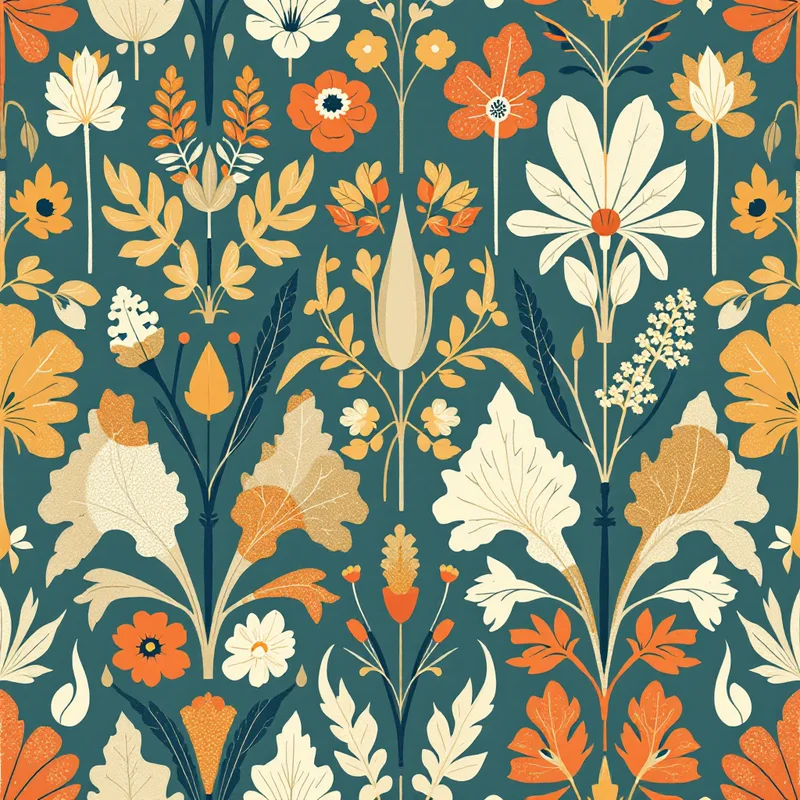
The word chintz comes from a Hindi word meaning spotted or variegated, and for much of the eighteenth century parts of Europe tried to ban the cloth it describes. That history, trade, prohibition, imitation and a long afterlife as a decorating cliché, is why chintz is worth knowing before you design one.
From the Coromandel Coast to Europe
Indian makers had long painted and printed cotton with mordants and resists, so that dyes such as madder produced reds that did not wash out. By the seventeenth century the Dutch and English East India Companies were shipping this cloth to Europe in quantity. Among the best loved forms were the palampores: bedcovers and hangings painted with a flowering tree of life, its branches carrying blooms, birds and rocks. They were washable, colorfast and cheaper than silk, and Europeans wanted them.
The bans
European textile makers objected. France banned the import and manufacture of printed cottons from 1686, a ban that lasted until 1759. Britain passed Calico Acts in 1700 and 1721 restricting imports and then use, and lifted its restrictions in 1774. The bans did not end the taste; they moved the work. European printworks began copying the Indian look with local labor.
One result was the factory at Jouy-en-Josas, founded in 1760 after the French ban ended, which made printed cottons in several styles. Its best known product, toile de Jouy, is covered in our toile pattern design guide.
Printing catches up
Copperplate printing joined block printing in the later eighteenth century and allowed much finer lines. Cylinder printing was patented in Britain in 1783 and made large production runs possible. The look drifted from Indian originals toward European gardens, with cabbage roses, peonies, tulips and honeysuckle.
Glazing and the English country house
Chintz is traditionally glazed: the cloth is treated with wax or starch and run through heated rollers, which gives a soft sheen. In the twentieth century, English country-house decorators such as Colefax & Fowler made glazed floral chintz the signature of the English country house look. It has swung in and out of favor since, and it is a reference point for today's cottagecore and "grandmillennial" interiors.
Chintz, calico and toile compared
| Chintz | Calico | Toile | |
|---|---|---|---|
| Scale | Large florals | Small, tight florals | Pictorial scenes |
| Look | Multicolor, often glazed | Simple, 2-3 colors | Single color on cream |
| Origin of the name | Hindi for spotted | Calicut, India | Jouy, France |
How to design chintz now
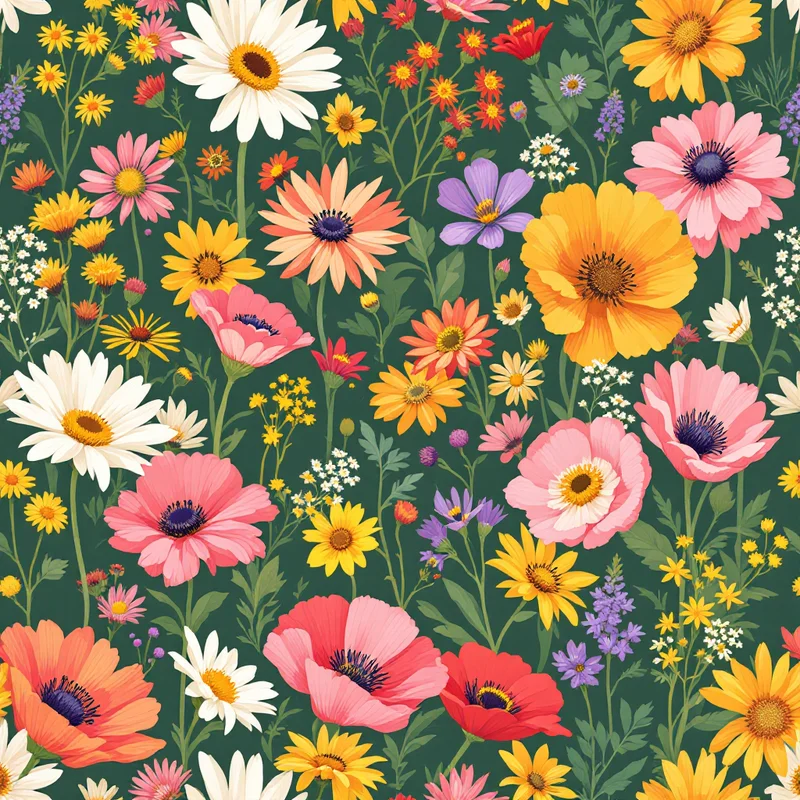
- 1Draw big flowers. Make the main blooms 5 to 9 inches (13 to 23 cm) across, with several sizes of leaf and bud around them.
- 2Add the supporting cast. Include butterflies, birds, ribbons or small insects, which add life.
- 3Choose a ground. Cream is classic. Black, deep blue or dark green grounds make a dramatic, almost antique look.
- 4Use a full but limited palette. Rose #D77A8C, peony pink #E7A3B1, leaf green #5E7F55, deep green #2F4F3A, blue #3C5A8A, cream #F4EBD6.
- 5Tuck, don't grid. Stagger blooms in a half-drop and vary the spacing so there are no obvious rows. See our half-drop repeat guide.
- 6Add a slight sheen. A soft highlight across the print suggests glazing without changing the pattern.
Updating chintz for today
The direction to watch is a lighter touch on an old formula. Instead of a full, glossy cottage garden, try a darker ground such as near-black #1E1B18 or deep green, cut the palette to four colors, and shrink the blooms to 2 or 3 inches (5 to 8 cm) so the print works on a dress or a tote as well as a curtain. The big, trailing bloom stays the star; the sheen becomes optional.
Indian block-printed and painted cottons remain a living tradition; for the source tradition, read our Indian block print pattern design guide, and for what makes the English version distinct, browse chintz patterns, calico patterns and vintage floral patterns.
In Pattern Weaver, Restyle changes the finish of a pattern, so you can generate the print and then try a different surface finish on the same design.
Explore related pattern styles