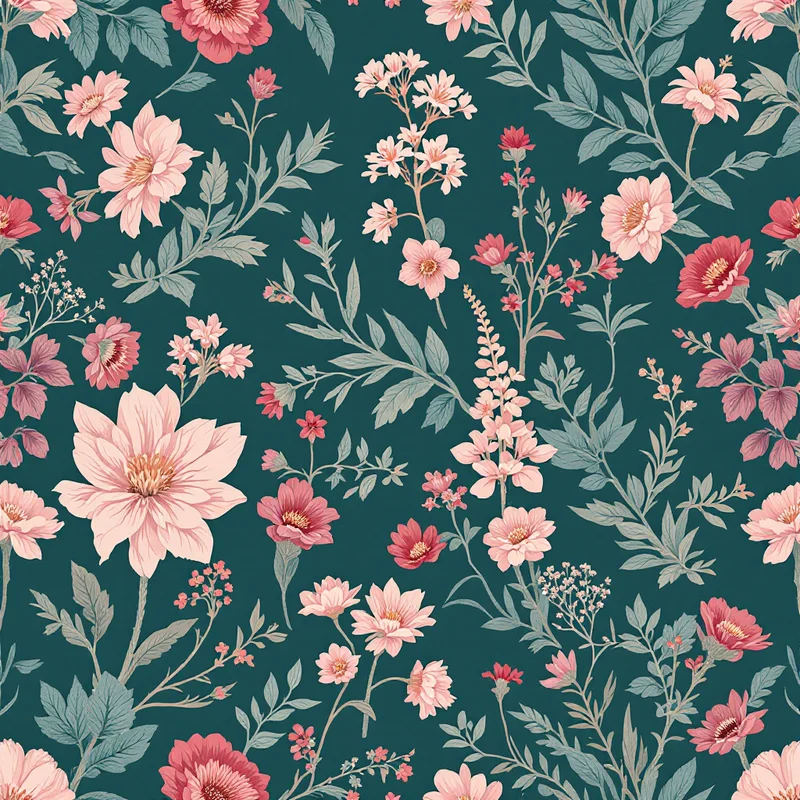

A cottagecore Christmas print should look like someone made it by hand at a kitchen table, flaws included. The pull is not glamor but comfort: wool socks, a window with frost, the smell of oranges and cloves. The design job is to make a clean seamless repeat that still looks like it was stitched, cut and tied by a person.
Get the embroidery look
Stitched texture is the signature of the style. Study real embroidery and borrow its grammar:
- Running stitch. Dashed lines for outlines, vines and borders.
- Backstitch. A continuous line for stems and lettering.
- Satin stitch. Closely packed parallel threads to fill leaves, berries and hearts.
- French knots. Tiny raised dots for berries and snow.
- Cross-stitch. A small grid of X marks. See cross-stitch pattern inspiration for how that grid works.
To imitate it digitally, keep the stitch direction following the shape, vary stitch length a little, and add a faint highlight on one side of each thread. Limit yourself to six or seven thread colors, as a real embroiderer would.
Foraged and kitchen motifs
Cottagecore is about things you can gather or make:
- Dried orange slices on string, with cloves and cinnamon sticks
- Evergreen wreaths with a few berries, pinecones and twigs
- Holly, ivy and hellebores, the so-called Christmas rose
- Mushrooms, including red-capped toadstools, a traditional good-luck symbol in German-speaking regions
- Robins, wrens and hares in snow
- Wool mittens, knitted stockings and felted ornaments
- Lanterns and candles in jam jars
- Baking: cookies, gingerbread, tea cups and a rolling pin
- Popcorn and paper chains as folksy garlands
Mix three or four motif types in one print, and keep all of them at a similar level of detail, so nothing looks more finished than the rest.
Gingham, ticking and linen
Cottagecore prints rarely stand alone. The supporting cast is simple weaves:
- [Gingham](/create/gingham-patterns/) in red and cream or sage and cream, at a quarter-inch check for most uses
- Ticking stripes in navy or burnt red on natural linen
- Small calico florals as blenders
- Plain linen as the ground, with visible slubs
Each acts as a quiet partner for a hand-drawn hero print. For more on the wider style, see the cottagecore aesthetic pattern guide.
A faded palette
| Name | Hex |
|---|---|
| Oatmeal | #E9DFC9 |
| Faded red | #A63D2F |
| Moss | #6B7F4E |
| Mustard | #D1A54B |
| Dusty blue | #7F9CB0 |
| Cream | #F7F0E1 |
The colors look washed and warm. Avoid pure black outlines, and use a dark brown #4A3A2F instead.
Flaws that don't break the repeat
The challenge is to keep a handmade feel and still tile properly.
- 1Vary the motifs. Draw three or four versions of each leaf or berry instead of copying one.
- 2Wobble the lines, but keep the edges of the tile clean, because a motif crossing the border needs to match on the other side.
- 3Add texture inside the tile. Linen grain, thread sheen and paper texture can go across the whole tile so it repeats without a seam.
- 4Let spacing be uneven. A natural scatter feels hand-placed. Avoid a perfect grid.
- 5Test the tile at 2 by 2 and 3 by 3 to catch repeated shapes that stand out.
Products that suit it
Tea towels, aprons, fabric gift bags, tree ornaments, table runners, advent calendars, tote bags and quilts fit the style. Keep fabrics natural: cotton, linen and wool blends. For the sweet side of the theme, see gingerbread pattern ideas, and for the broader holiday landscape, Christmas pattern design ideas. Browse cottagecore patterns and Christmas patterns for starting points.
In Pattern Weaver, Describe It lets you write the scene in your own words, such as "embroidered holly and dried orange slices on oatmeal linen", and the Tiling Fixer repairs edges if a handmade motif lands on a seam.
Explore related pattern styles