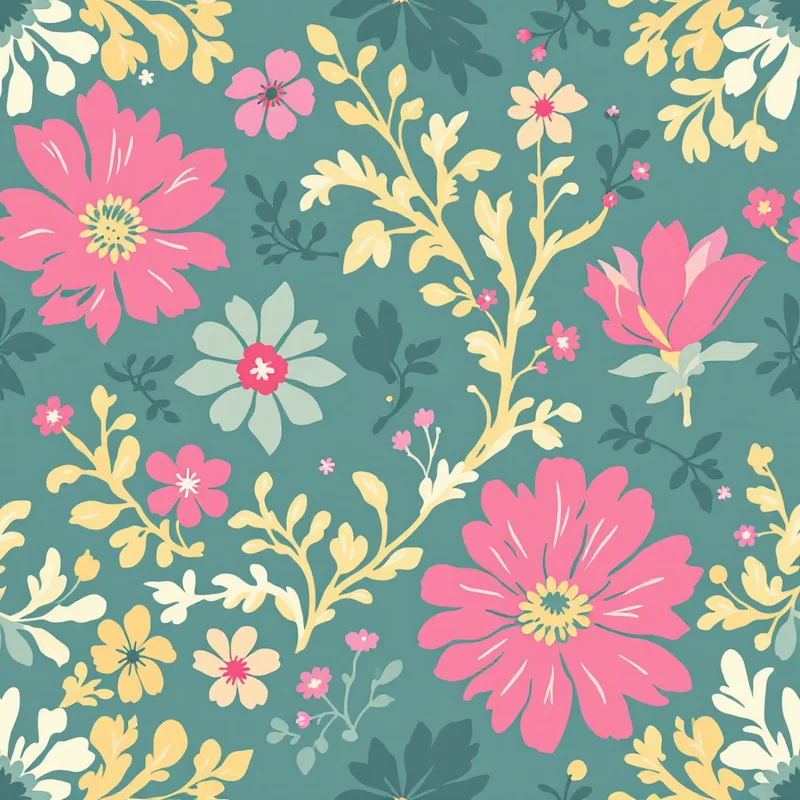
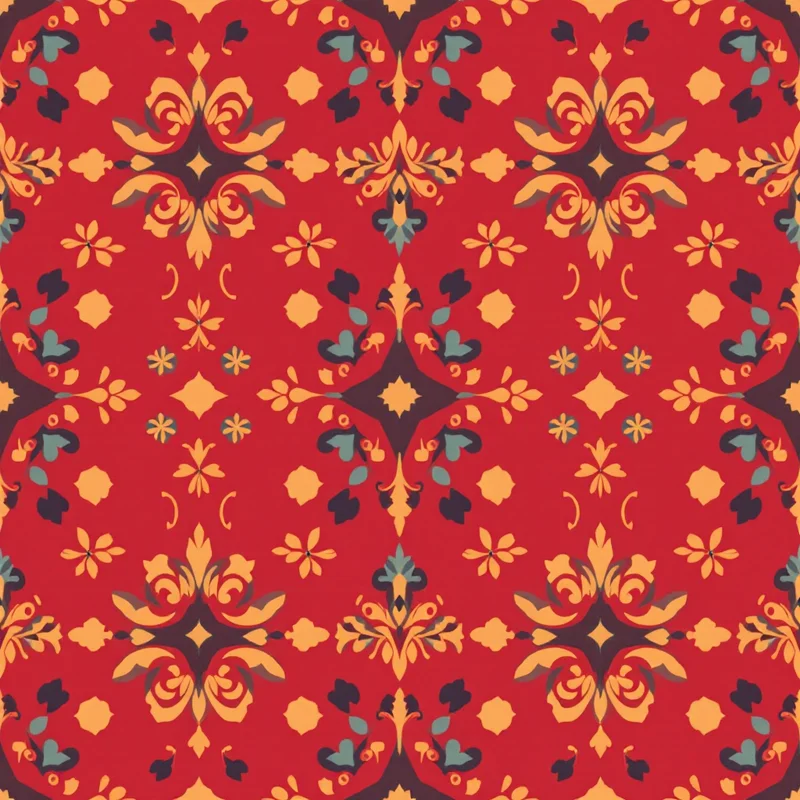
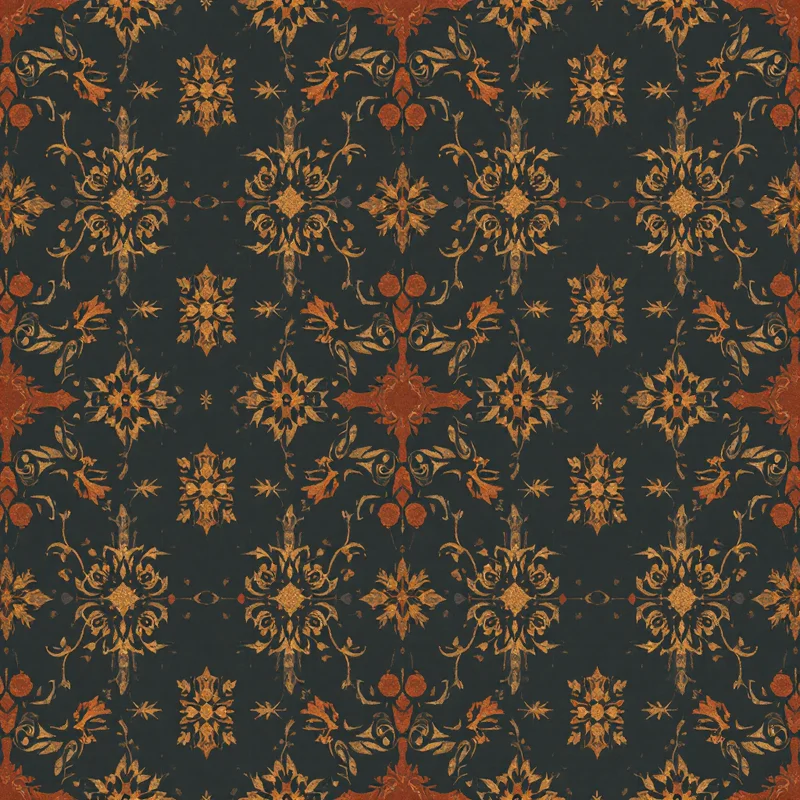
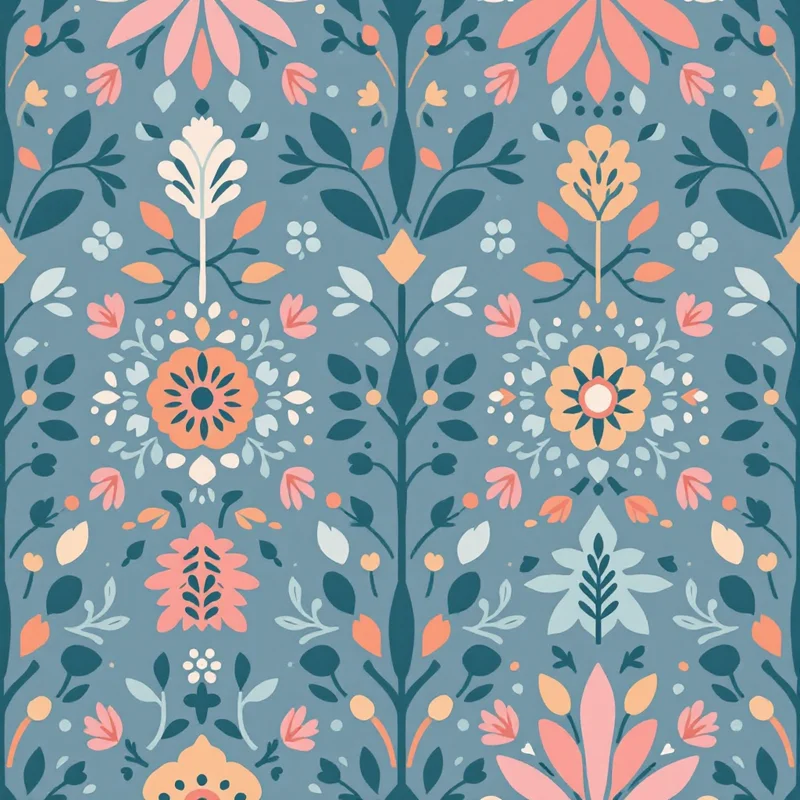
Quilters rarely buy one Christmas print. They buy a collection, and every fabric in it has a job. Design a single pretty print and you have a fabric. Design a set where each piece does a different job and you have something a maker can cut, piece and finish.
The jobs in a collection
| Role | Motif size | What it does |
|---|---|---|
| Focal print | 4 to 8 inches | The star; used for borders, large squares, fussy cutting |
| Secondary print | 2 to 4 inches | Supports the focal; picks up its colors |
| Blender | 0.5 to 1.5 inches | Quiet texture between busy prints |
| Stripe or plaid | Bands of 0.5 to 2 inches | Binding, borders, sashing |
| Panel | Sized to fabric width | Stockings, tree skirts, wall hangings |
| Solid or near-solid | None | Rests the eye |
Eight to ten pieces is a workable collection: one or two focals, two secondaries, two or three blenders, a stripe, a plaid and optionally a panel. See Christmas plaid and tartan patterns for the plaid side.
Design for the scissors
Pieced projects change how a print is read. Quilting cotton typically has 42 to 44 inches of usable width, and a standard quilting seam allowance is a quarter inch. A pattern is cut into strips, squares and triangles, often only 2 to 3 inches across. So:
- Check what survives a 2.5-inch cut. A 5-inch tree becomes a green smear in a 2.5-inch patch. Either shrink motifs under about 1.5 inches or make the layout dense enough that every patch catches part of a motif.
- Prefer tossed to directional. Trees, reindeer and houses look right-side-up only once. In patchwork they end up sideways. Scatter motifs at varied angles on at least one of your secondary prints.
- Plan fussy cuts. For focal prints, space the key motifs on a regular grid, such as one tree every 6 inches, so a maker can center a motif in a square.
- Leave margin around motifs. Seam allowances eat a quarter inch on every side.
The quilt block pattern guide is a useful companion on block structure and choosing fabric prints.
Palette: keep it sewable
Quilters often mix new prints with solids they already own, so a tight palette makes your fabric easy to say yes to. A good set uses six colors:
- Cranberry `#9E2B3A`
- Spruce `#2F5D45`
- Cream `#F4ECDC`
- Warm gray `#8A8580`
- Brass `#B8924A`
- Deep navy `#1F2A44`
Pick three as primary and use the other three sparingly. Contrasts of value (light, medium, dark) matter more than hue; a quilt with all medium-value prints goes flat.
Panels
A panel is a cut-and-sew design printed to size, such as a stocking, a tree skirt or a table runner with cutting lines. Design it to the fabric's usable width, and add clear cut lines and a seam allowance, because the maker will follow them literally. Keep the outer edge of a panel simple so it does not show a mistake if the cut is slightly off.
Yardage, fat quarters and cut sizes
Think about how the fabric sells. A fat quarter is roughly 18 by 22 inches, so a 6 or 9 inch repeat divides cleanly across the 18-inch side. Printing services differ in maximum repeat sizes and fabric widths, so check the specifications for your chosen service. The fabric printing prep guide walks through the file checks.
Projects to design toward
Table runners, stockings, tree skirts, mug rugs, quilted wall hangings, ornaments, pot holders and napkins are all quick makes. For quilted and patchwork looks, show finished project photos when you list a collection, even simple mockups, because quilters buy the idea of what they will sew.
Making it
Build the collection in one session so the palette stays consistent. Pattern Weaver generates a seamless tile in about 20 seconds, the Tiling Fixer fixes edges when a motif lands badly on the border, and Pro exports up to 8K, which helps when you need a large focal print or panel. New accounts get 5 free credits to start with the focal and blenders.
Explore related pattern styles
