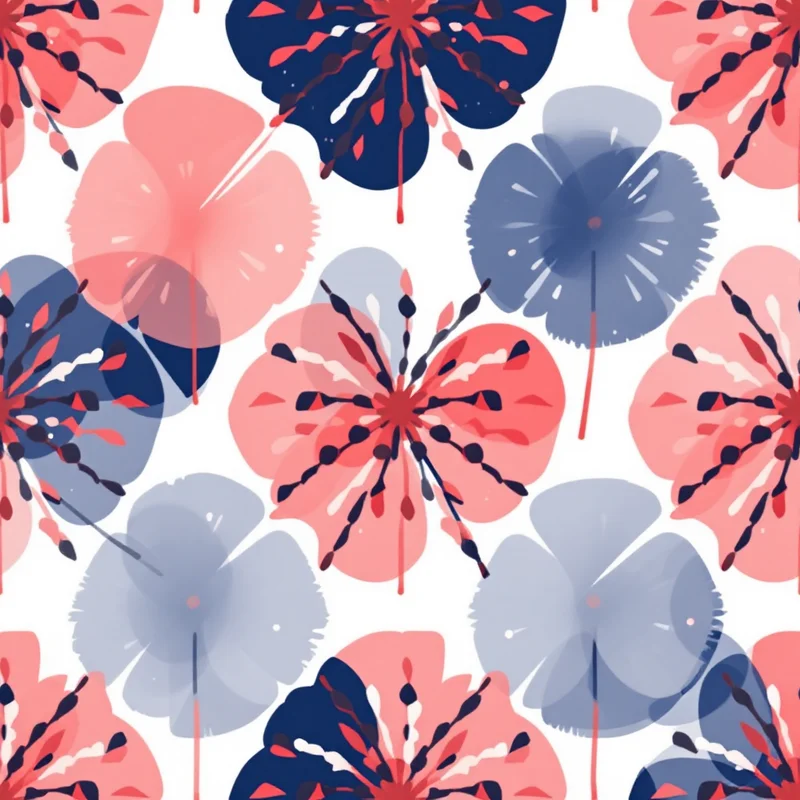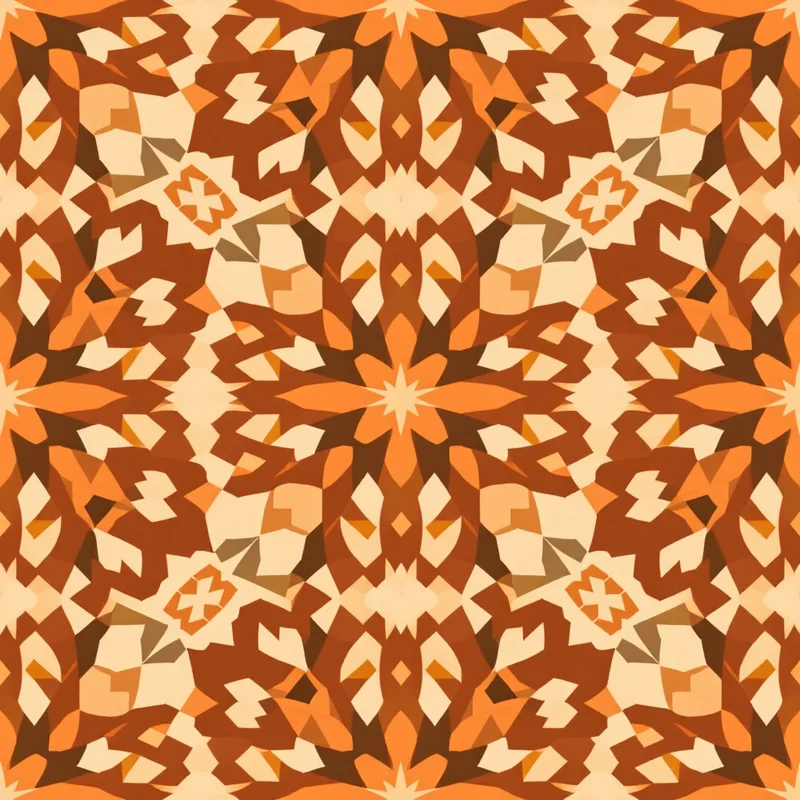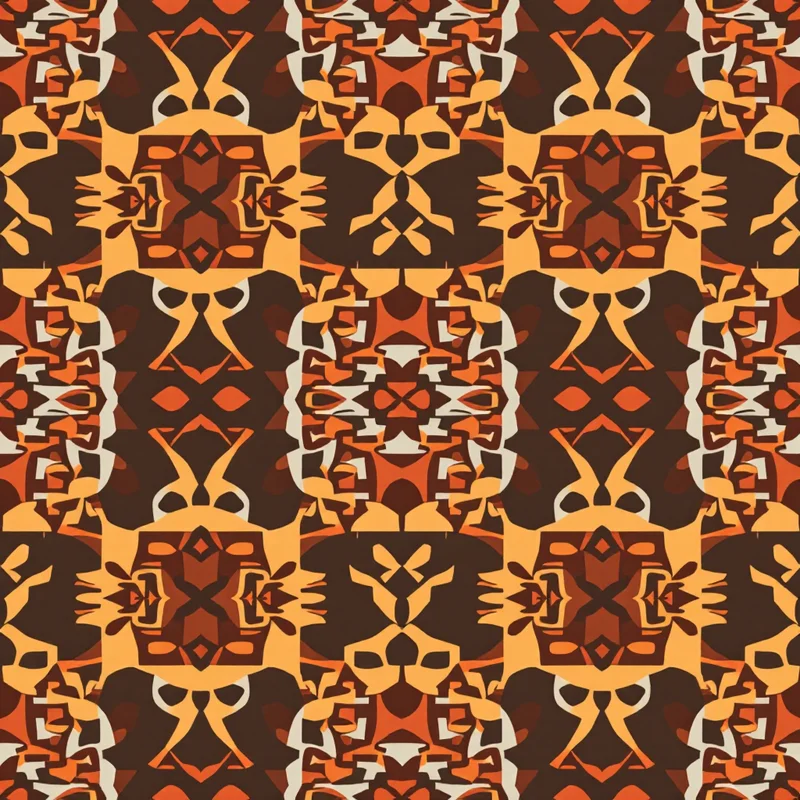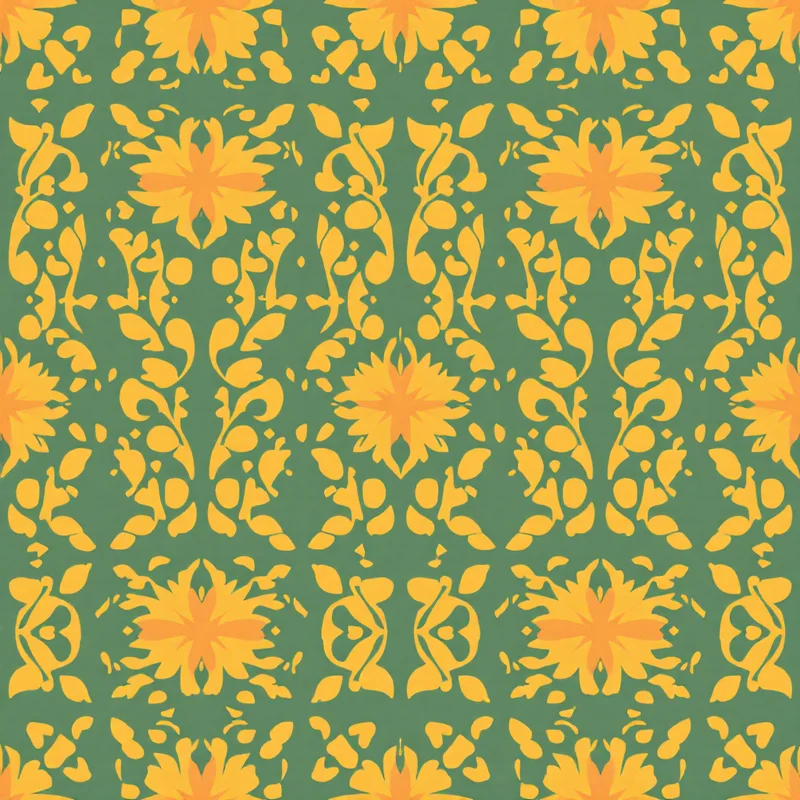
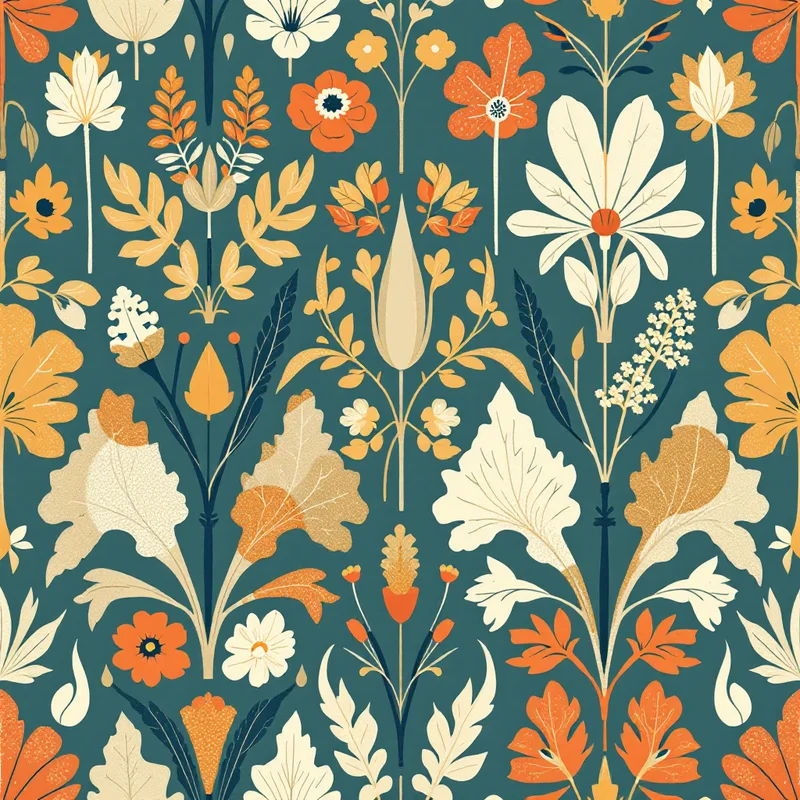
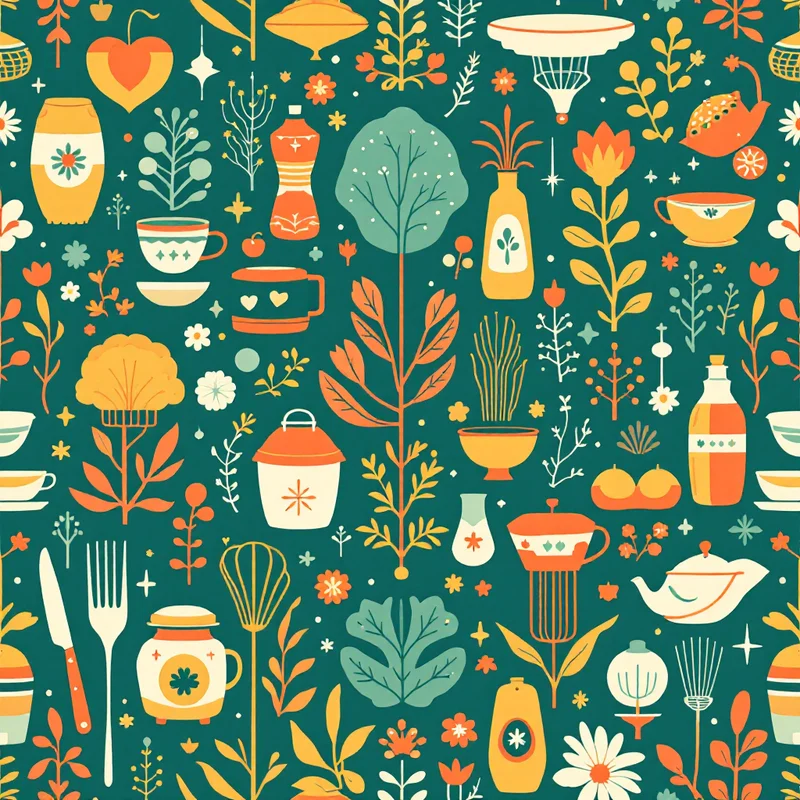
The 1970s aesthetic is having a full-scale comeback. Not the Y2K revival's techno-optimism, not the 90s grunge revival's anti-establishment edge — the 70s revival is something specific: earth tones, groovy typography, funky botanical shapes, and a warm, optimistic, maximalist sensibility. For pattern designers, 70s aesthetics have opened up significant markets in fashion prints, home textiles, boutique brand packaging, and editorial design.
Key takeaway: The 70s revival in 2026 divides into three clear directions — psychedelic groovy, earth-tone natural, and disco glamour. Pick one and commit to its specific visual vocabulary.
Direction 1: Psychedelic / Groovy
The most immediately recognizable 70s aesthetic. Warped typography, melting shapes, kaleidoscopic compositions, high saturation. Inspired by concert poster art of the late 1960s through mid-1970s.
Palette: orange, yellow, pink, purple, teal. Saturated to the point of almost-clashing.
Motifs: warped geometric shapes, melting text, mushroom motifs (with explicit drug-culture association), flowers with spiral centers, paisley-adjacent swirls.
Render styles: screen-print, collage, or saturated vector.
Direction 2: Earth-Tone Natural
The muted, earthy side of 70s design. Macrame-inspired patterns, hand-thrown pottery aesthetics, earth tones, desert imagery, natural materials. References the back-to-nature movement of the 1970s.
Palette: rust orange, mustard yellow, sage green, warm brown, cream. Slightly desaturated earth tones.
Motifs: pampas grass, sun motifs, desert imagery, mushrooms (natural rather than psychedelic), macrame-inspired geometric patterns, clay pottery aesthetics.
Render styles: hand-drawn, linocut, woodcut for authentic hand-made feel.
Strong overlap with boho pattern design guide.
Direction 3: Disco Glamour
The shiny, urban side of 70s design. Metallic silver, gold, bronze. Disco balls, reflective surfaces, glam rock influence. More polished and urban than the natural or psychedelic directions.
Palette: metallic gold, silver, bronze, black, deep purple, hot pink.
Motifs: disco balls, geometric shapes with reflection effects, glamour silhouettes, 70s fashion icons.
Render styles: vector with metallic treatment, or photorealistic for full disco-glam effect.
70s Typography Characteristics
Typography alone can anchor a pattern as "70s." Characteristic 70s type includes:
- Bubble letters with rounded edges
- Stretched vertical proportions
- Wavy or warped baselines
- Art Nouveau revival serifs
- Saturated multi-color wordmarks
Typography patterns — words rendered as the central pattern element — were a 70s hallmark and work strongly in contemporary revival work.
Key Motifs Worth Mastering
Sun faces. Anthropomorphized sun motifs. Huge across every 70s direction.
Mushrooms. The 70s mushroom motif vocabulary (different from cottagecore mushrooms) includes psychedelic-tinged illustrations and natural botanical studies.
Peace signs. Simple and recognizable. Works in graphic and illustrated forms.
Flowers with spiraling centers. The specific 70s flower style — asymmetric, graphic, often oversized.
Rainbow motifs. 70s rainbows are specifically chunky and divided into broad bands.
Geometric swirls. Hypnotic swirl patterns, often in multi-color gradients.
Peacock and bird motifs. 70s peacock motifs are especially iconic.
Macrame knot patterns. Geometric knot-based patterns reference 70s macrame craft traditions.
Product Categories
Fashion. 70s fashion revival has been ongoing for years. Flare pants, bell sleeves, wrap dresses all benefit from 70s-era print patterns.
Home textiles. 70s-inspired throw pillows, curtains, and bedding. Strong with millennial and Gen Z home decor buyers.
Wallpaper. Feature walls with bold 70s patterns. Growing home decor trend.
Phone wallpapers. 70s aesthetic phone wallpapers rank highly in search volume.
Stationery. 70s-inspired journals, notebooks, and planners for design-aesthetic buyers.
Packaging. Natural beauty brands, wellness brands, and boutique food products use 70s palettes and motifs.
70s Revival vs. Y2K vs. Indie Sleaze
These three retro revivals overlap but differ:
- Y2K (1998-2004): chrome, butterflies, techno-optimism, candy brights
- 70s (1970-1979): earth tones or psychedelic, handmade feel, back-to-nature or disco
- Indie Sleaze (2005-2012): grunge, Tumblr aesthetic, dark humor, flash photography
Each appeals to distinct buyer segments. 70s has the broadest demographic appeal and longest commercial durability.
Building a 70s Collection
A 70s mini-collection in earth-tone direction:
- A hero sun-and-flower pattern
- A mushroom motif scatter
- A macrame-inspired geometric pattern
- A 70s typography pattern
- A solid-look warm terracotta texture
All in rust, mustard, sage, cream palette. See retro patterns and vintage patterns. Open the pattern studio to begin.
Explore related pattern styles
Patterns for