
Valentine's Day is a compressed but high-velocity seasonal market. The buying window is shorter than Christmas or Halloween — realistically just four to six weeks — but the volume during that window is intense. For pattern designers, Valentine's Day rewards focus: a few tightly-designed collections in specific aesthetic directions outperform broad, undifferentiated romantic patterns.
Key takeaway: Valentine's Day 2026 patterns divide into four aesthetic directions — classic romantic, anti-Valentine, Galentine's friendship, and minimalist modern. Pick one, commit, and build a tight coordinating collection.
Direction 1: Classic Romantic
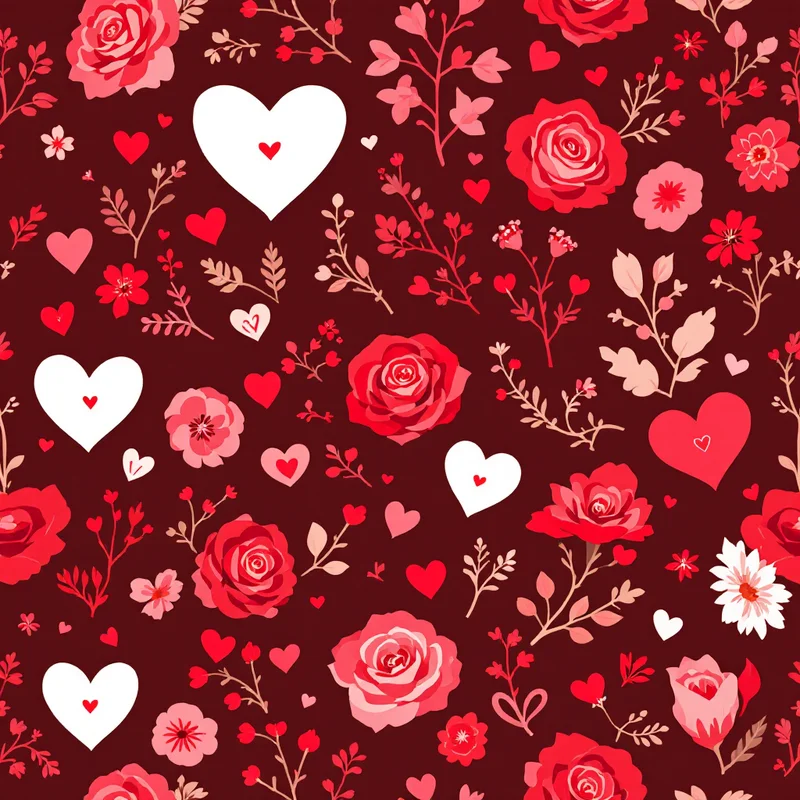
The traditional Valentine's aesthetic — hearts, roses, cherubs, love letters, and ribbon motifs in red, pink, and white palettes. Works across every product category and remains the largest sub-market within Valentine's Day patterns.
Render hearts in multiple styles: simple silhouette hearts for scattered repeats, detailed filled hearts for hero motifs, outlined hearts for minimalist applications. Mix scales — a single large heart alongside clusters of smaller hearts creates visual rhythm that flat-scale patterns lack.
For palette, the classic Valentine's combination is red + pink + white. But contemporary winners push further: dusty rose + cream + burgundy for a warmer romantic, or hot pink + red + black for a bolder modern take. See romantic patterns.
Direction 2: Floral Valentine's
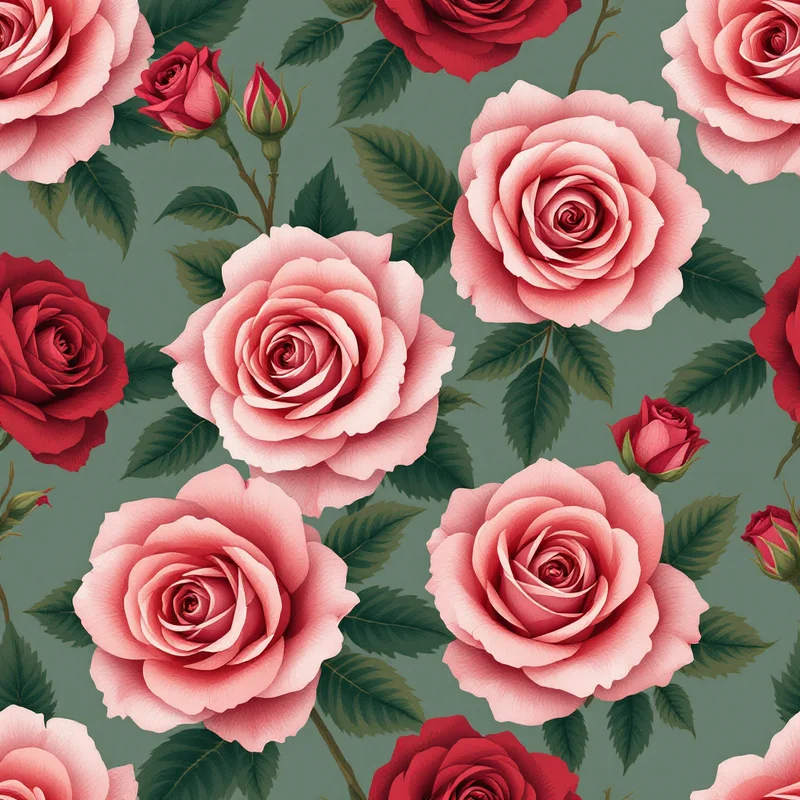
Rose-forward botanical designs. Red roses in classic illustration style. Pink peonies for softer romantic feeling. Tulip bouquets for spring-transitional patterns. Forget-me-nots for delicate floral designs.
This direction extends the Valentine's selling season into early spring — floral patterns remain relevant well into March and April, giving you a longer sales window than pure Valentine's-themed patterns. See botanical patterns paired with watercolor rendering.
Direction 3: Anti-Valentine / Humor
The rising aesthetic direction. Patterns with sarcastic typography, broken heart motifs, black palette with red accents, "I hate Valentine's Day" messaging, and humorous anti-romance imagery. Appeals strongly to Gen Z buyers and builds a differentiated niche within an otherwise oversaturated market.
Works especially well for phone wallpapers, enamel pins, sticker sheets, and greeting cards targeting single-and-proud audiences. The palette typically skews darker — black, charcoal, and deep red — with occasional pink punctuation.
Direction 4: Galentine's Day
The February 13th friendship celebration aesthetic. Themes of female friendship, sisterhood, and platonic love. Palette leans bright and playful — pink, coral, lavender, mint. Motifs include friendship bracelets, coffee cups, wine glasses, and phrases celebrating female friendships.
Fast-growing niche with dedicated buyer base. Products selling well: Galentine's greeting cards, gift wrap for friend exchanges, party supplies for Galentine's brunches, and social media templates for sharing friendship tributes.
Direction 5: Minimalist Modern Valentine's
Clean, editorial take on Valentine's. Single-color line drawings of hearts and floral elements. Abstract representations of love (intertwined lines, balanced compositions). Minimal palette — often just cream and terracotta red, or white and dusty pink.
Appeals to contemporary design-focused buyers. Works beautifully for wedding stationery that doubles as Valentine's-adjacent, editorial print products, and minimalist home decor. See minimalist patterns.
Core Valentine's Motifs
Hearts — obvious, but approach creatively. Heart silhouettes are overused; consider outlined hearts, patterned hearts (heart-shaped frames around other motifs), anatomical hearts for anti-Valentine directions, and abstract heart shapes.
Roses — red roses for classic, pink roses for softer, dried roses for dark academia Valentine's aesthetic.
Lips and kiss marks — contemporary Valentine's motif with Y2K and makeup-aesthetic crossover appeal.
Love letters and envelopes — strong motif for stationery and correspondence-related products.
Cupid and cherubs — classic Valentine's imagery. Works in vintage-aligned products.
Candy hearts and conversation hearts — specifically American Valentine's tradition. Works in nostalgic kids' products and retro-aligned designs.
Lace and ribbon motifs — decorative elements that combine with other motifs for layered romantic designs.
Candlelight and romantic dinner imagery — wine glasses, candles, and place-setting motifs for Valentine's party product lines.
Product Categories
Greeting cards — the core Valentine's product. Both romantic and anti-Valentine varieties sell well.
Gift wrap — Valentine's gift wrap is a concentrated selling window with strong margins for small-batch sellers.
Digital paper packs — scrapbooking and junk journaling buyers grab Valentine's themed packs every January.
Stationery — Valentine's letters, love notes, sticker sheets, and lunchbox notes for kids.
Packaging — chocolate and confectionery brands license Valentine's patterns heavily. Small candle, soap, and wellness brands also use Valentine's packaging in February.
Apparel — Valentine's-themed apparel for children (school party gear), couples (matching shirts), and adults (statement pieces).
Home decor — throw pillows, tea towels, small home accessories with Valentine's or general romantic motifs.
Wedding crossover products — wedding stationery designed in romantic palette often doubles as Valentine's-adjacent.
Valentine's 2027 Timing
Valentine's Day 2027 is Sunday, February 14. For optimal sales:
- November 2026 — start designing Valentine's collections
- December — list Valentine's products on Etsy and Spoonflower
- Early January — ramp up marketing; peak Etsy search traffic begins
- Late January — peak sales for physical products (shipping windows)
- Early February — digital product sales peak
- February 14 — last-minute digital sales
- February 15 — clear physical stock, pivot to spring/Easter designs
Because Valentine's has a shorter window than Christmas, the search algorithm advantage goes to shops with established listings rather than newcomers. Getting into the market in November-December is essential.
Pricing and Pack Structure
Valentine's digital paper packs typically sell at $5-$20 depending on size and quality. Greeting card sets sell at $3-$15 per pack. The compressed buying window means price sensitivity is moderate — buyers looking for Valentine's products are often last-minute and price-insensitive within reasonable ranges.
Pack structure that works: 15-25 coordinating patterns, mixed scales (hero patterns + blenders + solids), and variety in motif types (some heart-heavy, some botanical, some typography-focused).
Building a Valentine's Collection
A coordinating Valentine's mini-collection in classic romantic direction:
- A hero heart pattern (large-scale scattered hearts in mixed sizes)
- A rose botanical pattern
- A love letter / envelope motif
- A candy heart or conversation heart scatter
- A dusty pink solid-look textured ground
- A small-scale blender (tiny hearts or dots)
All in the same pink + red + cream palette. Open the pattern studio to begin.
For more seasonal pattern strategy, see the seasonal patterns category and the how to create patterns for Etsy guide.
Explore related pattern styles
Patterns for