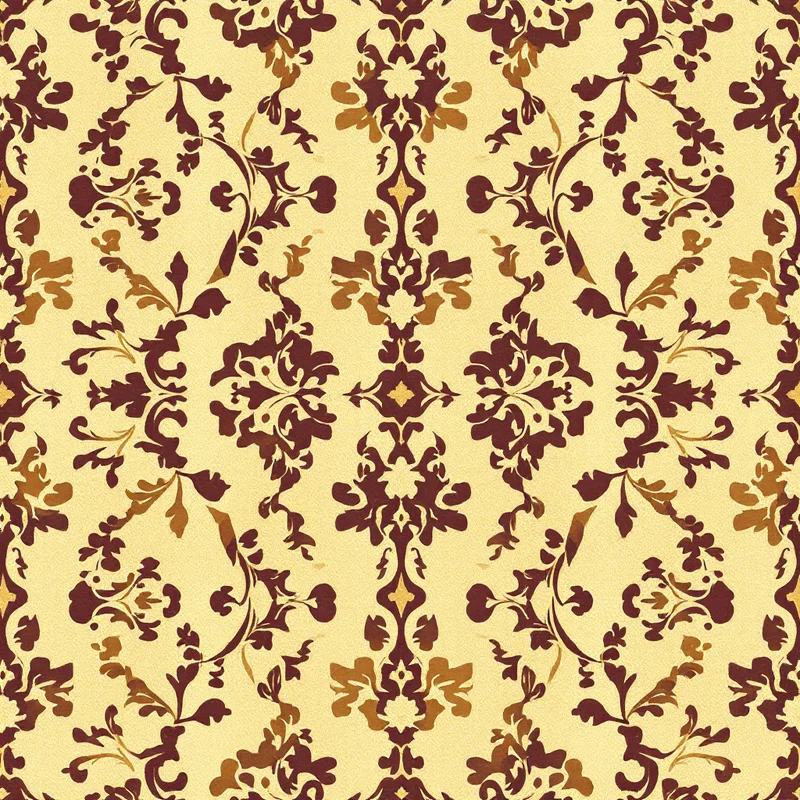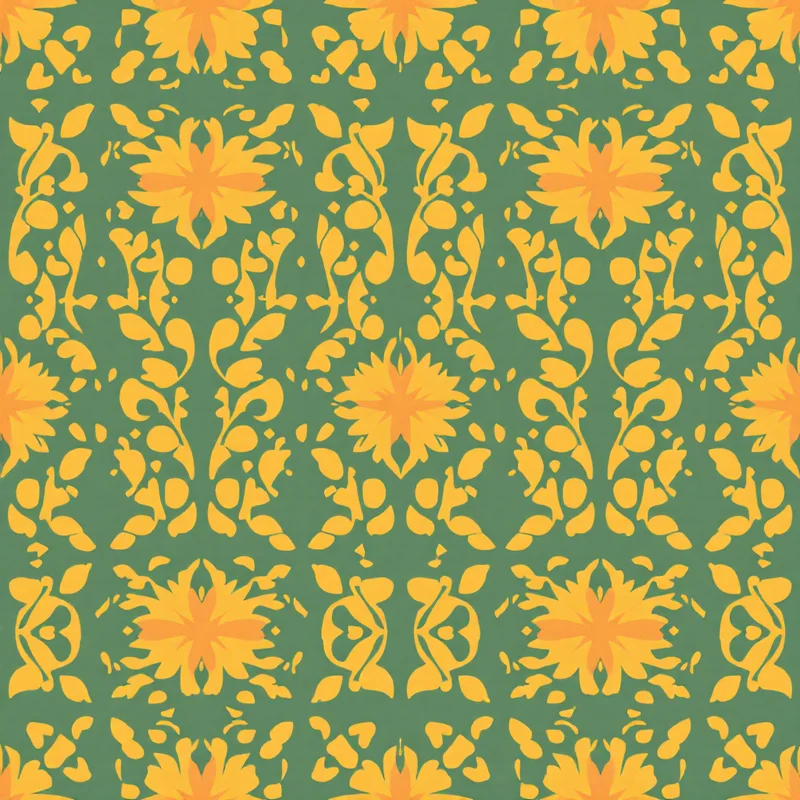
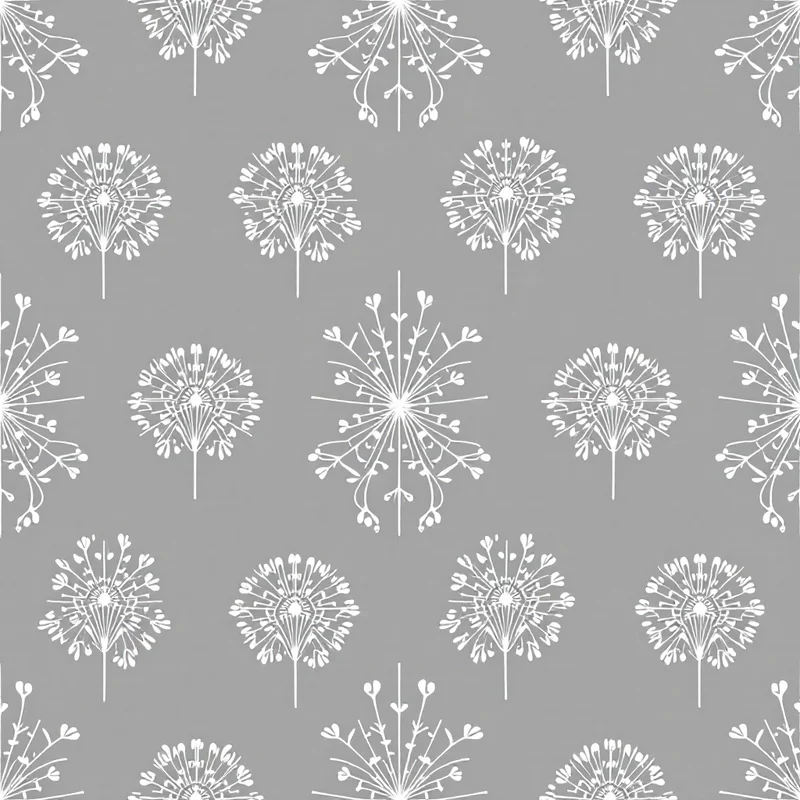


I have been designing and selling patterns for years now, and for anyone working in textile design, textile pattern design or surface print, Etsy remains one of the best places to sell digital pattern files directly to consumers. The audience is there, the infrastructure is solid, and digital downloads have essentially zero fulfillment overhead. But there is a big difference between uploading a few patterns and running a shop that actually pays you back for the time you put in.
This guide is everything I wish someone had told me when I started. It covers what kinds of patterns sell, how to price them, how to get your listings in front of buyers, and how to avoid the mistakes that trip up most new sellers.
What Etsy Buyers Actually Want
Before you design anything, understand who is buying patterns on Etsy and what they do with them. Most pattern buyers fall into a few groups:
Crafters and scrapbookers. They buy pattern bundles to use in paper crafts, card making, and journal decorating. They want coordinated sets with consistent color palettes — not single one-off tiles. They are price-sensitive but buy frequently.
Print-on-demand sellers. They purchase patterns to put on mugs, phone cases, tote bags, and similar products through services like Printify or Printful. They care most about commercial licensing and high resolution. A pattern that looks good on a flat tile but falls apart on a curved product surface is useless to them.
Small business owners. Think stationery brands, invitation designers, and boutique packaging companies. They want polished, professional designs they can use in client work. They are willing to pay more, especially for commercial licenses.
Fabric enthusiasts. Quilters and home sewists who upload patterns to Spoonflower or similar services to get custom fabric printed. They need files that tile perfectly and look good at fabric-printing scale.
Understanding these buyers shapes every decision you make — from style choices to file formats to how you write your listing descriptions.
File Specifications That Matter
Getting the technical details right is table stakes. Mess these up and you will get returns, bad reviews, and confused customer messages.
Resolution: 300 DPI. This is non-negotiable for print-ready files. A 12x12 inch tile at 300 DPI gives you a 3600x3600 pixel file, which is large enough for virtually any print application your buyers will encounter.
Tile size: 12x12 inches. This has become the Etsy standard for digital patterns. It works well for Spoonflower uploads, fits standard scrapbook paper dimensions, and tiles cleanly across most product templates. Some sellers also include 8x8 or 16x16 inch versions in their downloads as a bonus, but 12x12 should be your baseline.
Format: PNG. Always include PNG files. They support transparency, produce no compression artifacts, and are universally compatible. You can include JPG versions as well for buyers who need smaller file sizes, but never deliver only JPG — experienced buyers will notice the quality difference.
Color mode: RGB. Deliver in RGB. Buyers who need CMYK for commercial offset printing can convert on their end, and most digital pattern buyers are working in RGB workflows anyway.
Seamless tiling. This is the one thing you absolutely cannot get wrong. Every pattern you sell must tile perfectly in all directions — no visible seams, no color shifts at the edges, no motifs that get awkwardly chopped. A pattern that breaks when repeated will earn you one-star reviews faster than anything else. Always preview your tile in at least a 3x3 repeat grid before you list it.
Which Pattern Styles Actually Sell
Not every style performs equally well on Etsy. Here is what consistently moves, based on what I have seen in the market over time.
Botanicals and florals. The evergreen bestseller. Botanical patterns — especially watercolor florals, ditsy prints, and chintz-inspired designs — have been selling well for years and show no signs of slowing down. Seasonal variations keep things fresh: spring wildflowers, autumn foliage, holiday greenery. If you are only going to specialize in one category, this is the safest bet.
Geometric and minimalist. Clean geometric patterns and minimalist designs attract a modern, design-conscious buyer. These work particularly well for stationery, planners, and contemporary home decor. They also tend to be easier to create well, since the visual language is more structured and forgiving.
Animal prints. Leopard spots, snakeskin textures, abstract animal hide interpretations. These have sustained popularity in fashion-adjacent markets. Stylized and abstract versions tend to outsell photorealistic ones — buyers want the feel of animal print, not a zoology illustration.
Seasonal and holiday. Christmas, Halloween, Valentine's Day, and back-to-school patterns create predictable sales spikes. The key is timing: have your seasonal collections listed and indexed 6 to 8 weeks before the event. By the time the holiday arrives, your listings should already be ranking in search.
Boho and earthy tones. Muted palettes, organic shapes, and textural patterns in the boho aesthetic continue to do well, especially in the nursery decor, stationery, and small-batch maker markets.
Terrazzo and modern abstract. Terrazzo, speckle textures, marble effects, and abstract geometric compositions sell well to contemporary home goods brands and stationery designers. These feel current without being too trendy.
Pricing: What Works and What Doesn't
Pricing on Etsy is part strategy, part psychology. Here is what the market actually supports.
Individual patterns: $2.99 to $5.99. Single-pattern listings in this range attract impulse purchases and build your review count quickly. Standard designs sit comfortably at $2.99 to $3.99. More detailed or niche work — specific cultural styles, complex geometric compositions, or highly polished illustration-quality tiles — can command $4.99 to $5.99.
Bundles: $7.99 to $14.99. This is where most of your revenue will come from. Bundles of 4 to 10 coordinating patterns offer buyers better per-pattern value and give you a higher average order. A cohesive set of 8 patterns in matching colorways at $12.99 is far more attractive than 8 separate $3.99 listings — even though the math works out to less per pattern.
Commercial license upgrades: $5 to $20. Many buyers want to use your patterns on products they sell. Offering a commercial license as a listing variation or a separate linked listing creates meaningful additional revenue. The standard approach is charging 2x to 4x the base pattern price for commercial rights.
The low-price trap. Do not price at $0.99 or $1.00 to "get started." Rock-bottom prices signal low quality, attract bargain hunters who rarely leave reviews, and make it very difficult to raise prices later without losing your existing buyer base. Start at $2.99 and let your reviews and catalog depth justify increases over time.
Getting Found: Etsy SEO That Actually Works
You can have beautiful patterns, but if nobody finds them, nothing sells. Etsy search is the primary way buyers discover new listings, and understanding how it works is essential.
Titles: front-load your primary keyword. Etsy gives you 140 characters. Use them all, and put the most important search term first. A title like "Seamless Floral Pattern, Watercolor Botanical Digital Paper, Flower Print PNG, 12x12 300 DPI, Commercial Use" covers the primary keyword up front and stacks related terms after it. Do not waste title space on your shop name or cute phrases that no one searches for.
Tags: use all 13, and make them specific. Single-word tags like "floral" are nearly useless — the competition is overwhelming and the match is too broad. Multi-word phrases like "watercolor floral pattern" or "seamless botanical print" match how buyers actually search. Include tags for the use case ("fabric design file," "scrapbook digital paper"), the visual style ("minimalist geometric," "boho earthy tones"), and the format ("PNG digital download," "commercial use pattern").
Descriptions: lead with the essentials. The first 160 characters of your description appear in search results. Lead with what the pattern is, what files are included, and the primary use case. Then expand into full specifications, usage suggestions, license details, and any FAQ answers that reduce customer questions.
Product mockups make a huge difference. Listings with mockup images — showing the pattern on a pillow, fabric bolt, phone case, gift wrap, or wall — consistently outperform listings with only flat tile images. Mockups help buyers visualize the end result and justify the price. Free mockup tools like Placeit, Smartmockups, or even Placeit make this easy.
Categories and attributes. List under the most specific subcategory Etsy offers for digital patterns. Fill in every attribute — file type, dimensions, theme, color, occasion. Each attribute is another signal to Etsy's search algorithm about when to show your listing.
Photographing and Presenting Your Patterns
Your listing images are your storefront. Here is what works.
Image 1 (thumbnail): the hero shot. This should be a clean, professional mockup of your pattern on an appealing product — a pillow on a styled sofa, fabric draped on a table, a phone case on a marble surface. This image needs to stop scrollers in their tracks. Make it aspirational.
Image 2: the flat tile. Show the full pattern tile on a clean background so buyers can see exactly what they are getting. Include a small repeated grid in one corner so they can see how it tiles.
Image 3-7: additional mockups and details. Show the pattern across different product applications. Include a close-up crop showing the detail quality. If you are selling a bundle, show all patterns in the set together on one image so buyers can see the collection as a whole.
Image 8-10: information slides. Use these for "What's Included" specifications, license information, and a color palette swatch. These reduce customer questions and increase buyer confidence.
Consistent presentation across your shop builds trust. Use the same mockup styles, the same fonts for your info slides, and the same color scheme for your branding elements. A cohesive shop looks professional, and professional shops get more sales.
Building Your Catalog Strategically
The sellers who do well on Etsy are not just making patterns — they are building a catalog with intention.
Go deep before going wide. Start with 2 to 3 style families and build depth within them rather than offering one pattern each in 20 different styles. A shop with 40 botanical patterns across diverse colorways and substyles signals expertise. A shop with 40 unrelated patterns across 15 categories signals a lack of focus.
Think in collections. Group 4 to 8 patterns that share a color palette and aesthetic sensibility into named collections. "Dusty Rose Garden," "Coastal Blues," "Autumn Harvest." Collections are more appealing than isolated listings because buyers can mix and match across a coordinated set. They also make great bundle listings.
Create colorway variations. One strong pattern design in 3 to 5 different color palettes becomes 3 to 5 separate products with minimal additional work. A floral that sells in blush pink might also move in navy, sage green, terracotta, and classic black and white. Colorways are the simplest way to grow your catalog.
Plan for seasonal spikes. Have your Christmas patterns listed by mid-October. Valentine's Day by late December. Back-to-school by June. Etsy's search algorithm takes time to index and rank new listings, so launching a week before the holiday is far too late.
Common Mistakes That Hold Shops Back
Skipping the tiling check. I cannot stress this enough. Always verify seamless tiling in a repeated grid before listing. A single bad review about broken tiling can tank a listing's momentum.
Neglecting SEO. Beautiful patterns that nobody can find are just portfolio pieces. Put real effort into titles, tags, and descriptions for every single listing.
No mockups. Flat tile images alone do not sell. Buyers need to see the pattern in context on a product they can imagine using.
Pricing too low. It is tempting to undercut everyone when you are starting out, but low prices attract the wrong buyers and make it very hard to build a sustainable business.
Inconsistent publishing. Etsy's algorithm rewards shops that add new listings regularly. A burst of 20 listings followed by three months of silence is less effective than publishing 3 to 5 new listings every week.
The Long Game
Building a profitable pattern shop on Etsy is not a get-rich-quick situation. It is a real business that rewards consistency, quality, and strategic thinking over time.
Most shops start seeing meaningful traction once they have 50 to 100 well-optimized listings with good reviews. Below that threshold, you simply do not have enough surface area for Etsy's search to work in your favor. Above it, things start to compound — more listings mean more search impressions, more reviews mean better ranking, and returning customers start to discover more of your catalog.
The tools available today make the design side of this faster than it has ever been. An AI pattern generator can dramatically speed up the creation workflow. But the business fundamentals — understanding your buyer, pricing strategically, optimizing for search, and showing up consistently — those have not changed.
If you approach this as a craft and a business in equal measure, there is real money to be made selling patterns on Etsy. The sellers who succeed are the ones who keep listing, keep improving, and keep paying attention to what the market wants.
Explore related pattern styles
Patterns for