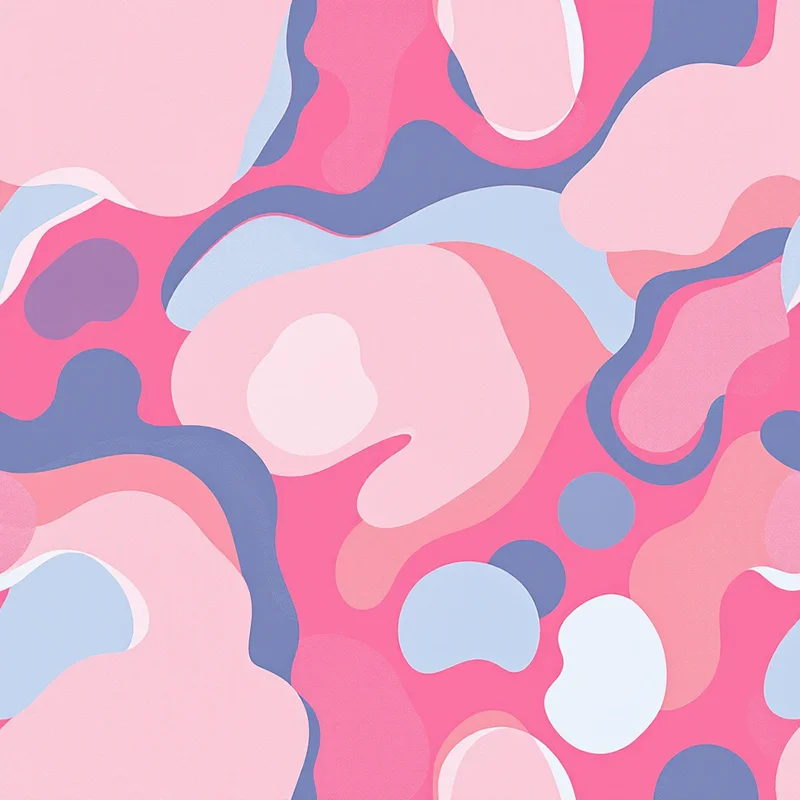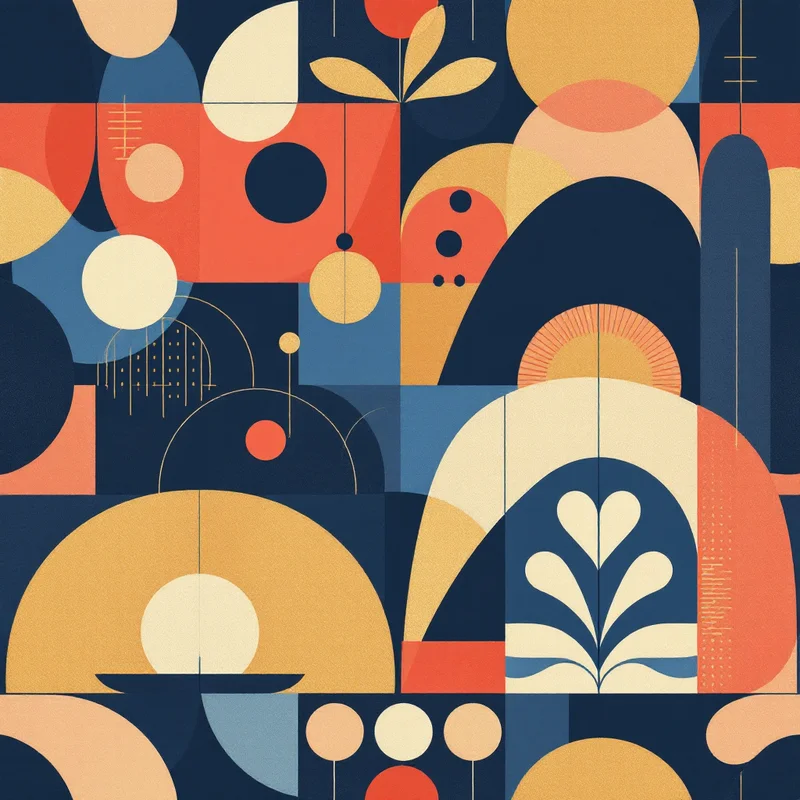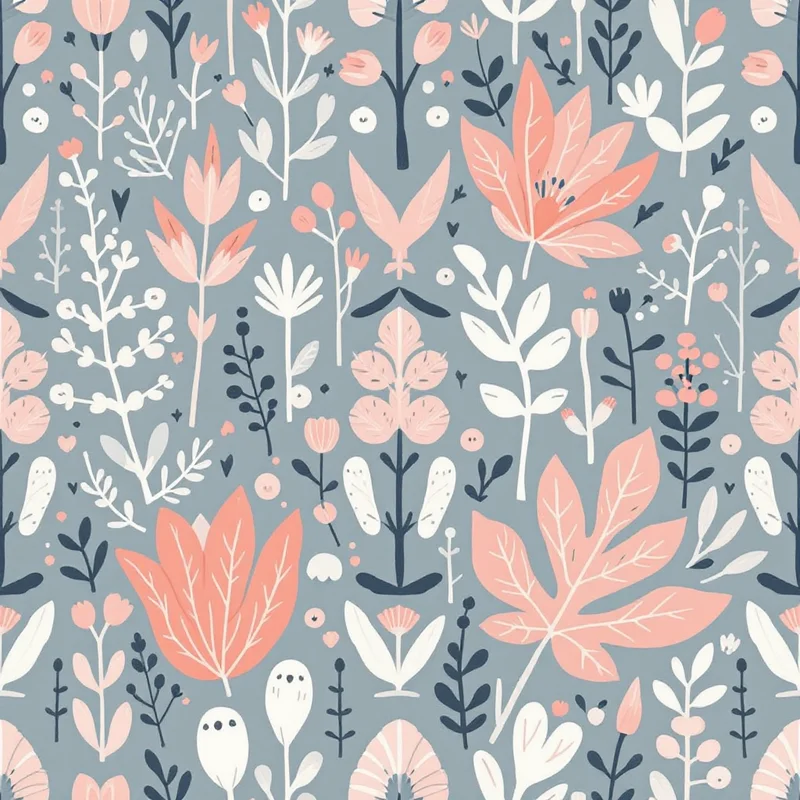
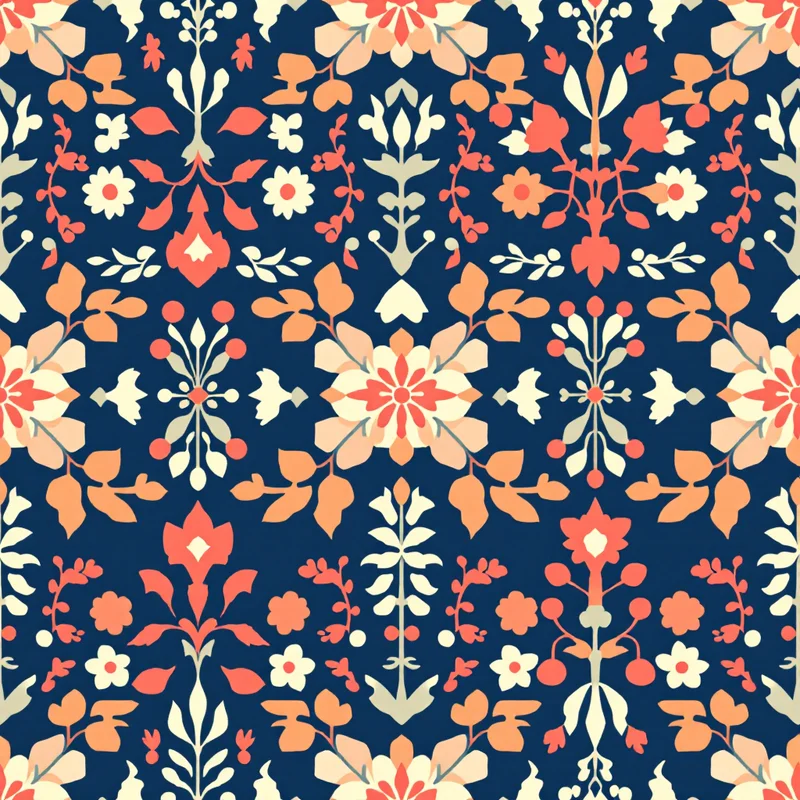
Scandinavian pattern design sits in a unique commercial position — simultaneously trendy and timeless, minimalist enough to sell in mass-market home stores and distinctive enough to command premium prices in boutique settings. The aesthetic's durability comes from its roots in genuine Nordic folk tradition combined with its 20th-century refinement through the modernist movement. For designers, Scandinavian patterns offer evergreen appeal in home textiles, stationery, and children's products.
Key takeaway: Scandinavian design is not "minimalism." It's a specific tradition combining folk-art warmth with modernist restraint. Get the balance right and your patterns carry decades of design heritage.
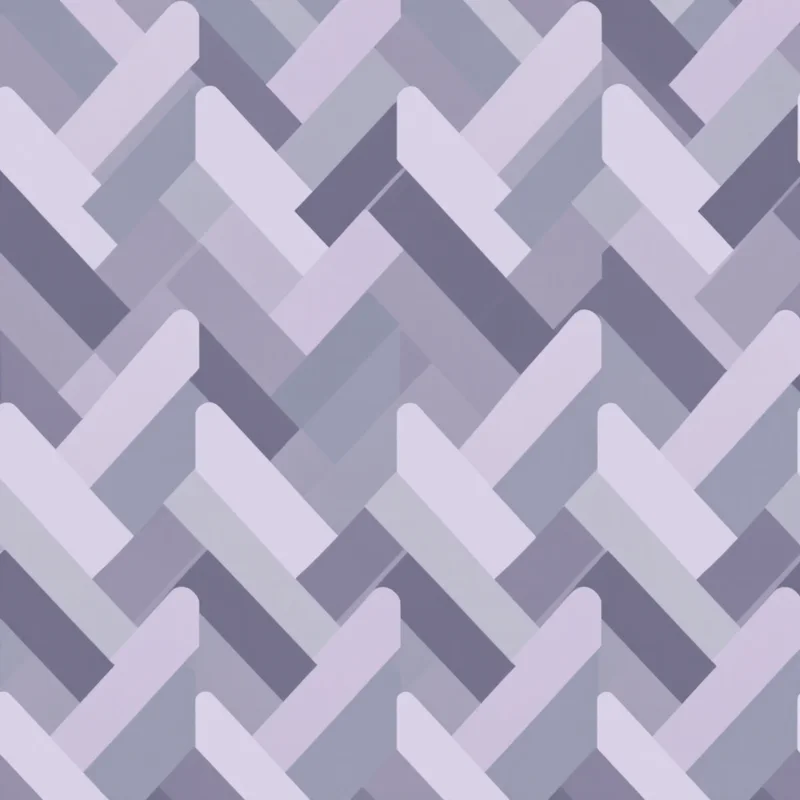
The defining palette is cool but warmed by cream rather than white. Soft grays (blue-gray, taupe-gray, warm gray). Muted blues (Swedish blue, Danish slate). Forest green and moss green. Cream (not pure white — always slightly warmed). Black (used sparingly for accents). Occasional pops of mustard yellow or dusty red.
Think of a winter morning in Copenhagen: muted light, natural wood tones, wool textures, and single small moments of warmth. The palette captures that quality. Avoid neon, avoid saturated brights, and avoid cold true-white.
Folk Motif Traditions
Scandinavian folk art provides the deeper motif vocabulary:
Dala horse silhouettes — the Swedish wooden horse figurine translates into repeating patterns beautifully. Traditionally painted in red with floral details, the silhouette alone works in monochrome Scandinavian palettes.
Folk flowers (kurbits) — stylized florals from Swedish folk painting traditions. Characterized by simplified, slightly geometric forms and saturated colors within a limited palette.
Reindeer and woodland animals — reindeer, moose, foxes, and bears in simplified silhouette form. Winter-associated but sell year-round in Scandinavian-inspired product lines.
Woven heart motifs — the Danish Christmas decoration tradition of paper-woven hearts translates into pattern work. Interlocked heart shapes create geometrically interesting repeats.
Snowflakes and ice crystals — Nordic mathematical precision meets natural form. Works beautifully when rendered simply and repeated at medium density.
See minimalist patterns and cultural patterns for relevant libraries.
The Modernist Influence
20th-century Scandinavian design — Marimekko, Josef Frank, Stig Lindberg, and the broader mid-century modern movement — introduced a distinctive modernist sensibility to the folk traditions. Larger-scale botanical motifs (poppies, mushrooms, stylized flowers). Playful figurative patterns. Bold use of black-and-white with single accent colors.
Marimekko's "Unikko" poppy pattern from 1964 remains one of the most recognizable surface patterns in the world. The lesson is that Scandinavian design rewards singular, confident motifs more than complex ornamentation. One strong shape repeated in a bold scale often works better than a busy composition.
Nordic Botanicals
A specific subcategory of Scandinavian design deals with the actual plant life of Nordic countries: birch trees, pine boughs, ferns, mosses, mushrooms, cloudberries, and lichen. These botanicals differ visually from English garden flora or Mediterranean plants — they tend toward smaller, hardier forms with restrained color palettes.
Nature patterns paired with Nordic color palettes produce authentic results. Winter botanicals especially (evergreen boughs, winter berries, frosted branches) perform well in Scandinavian-inspired product lines during holiday seasons.
Typography and Pattern
Scandinavian patterns sometimes incorporate typography — Nordic language text, handwritten captions, or calligraphic elements. When typography appears, it usually does so in a clean sans-serif style or a handwritten cursive, always in the same muted palette as the rest of the pattern.
Render Styles That Work
Linocut, woodcut, hand-drawn, and vector render styles all suit Scandinavian design. The key is cleanliness and restraint — highly textured or loose rendering can work for folk-art variants but generally the Scandinavian aesthetic favors crisp, confident lines.
Avoid heavy watercolor or loose painterly styles for canonical Scandinavian work, though watercolor can work for the nature-focused subvariants.
Product Categories
Home textiles — the single largest Scandinavian pattern market globally. IKEA, H&M Home, Ferm Living, and dozens of smaller brands build entire product lines around Scandinavian-inspired patterns. Bedding, curtains, pillows, tea towels, and wall hangings. See the home decor guide.
Children's products — Scandinavian children's textiles and accessories represent a premium niche with devoted buyers. Soft, friendly, and neutral-toned products appeal to parents who prefer gender-neutral and aesthetic-driven children's goods. See baby products and kids patterns.
Stationery — Scandinavian minimalism translates beautifully to stationery. Journal covers, planners, greeting cards, and wrapping paper. See the stationery guide.
Wallpaper — modern Scandinavian wallpaper is one of the strongest home decor categories. See the wallpaper guide.
Seasonal products — Scandinavian Christmas patterns (nordic folk motifs in red, cream, and green) are a massive December market. Start designing by August for holiday sales.
The Japandi aesthetic — a fusion of Japanese and Scandinavian design — has emerged as a distinct design movement. Japandi patterns use the Scandinavian palette combined with Japanese restraint, often featuring simplified botanical silhouettes, single-color washes, and extreme negative space. If you work in Scandinavian patterns, consider expanding into Japandi variants for additional market coverage.
A strong Scandinavian mini-collection:
- A hero folk-floral or botanical silhouette
- A Dala horse or animal silhouette blender
- A simple geometric (stripe, grid, or polka dot in Nordic palette)
- A textured solid (linen-look)
- An optional seasonal variant (winter botanical or folk holiday motif)
Open the pattern studio to start building, or see the minimalist pattern category for adjacent style inspiration.
Explore related pattern styles
Patterns for