Easter is one of the single biggest seasonal product opportunities of the year. Gift wrap, packaging, table linens, spring apparel, home decor, party supplies, greeting cards — every category needs fresh patterns when spring arrives. And unlike Christmas, where designers can lean on a well-worn palette of reds and greens, Easter invites a broader, more nuanced design language. Soft pastels, botanical motifs, folk art influences, and the unmistakable optimism of early spring all converge into a season rich with creative possibility.
With Easter 2026 falling on April 5th, now is the time to design. Products need to be listed, printed, and shipped well before the holiday arrives. Here are the pattern directions worth exploring this season.
Pastel Botanical Patterns
Spring and florals are inseparable, and Easter leans into this connection more than any other holiday. The palette is what sets Easter botanicals apart from general floral design — soft pinks, dusty lavenders, sage greens, butter yellows, and the palest sky blues. These are not the saturated florals of summer. They are quiet, fresh, and luminous, like the first warm morning after a long winter.
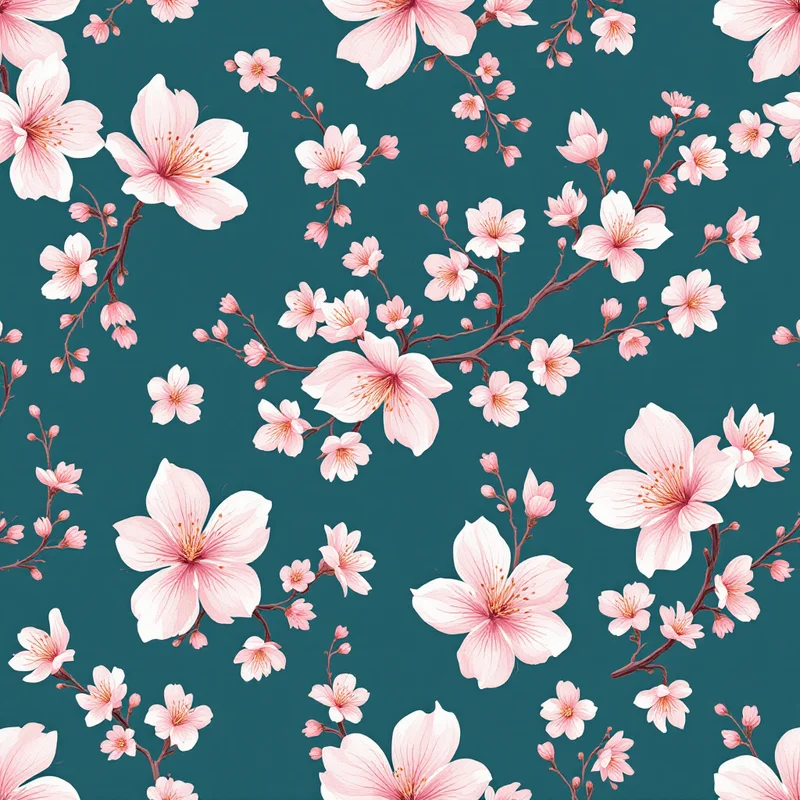
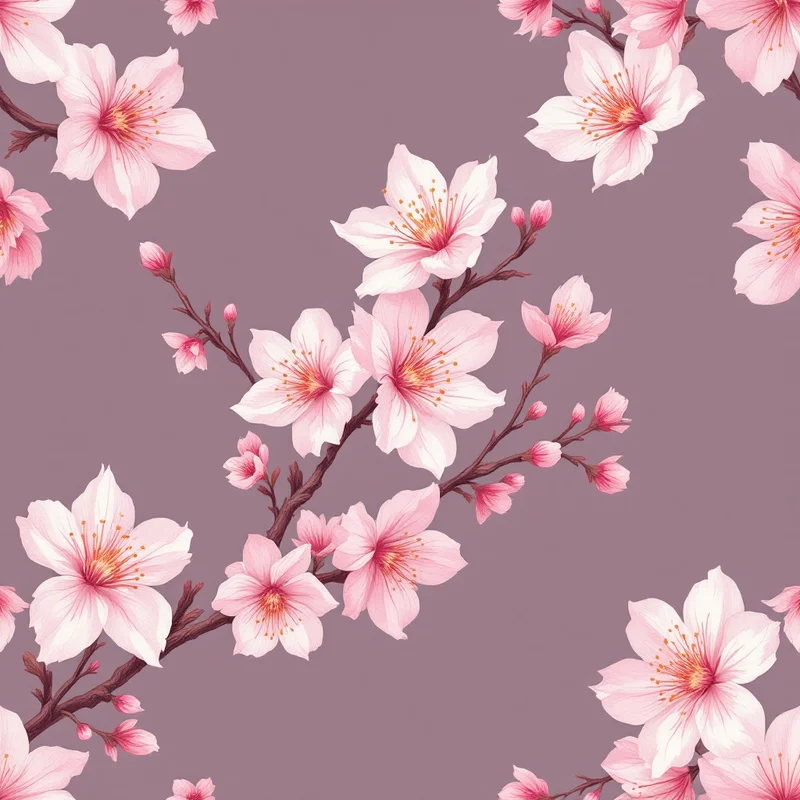
Cherry blossoms are a natural fit, their delicate clusters suggesting both fragility and renewal. Tulips bring a bolder silhouette while staying firmly within the spring palette. Daffodils — the quintessential Easter flower — add warmth with their golden trumpets against green stems. Pussy willows and catkins offer wonderful textural contrast when woven through floral compositions, their soft silver buds breaking up the sweetness of petals.
The most effective Easter botanicals tend toward watercolor rendering rather than hard-edged illustration. A soft wash of pigment, slightly bleeding at the edges, captures the feeling of spring far better than crisp vector lines. This watercolor quality also translates beautifully to printed products — it feels handmade and artisanal, which is exactly what customers are drawn to in seasonal goods.
For packaging and gift wrap, consider a loose allover floral on a cream or very pale pink ground. For textiles like tea towels or table runners, a more structured botanical repeat with clear negative space gives the design room to breathe at larger scales. Explore botanical patterns and the watercolor style to develop this direction.
Easter Egg and Bunny Motifs
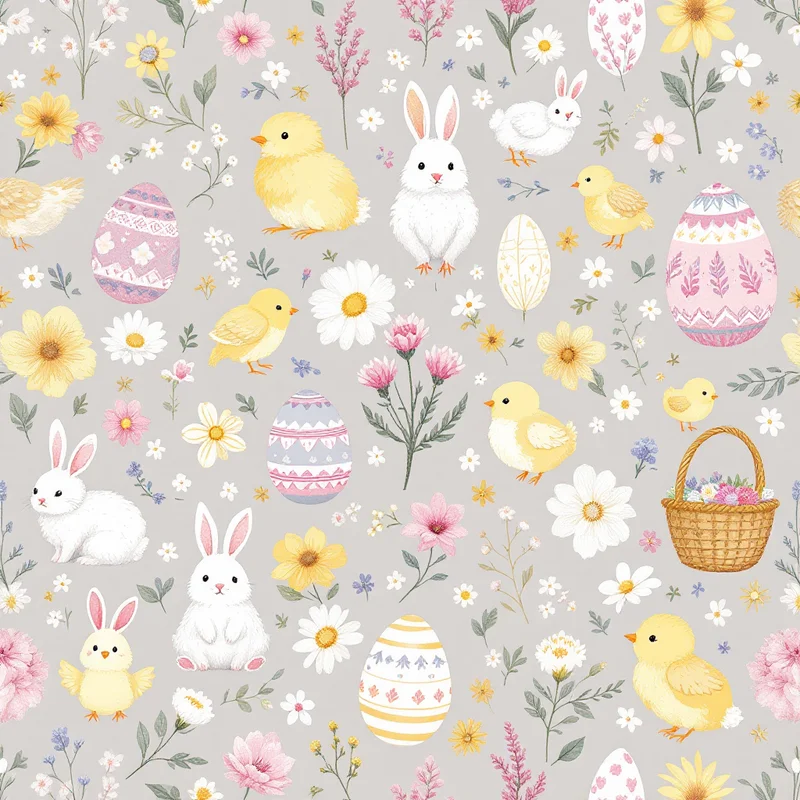
The classic Easter icons — decorated eggs, rabbits, fluffy chicks, woven baskets — remain perennial bestsellers for a reason. They are instantly recognizable, universally cheerful, and beloved by children and adults alike. The design challenge is rendering them in a way that feels current rather than dated.
The strongest approach is to treat these motifs as elements within a seamless repeat rather than as standalone illustrations. A scattered pattern of decorated eggs in varied sizes and patterns, interspersed with small sprigs of greenery and tiny flowers, creates visual richness that a single repeated egg cannot. Bunnies work beautifully in profile silhouettes — a clean, modern shape that reads well at small scales on wrapping paper and at larger scales on fabric.
For children's products specifically, the palette can push brighter — coral pinks, sunny yellows, Robin's egg blue — while maintaining the softness that distinguishes Easter from, say, a birthday party. Think joyful but not loud. Chicks and bunnies with simple, rounded forms and minimal detail tend to print cleanly and appeal across age groups.
Party supplies are a major market here. Paper plates, napkins, treat bags, and banner bunting all require seamless or semi-seamless patterns. These products are printed at relatively low cost, so patterns with fewer colors and clean separation between elements perform better in production. Explore festive patterns and kids patterns for this category.
Spring Garden Patterns
Beyond the traditional Easter iconography, there is a rich vein of spring garden imagery that captures the season without being holiday-specific. This is strategically valuable because garden patterns have a longer selling window — they work from early March through May, not just the two weeks before Easter.
Butterflies are the stars of this category. A mixed butterfly pattern in soft pastels, with species varied in size and wing pattern, creates movement and life across any surface. Add ladybugs for a touch of red warmth and visual punctuation. Bees bring a sense of industry and purpose, and they carry strong positive associations with nature and sustainability that resonate with environmentally conscious buyers.
Wildflower meadow patterns — loose, organic scatterings of daisies, clover, cornflowers, and buttercups — feel effortlessly beautiful. They work on everything from cotton tote bags to ceramic mugs to wrapping paper. The key is keeping the composition airy. Spring is about openness and light. Dense, heavily packed floral compositions feel more autumnal. Let the background breathe.
For home textiles, garden patterns translate exceptionally well to cushion covers, placemats, and kitchen textiles. A spring garden runner down the center of an Easter brunch table sets the entire mood without any additional decoration. See garden patterns and nature patterns for inspiration.
Gingham and Pastel Checks
Easter tablescapes love gingham. There is something about the simple checked pattern in soft spring colors that immediately evokes picnics, farmhouse kitchens, and outdoor gatherings — all central to the Easter aesthetic. Gingham is also one of the easiest patterns to produce and one of the most versatile to sell.
A classic two-color gingham in lavender and white, pink and white, or mint and white is an Easter staple. But consider pushing further: a multi-color pastel check that layers soft yellow, pink, and blue creates a more distinctive product. Windowpane checks — thinner lines on a solid ground — offer a more refined alternative that works for adult-oriented products like cloth napkins and table runners.
These geometric patterns pair beautifully with the florals and motifs described above. A gingham napkin beside a floral plate. A checked gift bag with a botanical tissue paper inside. Designing coordinating collections — a floral hero print with a complementary check — dramatically increases the value of each design because customers buy the set. Explore geometric patterns for checks, plaids, and grid-based designs.
Cross and Religious Motifs
For a significant portion of the market, Easter is primarily a religious observance, and there is strong demand for faith-based pattern designs. This is an underserved niche in the print-on-demand and stationery world, which means less competition and a dedicated customer base.
Easter lilies are the bridge between secular spring florals and religious symbolism — they are associated with purity and resurrection and work in both contexts. White lilies on a deep green or soft gold ground create elegant, reverent patterns suitable for church event programs, faith-based greeting cards, and devotional products.
Crosses rendered as repeated pattern elements can range from ornate and traditional to minimal and modern. A simple line-drawn cross repeated in a grid on a linen-textured background has a quiet dignity that appeals to a broad audience. Doves, palm fronds, and lamb motifs carry religious significance while remaining visually accessible. The palette for religious Easter patterns tends to be either white and gold — reflecting the liturgical colors of Easter — or soft pastels with a more contemplative, muted quality.
This category rewards restraint. The most effective religious patterns are those that convey reverence through simplicity rather than complexity. See cultural patterns for patterns that draw on symbolic and traditional visual language.
Where to Sell Easter Patterns
Timing is everything with seasonal products. Easter 2026 is April 5th. For your patterns to be available when customers start shopping, you need products listed by mid-March at the latest — and ideally earlier. Shoppers searching for Easter gift wrap, party supplies, and spring decor begin browsing three to four weeks before the holiday.
Etsy remains one of the strongest channels for seasonal pattern-based products. Digital downloads — seamless pattern files that buyers print themselves — have near-zero production cost and ship instantly. Physical products like wrapping paper rolls, fabric by the yard, and printed stationery require more lead time but command higher prices. Easter is a peak traffic period on Etsy, and listings with strong seasonal keywords see significant visibility bumps. See the Etsy sellers guide for more on optimizing pattern listings.
Spoonflower lets you sell fabric, wallpaper, and home decor products with your patterns. The production and fulfillment is handled for you. Spring is one of Spoonflower's strongest seasonal categories, and buyers there are specifically looking for unique, designer-quality patterns for sewing projects and home decorating.
Redbubble and similar print-on-demand platforms distribute your pattern across dozens of product types — phone cases, tote bags, stickers, wrapping paper, and more. The margin per sale is lower, but the volume potential is significant during seasonal peaks.
Beyond POD, consider approaching gift wrap manufacturers and packaging suppliers directly. Many small to mid-size companies license patterns seasonally and are actively looking for fresh Easter designs by late winter. A strong portfolio of coordinating Easter patterns — a floral, a check, and a motif design in a shared color palette — is exactly the kind of collection these buyers look for. See guides on packaging and print-on-demand for more on these channels.
Getting Started
The best seasonal patterns come from starting with a clear direction — a specific palette, a motif family, a target product — and building from there. Choose a style that resonates with your target market, set your spring colors, and generate. Iterate quickly, because seasonal windows close fast. A pattern designed today can be on a product listing by tomorrow and in a customer's cart by next week.
Open the studio to start generating Easter patterns now, or browse all styles to find the aesthetic direction that fits your spring collection.
Explore related pattern styles
Patterns for