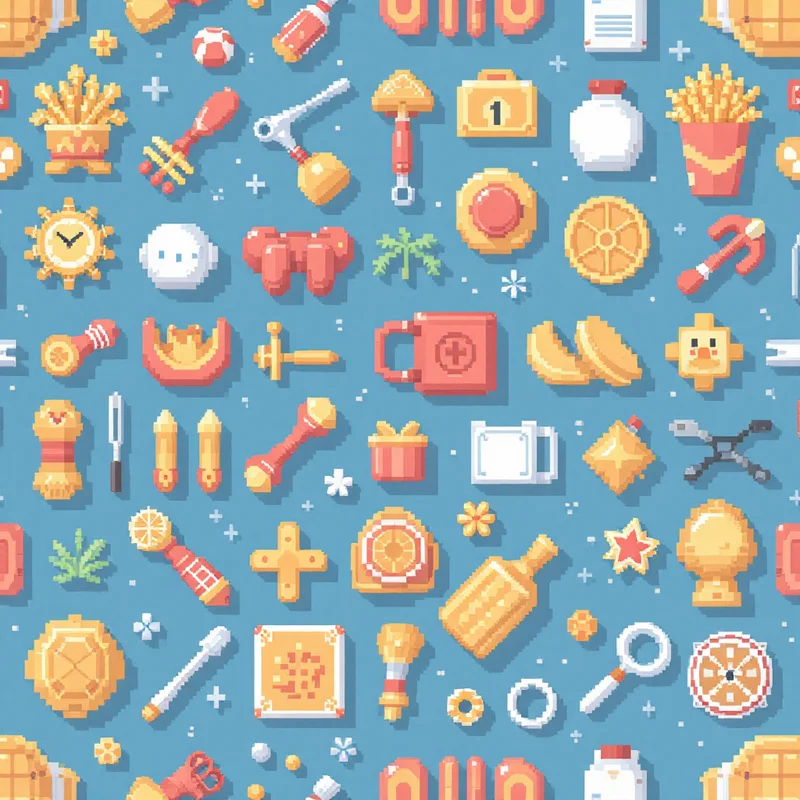
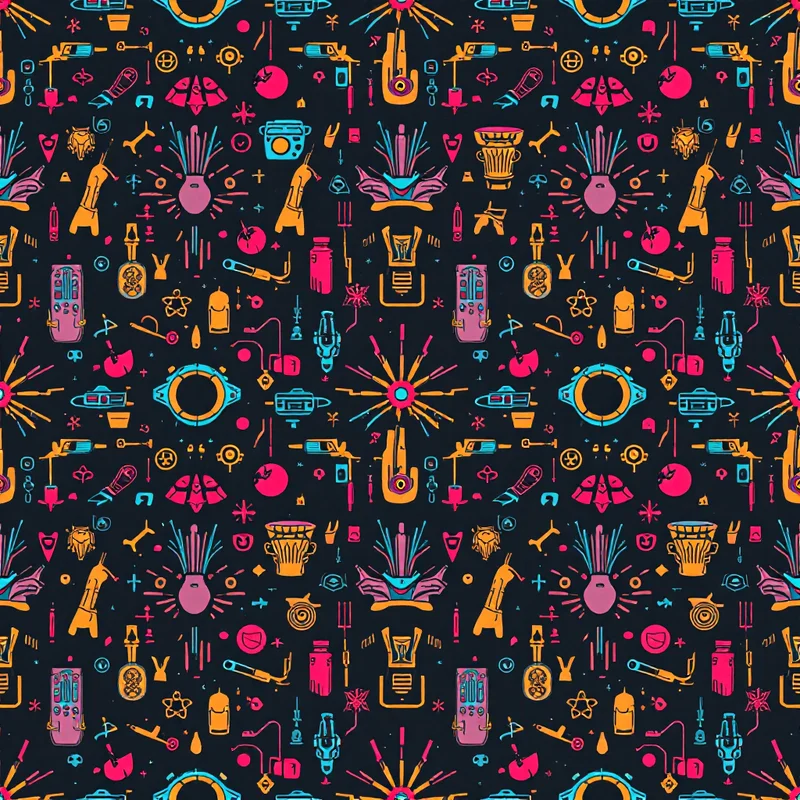
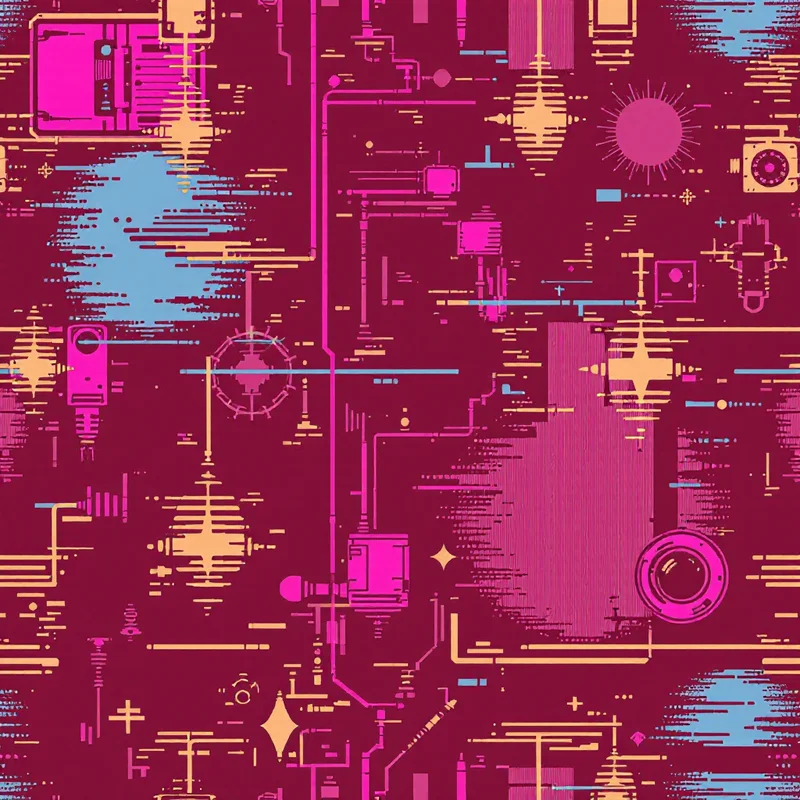
Pixel art as a pattern design direction has never been bigger. Gaming's mainstream cultural dominance, cozygame aesthetics (Stardew Valley, Animal Crossing), and retro-digital nostalgia have pushed pixel art from subculture into primary aesthetic territory. For pattern designers, pixel art opens distinct markets in gaming merchandise, cozygame products, phone wallpapers, and nostalgic apparel.
Key takeaway: Pixel art rewards aesthetic discipline. The visible-pixel structure only reads as intentional design when you commit fully to the medium — limited palettes, proper scale, and authentic pixel-level construction.
Pixel Art Principles
Visible pixel structure. The entire aesthetic depends on pixels being large enough to see individually. Smooth edges or anti-aliasing breaks the look.
Limited color palettes. Classic pixel art uses 4-16 colors total. Even contemporary pixel art rarely exceeds 32 colors. Palette restriction is a feature, not a limitation.
Grid-based construction. Every element sits on a pixel grid. Curves are approximated through carefully placed pixels rather than true curves.
Scale-dependent detail. Small motifs (16x16 pixels) rely on iconic silhouettes with minimal interior detail. Larger motifs (64x64+) support more detail and shading.
Pixel Art Aesthetic Directions
8-bit classic. The most recognizable pixel style. Blocky 8x8 or 16x16 pixel motifs in very limited palettes (typically 4-8 colors). References early video games (NES, Game Boy original).
16-bit evolution. More colors (16-32), more detail, shading gradients. References SNES, Sega Genesis, Game Boy Advance era.
Cozygame aesthetic. Modern pixel art influenced by Stardew Valley, Animal Crossing, and Harvest Moon. Softer palettes, rural/pastoral motifs, warm lighting.
Isometric pixel art. 3D-perspective pixel art creating dimensional scenes. Popular for gaming merchandise and infographic design.
High-res modern pixel art. Contemporary pixel art using 32-64 colors and complex shading while maintaining visible pixel structure.
Motif Categories That Work
Food motifs. Pixelated food (apples, cakes, donuts, sandwiches) is a massive pixel art subgenre. Cute, graphic, universally appealing.
Nature motifs. Pixel trees, flowers, clouds, and landscapes. Cozygame aesthetic leans heavily into pixel nature.
Animal motifs. Pixel cats, dogs, dinosaurs, and fantasy creatures. Strong with gaming-adjacent audiences.
Gaming iconography. Controller silhouettes, power-ups, classic game references (bricks, coins, 1-up mushrooms). Legal caution required when referencing specific IP.
Cosmic and tech motifs. Pixel stars, rockets, UFOs, planets. Bridges pixel art with sci-fi aesthetics.
Abstract pixel art. Pure geometric compositions using pixel structure. Works well for phone wallpapers and backgrounds.
See retro patterns and tech patterns for related categories.
Palette Considerations
Classic pixel art palettes include:
Game Boy green: 4 shades of green, nothing else. Extremely limited but immediately recognizable.
NES palette: 54 colors available, typically 4-8 used per sprite. Saturated primary colors with distinctive mustard yellows and teals.
SNES palette: 32k colors available, typically 16-32 used. More subtle gradients and earth tones possible.
Cozygame palette: warm cream, sage green, dusty rose, soft terracotta, pale blue. Pastoral rather than saturated.
Dark pixel aesthetic: deep navy, purple, black, magenta. Cyberpunk/retrowave influence.
Product Categories
Phone wallpapers. Pixel art phone wallpaper packs sell strongly, especially among gaming-adjacent audiences. See the phone wallpaper pattern design guide.
Apparel. Pixel-art t-shirts, hoodies, and accessories for gaming audiences.
Stickers and decals. Small-scale pixel art translates beautifully to sticker format.
Gaming merchandise. Official and fan-made merchandise for video games. Legal considerations apply for specific IP references.
Enamel pins. Pixel art silhouettes work exceptionally well as enamel pin designs.
Home decor with nostalgic appeal. Pixel-pattern throw pillows, wall art, and blankets for adult gamers.
Rendering in Pattern Weaver
Use the pixel-art render style paired with appropriate motif categories. Key settings:
- Keep palette under 16 colors for authentic feel
- Use lower density to allow individual pixels to read clearly
- Motif scale should be large enough that pixel structure is visible
- Consider combining with retro patterns or tech patterns
Building a Pixel Art Collection
A coordinated pixel art mini-collection:
- A hero food motif scatter (pixel fruits or sweets)
- A pixel animal pattern
- A pixel nature pattern (trees or flowers)
- A simple geometric pixel blender (stripes or dots in pixel style)
- A solid-color pixel-textured ground
Open the pattern studio to begin.
Explore related pattern styles
Patterns for