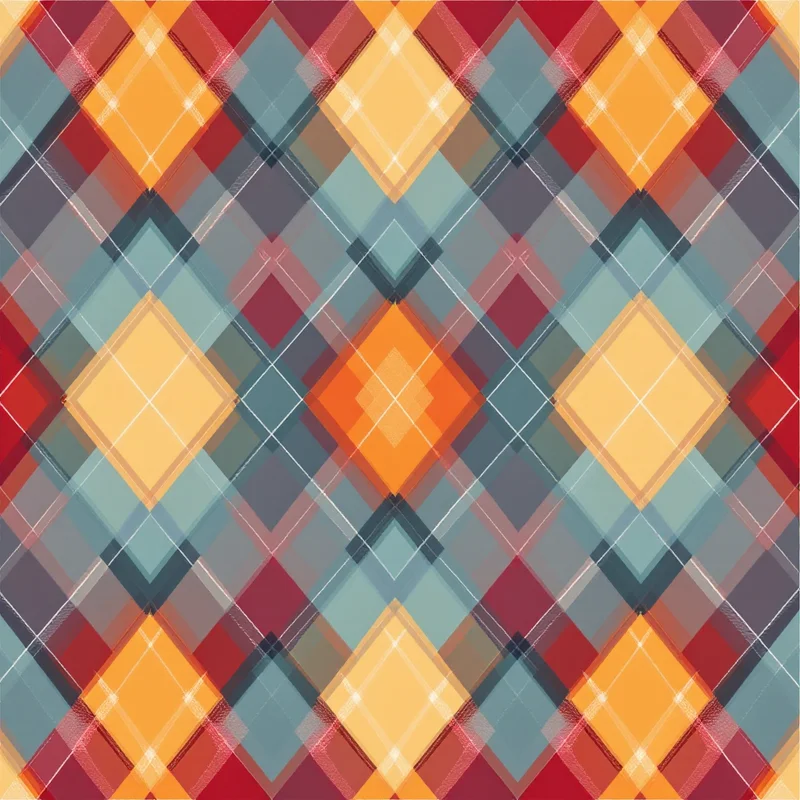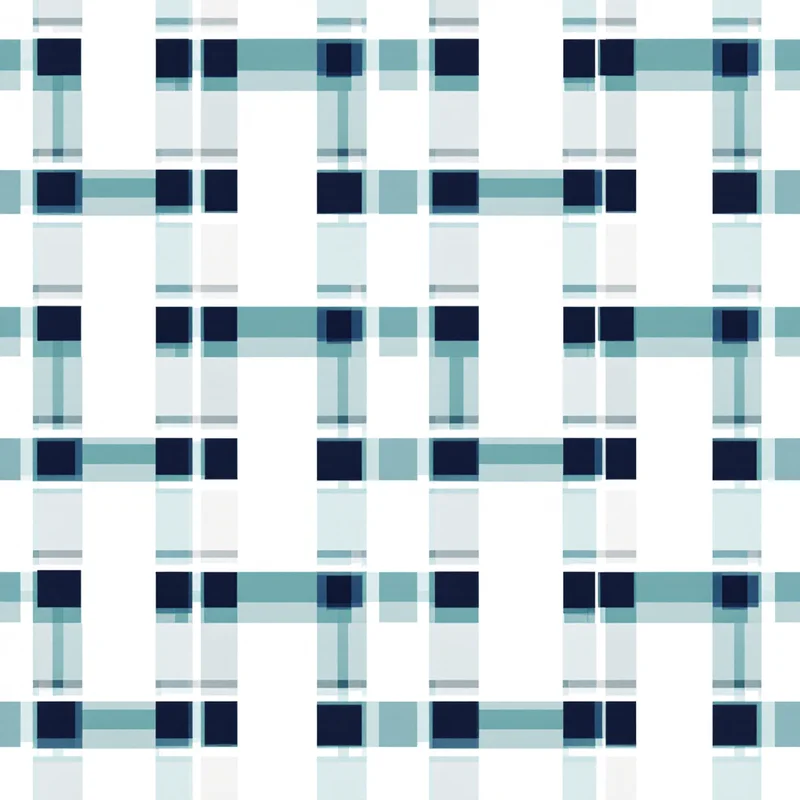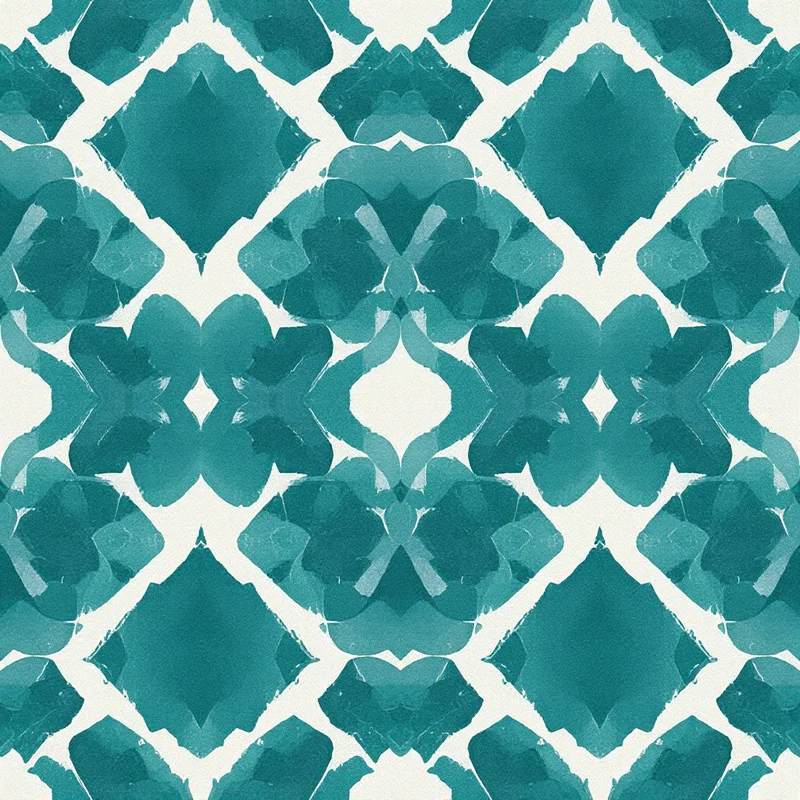
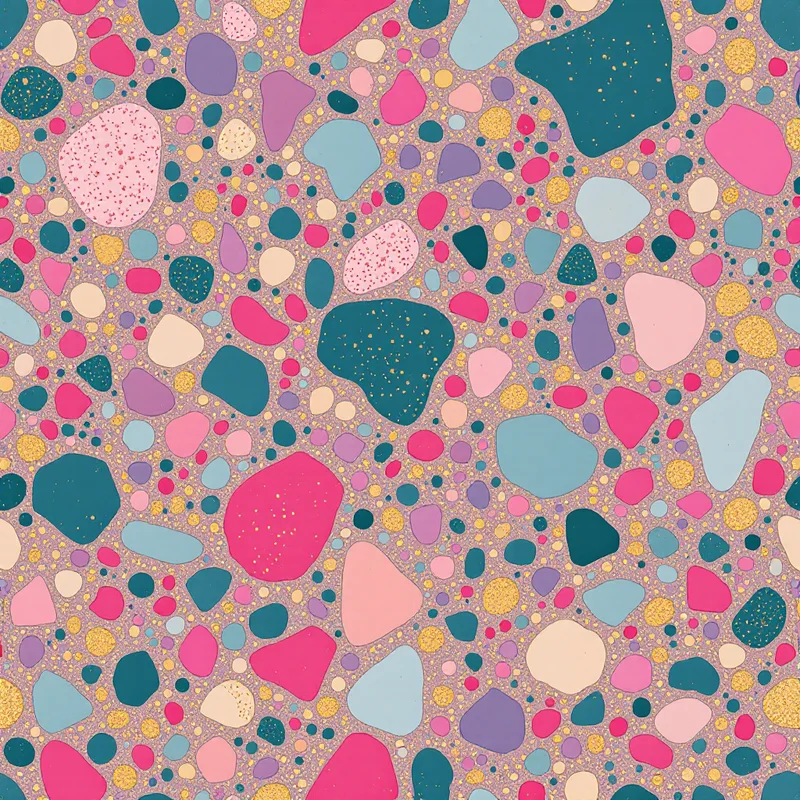

Choosing a pattern for an interior is a fundamentally different process from choosing a pattern for fashion, packaging, or stationery. In interiors, the pattern lives on a permanent surface at architectural scale, viewed from varying distances, under changing light conditions, for years. A pattern that looks stunning as a 6-inch swatch can be overwhelming across a 12-foot wall, or it can disappear entirely into visual noise. Interior designers who work confidently with pattern understand that the selection process is as much about spatial relationships, light behavior, and production specifications as it is about aesthetics.
Scale and Room Size
The relationship between pattern scale and room dimensions is the first consideration, and it is more nuanced than the common rule that small patterns suit small rooms.
Large-scale patterns in small rooms can actually work well — counterintuitively, a bold, large-repeat pattern on a single accent wall can make a small powder room feel more intentional and curated than a timid small-scale print. The key is commitment. A large pattern on all four walls of a small room is claustrophobic. A large pattern on one wall, with the remaining surfaces in a coordinating solid, creates a focal point that draws the eye and makes the room feel designed rather than just decorated.
Small-scale patterns in large rooms risk reading as texture rather than pattern. From across a large living room, a delicate ditsy floral becomes a visual blur — the motifs lose their identity. If you want a small-scale pattern in a large space, it works best on surfaces viewed from close range: chair upholstery, decorative cushions, or a reading nook wallpaper.
Medium-scale patterns — motifs roughly 3 to 6 inches across — are the most versatile for interiors. They maintain legibility from typical room viewing distances (6 to 12 feet) while not overwhelming the space. This is the safe middle ground for most residential applications.
Repeat Types and Viewing Distance
The type of repeat affects how a pattern reads on a wall or across a piece of furniture, and different repeat structures suit different applications.
Straight repeats (also called block repeats) align motifs in a grid. They are the easiest to install and the most forgiving of slight misalignment during wallpaper hanging. However, the grid structure can become visually obvious on large surfaces — the eye picks up the repeating rows and columns, which can make the pattern feel mechanical. Straight repeats work best for geometric patterns where the grid structure is part of the design intent.
Half-drop repeats offset every other column by half the repeat height, creating a diagonal flow that disguises the repeat unit. This is the most common repeat type for wallpaper and upholstery because it feels more natural and organic. Most floral and botanical patterns use half-drop repeats. The trade-off is more waste during installation — the offset means more cutting and matching at seams.
Brick repeats offset every other row horizontally, like brickwork. They suit patterns with strong horizontal elements and are common in tile-inspired designs.
The repeat length — how many inches before the pattern cycles — directly affects both cost and visual impact. Short repeats (under 12 inches) are economical to print and easy to match during installation but can feel repetitive on large surfaces. Long repeats (24 inches or more) create more visual variety and feel less obviously repeating, but they generate more waste during cutting and matching.
Pattern Selection by Room
Different rooms impose different constraints on pattern selection. These constraints are practical, not just stylistic.
Living Room
The living room typically has the longest viewing distances and the most varied use of surfaces (walls, seating, curtains, cushions). Pattern choices here need to work from across the room and up close. A layered approach works best: one statement pattern at medium to large scale for the dominant surface (feature wall or sofa), one supporting pattern at smaller scale for secondary surfaces (accent chairs, cushions), and one textural pattern for backgrounds (curtain sheers, rug).
Durability is a consideration for upholstery patterns. Living room seating sees daily use, so the fabric must be rated for high rub count (minimum 15,000 double rubs for residential, 30,000+ for commercial). The pattern itself should avoid large areas of light color on high-contact surfaces — arms and seat cushions — where soiling will be most visible.
Bedroom
Bedrooms favor softer, lower-contrast patterns. The bed is the dominant surface, and the pattern on bedding sets the room's visual tone. Wallpaper in bedrooms typically appears on a single accent wall (usually behind the headboard) rather than all four walls, allowing a bolder pattern choice without overwhelming a space intended for rest.
Light behavior is critical in bedrooms. A pattern chosen under showroom lighting may read completely differently under the warm, dim light typical of bedside lamps. Always evaluate bedroom patterns under warm light (2700K to 3000K) rather than cool daylight.
Bathroom
Bathrooms introduce moisture and humidity, which limits material choices. Wallpaper in bathrooms must be vinyl-coated or solid vinyl to withstand humidity without peeling. Tile-inspired patterns — Moroccan, encaustic, or geometric tile designs — feel natural in bathrooms and reference the tile surfaces already present.
Scale in bathrooms depends on the room's size and the amount of pattern-free surface (countertops, mirrors, fixtures compete for visual attention). In powder rooms, where the space is small and the visit is brief, bold patterns work because they create a moment of visual impact. In primary bathrooms, restraint usually serves better.
Kitchen
Kitchens are utilitarian spaces where pattern competes with an enormous amount of visual information — cabinetry, appliances, countertops, backsplash, open shelving. Pattern in kitchens works best in a single, defined location: a backsplash, a window treatment, or a single wallpapered wall in an eat-in area. Trying to introduce pattern across multiple kitchen surfaces creates visual chaos.
For kitchen backsplashes, patterns must be rendered on materials that withstand grease, moisture, and cleaning — ceramic tile, glass, or vinyl. The pattern scale should be modest, as backsplash viewing distance is typically arm's length.
Wallpaper vs Upholstery vs Curtain Requirements
The same pattern does not behave the same way across different interior surfaces. Each application has specific requirements.
Wallpaper
Wallpaper patterns are viewed on a flat, backlit-free surface. Colors appear exactly as printed (assuming correct lighting). The pattern needs to tile seamlessly across multiple strips, so the horizontal match at seams is critical. Most wallpaper patterns use straight or half-drop matches to make installation manageable.
Weight and texture of the wallpaper stock affect how the pattern reads. A matte paper absorbs light and mutes colors. A metallic or pearlescent stock adds shimmer and can make the same design feel significantly more formal. Textured stocks (grasscloth, linen-embossed) add physical depth but can obscure fine pattern details.
Upholstery
Upholstery patterns must account for the three-dimensional form of the furniture. A pattern that tiles beautifully flat can break down visually when stretched around curved arms, gathered into pleats, or interrupted by piping and tufting. Directional patterns (with a clear up/down orientation) require careful cutting and placement, adding to upholstery costs.
The pattern's scale must relate to the furniture piece. A large-scale floral on a dining chair reads very differently than the same pattern on a sectional sofa. On small pieces, only a fragment of the repeat is visible, so the pattern must work as a partial view. On large pieces, multiple repeats are visible, so the tiling quality becomes apparent.
Curtains and Drapery
Curtain fabric hangs in folds, which changes how patterns are perceived. Vertical stripes and patterns with strong vertical elements get compressed and fragmented in the folds, sometimes unrecognizably. Allover patterns and small-scale designs survive the folding better because no single motif needs to be seen in its entirety. Sheer curtain fabrics with subtle tone-on-tone patterns work well because the translucency adds a layered, atmospheric quality.
Curtain patterns must also account for backlighting. Curtains hung against windows will be viewed both in reflected light (from inside the room) and in transmitted light (silhouetted against daylight). The pattern's visual weight changes dramatically between these two conditions.
Working with Printers and Manufacturers
Specifying patterns for interior production requires attention to technical details that surface designers sometimes overlook.
Color matching between different surfaces is one of the most common pain points. A wallpaper printed via digital inkjet, an upholstery fabric printed via rotary screen, and a curtain fabric printed via sublimation will not automatically match even when using the same digital file. Each production method has its own color gamut and substrate interaction. Always request strike-offs (test prints on the actual production substrate) and evaluate them together in the room's actual lighting.
Repeat tolerance varies by production method. Digital printing can accommodate any repeat length. Rotary screen printing is limited by the screen circumference (typically 25 or 36 inches). If your pattern repeat does not match the available screen sizes, it will need to be rescaled, which can shift the visual balance.
Minimum order quantities are a reality of custom pattern production. Digital fabric printing has made short runs more accessible, but custom wallpaper still often requires minimum orders of 50 to 100 rolls. For smaller projects, stock patterns or digitally printed custom wallpaper from on-demand services are more practical.
Understanding these constraints before committing to a pattern saves significant time and budget. A pattern designed with production requirements in mind — correct repeat lengths, achievable color counts, appropriate scale for the surface — moves from concept to installed interior far more smoothly than one that needs to be reworked after the fact.
Pattern in interior design is not decoration applied after the architecture is complete. At its best, it is integral to the spatial experience — shaping how a room feels, how the eye moves, and how the occupant relates to the space. That integration demands that pattern selection be treated as a technical discipline, not just an aesthetic preference.
Explore related pattern styles
Patterns for