Patina Blue emerged in 2025 on Etsy's color trend forecasts and has solidified into one of the most commercially relevant blue tones for 2026. Unlike the saturated teals and crisp navy blues that dominated a generation of interiors, Patina Blue is muted, sophisticated, and evocative of oxidized copper and aged metal. Hex approximately #7AA8B8, it sits at the intersection of cool blue and gray-green, as if a copper roof has been exposed to decades of salt air and mineral-rich moisture.
The color's appeal is not nostalgic — it is architectural. Patina Blue references the patina that forms on authentic aged metals, suggesting time, quality, and natural weathering. In surface design, this translates to patterns that feel both contemporary and grounded in material authenticity. Designers working across home interiors, ceramics, tile, wallpaper, and branding have seized on this color because it delivers the sophistication of a cool palette without the clinical coldness of true cool tones.
What distinguishes successful Patina Blue seamless patterns from ones that simply use the color is understanding the aesthetic DNA behind it: patina is not a pure color, it is a narrative about materials aging. The most commercially successful Patina Blue patterns lean into this narrative through motif choices, surface textures, and supporting color palettes that evoke mineral forms, oxidation marks, and the kind of beauty that emerges from time and exposure.
Understanding Patina Blue's Character and Mood
Patina Blue's power lies in its complex undertones. At first glance, it reads as a muted blue-green. Looked at longer, it reveals cooler (blue) and warmer (green) oscillations. Place it next to a true cool blue and it will appear slightly warm. Place it next to a true teal and it will appear more blue.
This chromatic complexity is precisely what makes Patina Blue so commercially versatile. It does not demand companion colors to feel complete — it has internal visual interest through its own undertone shifts.
The color's saturation is deliberately restrained. It is not a vivid mineral blue (which would reference lapis or turquoise) but rather a grayed-down version, as if the blue has been dulled by time and exposure to air. This desaturation is what makes it feel aged, authentic, and sophisticated rather than saturated and decorative.
Psychologically, Patina Blue carries associations with both natural and industrial materials. Consumers see oxidized copper gutters, verdigris patina on bronze sculptures, the exterior of aging swimming pools, mineral deposits on cave formations, and the weathered finish of aged metal hardware. All of these associations cluster around concepts of time, authenticity, quality, and permanence. In a marketplace saturated with cheap, trendy colors, Patina Blue signals that a product is made to last.
The color pairs beautifully with bone white and cream, which provide light and air. It coordinates with aged brass and antiqued gold — materials that have undergone their own oxidation journey. Deep sea green, forest green, and olive green complement it when designers want to build a richer, nature-inspired palette. Terracotta, burnt orange, and dusty rust create surprising warmth-cool tension that reads as intentional rather than accidental.
Motifs That Work With Patina Blue
The motifs that succeed in Patina Blue patterns are those that reinforce either the oxidation narrative (mineral, geological, weathering) or the architectural narrative (geometric, structural, material-focused).
Mineral and Geological Forms
Abstract patterns that suggest mineral crystallization, rock formations, or geological cross-sections work exceptionally well in Patina Blue. These might be literal (recognizable crystal clusters, striated stone formations) or abstract (organic angular shapes that evoke geology without representing a specific mineral). The key is capturing the sense of natural formations shaped by time and pressure. In seamless patterns, these motifs create visual movement and interest without the busyness of finer-detail botanicals.
Oxidation and Weathering Marks
Patterns that suggest verdigris, rust streaks, oxidation spotting, or the random marks of weathered metal resonate strongly with Patina Blue's cultural positioning. These might be abstract marks scattered across a field, or they might be structured strokes that suggest intentional aging techniques like patina-building. The effect is a pattern that looks both designed and naturally aged simultaneously.
Grid and Architectural Geometry
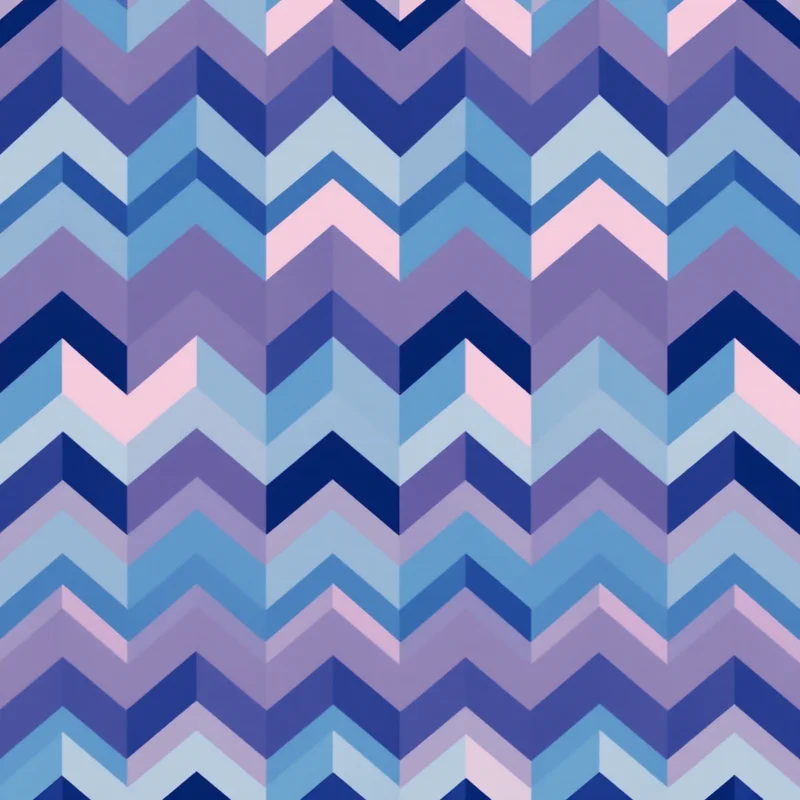
Unlike romantic curved botanicals, Patina Blue pairs powerfully with clean grids, architectural frames, and minimal geometry. A simple grid in Patina Blue on bone white creates a contemporary, sophisticated pattern suitable for wallpaper, tile, and commercial interiors. The pattern reads as designed, not decorative. Stepped forms, linear arrangements, and radial grids all complement the color's material, structural quality.
Abstract Organic with Mineral Quality
Organic shapes that have angular, faceted, or mineral-like edges (not soft curves) work well in Patina Blue. Think of abstract forms that suggest broken stone, fragmented metal, or ice shards rather than flowing water or organic growth. These patterns feel contemporary and sculptural rather than nature-inspired in a traditional botanical sense.
Stippling, Textural Marks, and Micro-Patterns
Patina Blue works beautifully as a textural base with small-scale repeated marks — stippling, fine lines, micro-dots, or textured brushstrokes. A Patina Blue background with subtle white or cream texture reads as a sophisticated surface finish rather than a bold color choice. This application is particularly effective for fashion, home goods, and any application where color impact should be understated.
Constructing Palettes Around Patina Blue
Patina Blue's sophistication is enhanced or diminished entirely by its companion colors. The color does not demand a complex palette, but it does demand intentionality.
The Minimalist Palette: Patina Blue + Bone White (#FFFAF0). This two-color arrangement is deceptively powerful. The Patina Blue provides color and mood, the bone white provides air and luminosity. Many of the most commercially successful applications use exactly this palette. Think of it as the baseline against which more complex palettes are built.
The Mineral Expansion: Patina Blue + Bone White + Deep Sea Green (#2E5F6F) + Off-White (#F9F9F7). This palette builds on the minimalist base by adding a darker, richer green that deepens the mineral narrative. The off-white prevents the overall palette from reading as cold or clinical.
The Oxidized Metal Palette: Patina Blue + Bone White + Aged Brass (#D4A373) + Dusty Black (#4A4A4A). This four-color arrangement explicitly invokes the patina-and-metal narrative. The aged brass echoes the oxidation story, while the dusty black provides structure and contrast without harshness.
The Contemporary Warm Counterbalance: Patina Blue + Bone White + Terracotta (#C87533) + Soft Gold (#D4B896). When designers want to introduce warmth without abandoning Patina Blue's sophisticated coolness, this palette creates visual tension and interest. The terracotta's earth-warmth contrasts with Patina Blue's cool, but the desaturated tones keep everything cohesive.
The consistent rule across Patina Blue palettes: include bone white or cream as at least 40-50% of the pattern's composition. The color can carry a design, but it requires light and breathing room to avoid appearing heavy or dated.
Where Patina Blue Converts Commercially
Understanding the specific use cases where Patina Blue commands premium positioning and strong conversion is critical for designers building patterns intended for sale or licensing.
Residential Wallpaper and Architectural Interiors
Patina Blue wallpaper is experiencing significant uptake in residential design, particularly in spaces intended to feel sophisticated and mature rather than trendy or youthful. Powder rooms, bedrooms, feature walls in living spaces — these are where Patina Blue patterns are specified. The color works because it feels timeless (unlike saturated teals that read as era-specific) while still delivering visual impact. Subtle geometric patterns, mineral-inspired abstracts, and minimalist grid patterns all perform well in this category.
Tile and Ceramics
Patina Blue tile — especially when paired with patterns that evoke mineral or oxidized surfaces — has become a staple in contemporary interior design. Designers specify it for kitchen backsplashes, bathroom features, and accent wall applications. The color's sophistication elevates standard ceramic tile from utilitarian to design-forward.
Home Goods and Textiles
Bedding, upholstery, and decorative textiles in Patina Blue are popular in contemporary home goods collections. A Patina Blue throw pillow with a subtle mineral pattern, a Patina Blue duvet cover with a restrained grid motif, or a Patina Blue area rug with oxidation-inspired markings all read as considered design choices in residential spaces.
Commercial Interiors and Hospitality
Hotels, restaurants, and corporate offices seeking a sophisticated, contemporary aesthetic specify Patina Blue for wallpaper, upholstery, and accent wall applications. The color is masculine-leaning without being aggressively so, making it popular for executive spaces and business-casual hospitality environments.
Packaging and Branding
Beauty, wellness, and premium home care brands are adopting Patina Blue for packaging. The color signals sophistication, quality, and a connection to natural materials (the oxidation narrative reinforces authenticity). On packaging, Patina Blue patterns work as accent elements — borders, corners, or secondary surface designs that add visual interest without overwhelming the primary product information.
Generating Patina Blue Seamless Patterns
Creating Patina Blue patterns manually presents specific challenges. The color's complexity — its blue-green oscillation, its grayed-down saturation, its specific undertone — means that slight variations in how you mix or apply the color can shift the entire mood from "sophisticated and aged" to "dated and muddy."
AI pattern generation tools eliminate this risk through consistency. Pattern Weaver includes the "Patina Blue 2026" preset palette, which captures Patina Blue at the precise undertone, saturation, and luminosity that makes it commercial. Rather than spending hours attempting to match the color manually, you can specify the palette, select the motif direction (mineral, geometric, abstract, textural), adjust the pattern density and scale, and generate variations within minutes.
This approach is particularly effective for Patina Blue because the color's power comes not from novelty or boldness but from its precise, sophisticated tone. A generated pattern maintains this consistency across the entire seamless tile, ensuring that when the pattern repeats across a wallpapered wall or an upholstered surface, the color remains stable and reads as intentional rather than variable.
Practical Generation Tips for Patina Blue Patterns
- Use the preset palette. The Patina Blue 2026 preset is calibrated to ensure the color reads as sophisticated and aged rather than muddy or desaturated. Starting here eliminates color-matching guesswork.
- Keep bone white or cream as the dominant background. Aim for Patina Blue and supporting colors comprising no more than 30-40% of the pattern's area. The remaining space should be your lightest palette color.
- Lean into geometric or mineral motifs. Abstract organics with angular, faceted quality work well. Botanical curves tend to soften Patina Blue's architectural character.
- Generate variations in density. Test the pattern at "sparse," "medium," and "dense" settings to understand how the pattern reads at different scales. Patina Blue patterns often perform better at medium density where the color has room to breathe.
- Preview at intended application scale. A pattern that feels balanced at 6 inches per repeat might feel too busy at 12 inches. Generate proofs and preview them at actual size before finalizing.
Patina Blue's Long-Term Commercial Potential
Unlike colors that spike suddenly and then fade (hyper-saturated pinks, neon greens), Patina Blue has the structural characteristics of a long-term trend. Its cultural associations with authenticity, quality, and aged materials position it well for sustained demand through 2026 and beyond.
The color works across age groups, income levels, and design aesthetics. It is equally at home in a minimalist Scandinavian interior and a maximalist bohemian space. It appeals to designers seeking timelessness and to brands positioning themselves as premium and considered.
For surface designers, the window of opportunity — when Patina Blue has strong trend momentum, when commercial demand is rising, but before the market becomes saturated with Patina Blue patterns — is exactly now. Building a library of seamless patterns in this color, across diverse motif styles (mineral, geometric, abstract, textural), positions you to respond to client requests and commercial opportunities as the trend continues to develop.
Patina Blue is not a fad. It is a color that will age well — much like the patina that inspired its name.
Explore related pattern styles
Patterns for