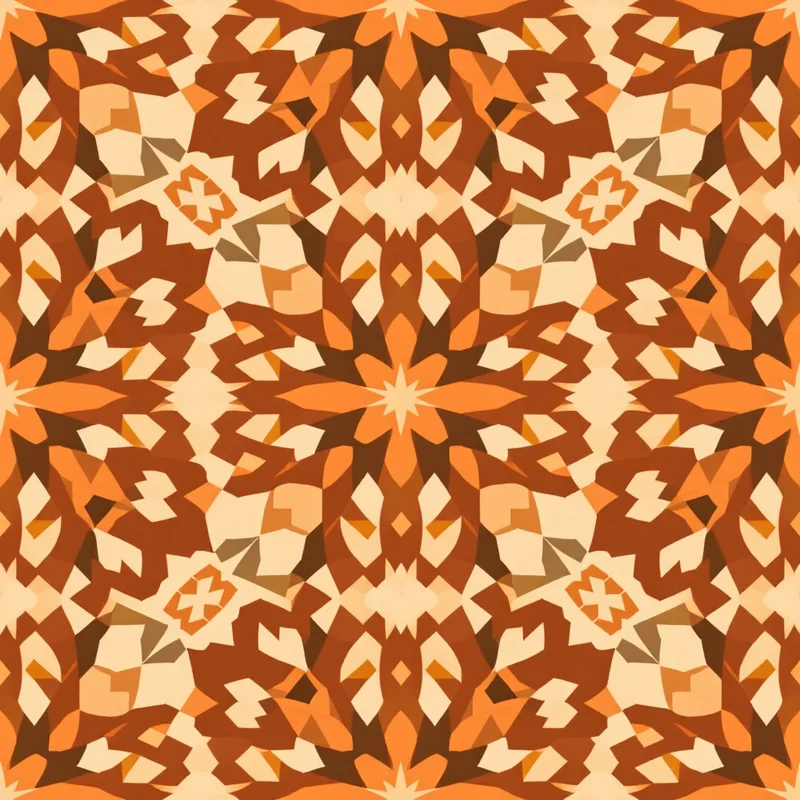
Pinterest named NeoDeco the #1 design trend for 2026, and for good reason. It represents something the design world has been waiting for: a version of art deco that speaks to contemporary sophistication rather than historical nostalgia.
Classic art deco—the 1920s-and-1930s movement of gold accents on black, sunburst radiants, and unabashed glamour—has become visual shorthand for "fancy but retro." NeoDeco strips that away. It takes the geometric precision and mathematical confidence of its predecessor but translates them into moodier color palettes, deeper jewel tones, and an architectural refinement that feels urgent and present rather than archived.
The difference matters for designers because it means you can use art deco's most powerful asset—its ability to communicate luxury and intentionality through pure geometry—without leaning into period aesthetics. NeoDeco works on a modern minimalist apartment wall. It works on a tech company's packaging. It works anywhere that wants confidence without nostalgia.
What is NeoDeco?
NeoDeco is the contemporary evolution of art deco pattern design. It preserves the core geometric vocabulary—fans, sunbursts, stepped forms, radiating lines, bilateral symmetry—but reimagines them through a 2026 lens: cleaner line weights, deeper color saturation, refined metallics (often matte or subdued rather than gleaming), and a preference for architectural precision over ornamental detail.
Where classic art deco says "Jazz Age glamour," NeoDeco says "contemporary luxury." The patterns are equally bold but less nostalgic. They feel designed for today's aesthetic, not inherited from yesterday's.
The key distinction is restraint within richness. NeoDeco uses the geometry of deco but the compositional discipline of minimalism. Motifs are more isolated, negative space is more deliberate, and color interplay is more sophisticated.
Why NeoDeco Emerged in 2026
Design movements rarely appear from nowhere. NeoDeco emerged from a convergence of three forces:
Trend exhaustion with millennial aesthetics. The boho, cottagecore, and maximalist cycles of the 2020s created a cultural appetite for something more structured. NeoDeco offers that structure without swinging all the way to cold minimalism.
Social media visibility of deco influences. Luxury brands (Hermès, Cartier, high-end hospitality) have quietly been layering geometric deco elements into contemporary collections for three years. When enough design-focused creators began noticing and recreating these patterns, Pinterest algorithms recognized the clustering trend.
AI pattern generation capabilities. The refinement of geometric AI generation made it possible to produce NeoDeco patterns that maintain mathematical precision at scale. This accessibility democratized a style that previously required skilled manual drafting, which accelerated its adoption across indie brands and small manufacturers.
Pinterest's naming and ranking of NeoDeco as their #1 2026 trend gave the emerging movement the cultural signal it needed to reach mainstream awareness. Etsy and design publication coverage followed.
Defining Visual Elements of NeoDeco
NeoDeco patterns use the same motif vocabulary as classic art deco but with different compositional weight and visual intensity.
Refined Fan and Petal Forms
The palmette fan appears, but with several modernizations. Lines are thinner and more precise. The internal radiations are often simplified to 5-7 lines rather than the dense 10-12 of 1930s deco. Spacing between fans is more generous. The effect is less "dense geometric tapestry" and more "carefully orchestrated geometry."
Petal and leaf forms derived from the fan often replace the pure scallop shape. These feel more organic than geometric, creating visual softness within a rigid overall structure.
Architectural Stepping and Columns
Unlike the ornamental stepped pyramids of classic deco, NeoDeco favors clean vertical and horizontal columns with sharp step intervals. Think of the lines as reducing complexity rather than building it up. A stepped frame in NeoDeco might have just 3-4 steps instead of 7-8, giving it a more brutalist clarity.
These architectural elements often serve as framing devices—borders, vertical dividers, or gridlines—rather than hero motifs.
Refined Sunburst and Ray Systems
Sunbursts appear less frequently than in classic deco, and when they do, they are typically simplified. A sunburst might feature 12-16 rays instead of 24-32. The rays are often of unequal length or thickness, creating visual interest through asymmetry rather than perfect radiance.
Half-sunbursts and quarter-sunbursts are common as corner motifs or as edge elements within a larger composition.
Geometric Linework and Striation
NeoDeco introduces fine parallel lines—striations—as a primary visual element. Thin, precisely spaced horizontal or diagonal lines create texture and movement without relying on recognizable motifs. This element bridges geometric precision with a modern minimalist sensibility.
Subtle Overlapping and Transparency
Where classic deco maintains sharp distinction between figure and ground, NeoDeco sometimes introduces subtle overlapping and layering. A fan shape might partially overlap a column, or a striped field might sit slightly transparent over a geometric background. The overall effect remains clean and organized—no chaos—but adds depth.
Color Palettes That Define NeoDeco
This is where NeoDeco most clearly diverges from its predecessor. While classic art deco relies on high-contrast, warm luxury (gold and black, emerald and cream), NeoDeco favors cool, moody, jewel-toned palettes.
Deep teal and matte bronze is an emerging NeoDeco standard. The teal carries sophistication and calm, while the muted bronze provides warmth without gloss. Together they read as contemporary luxury rather than historical period.
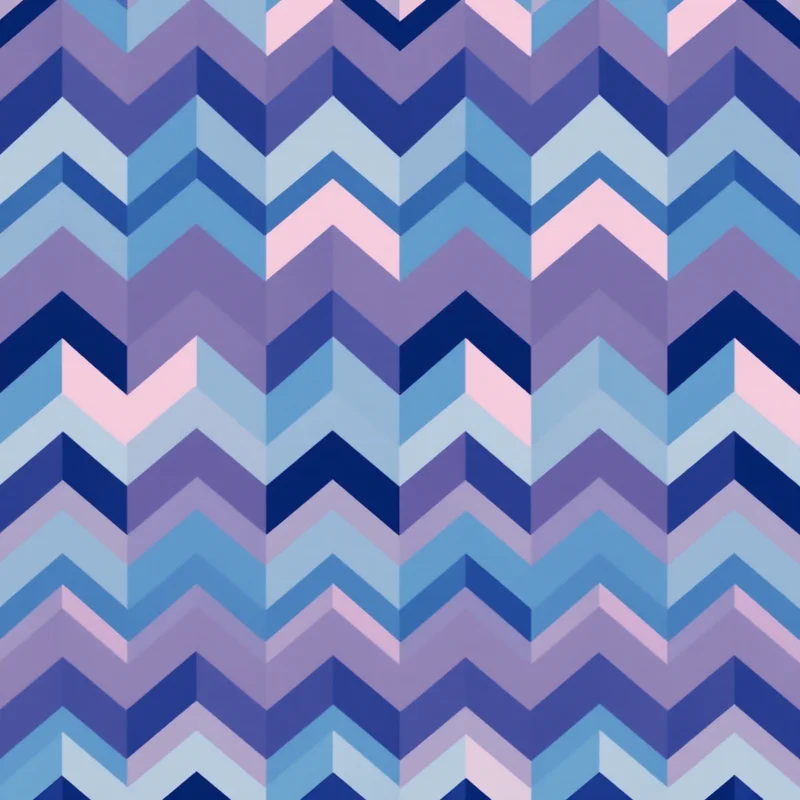
Navy blue and charcoal gray creates a minimalist take on NeoDeco. Pairs well with thin white or cream linework for architectural clarity. This palette works for corporate applications and refined residential interiors.
Deep emerald and taupe combines the jewel-tone richness NeoDeco favors with an earthy neutrality. The emerald is deeper and cooler than classic deco's emerald, and the taupe replaces cream for a more contemporary feel.
Slate and aged copper evokes materiality rather than pure luxury. Useful when NeoDeco is applied to surfaces intended to evoke natural materials—concrete, stone, weathered metal.
Black with deep jewel accents (sapphire, amethyst-tinted purple, or forested green) maintains the high-contrast clarity of classic deco while shifting the secondary color to something cooler and moodier.
A defining rule: NeoDeco avoids warm metallics (gold, bronze) in favor of cool metallics (silver, platinum, matte copper) or no metallics at all. When warm tones appear, they are muted and secondary to deeper jewel hues.
The overall palette psychology is "confident luxury without excess"—colors that read as expensive and intentional rather than flashy or nostalgic.
NeoDeco vs. Classic Art Deco: The Distinction Matters
Understanding how NeoDeco differs from its predecessor is crucial for designers deciding which direction to pursue.
Geometry. Classic deco embraces ornamental density—motifs stacked, layered, and interlocking to create visual richness. NeoDeco favors clarity and isolation. Each motif is distinct. Negative space is intentional. The pattern reads as designed rather than accumulated.
Metallics. Classic deco glows with gold and warm luminosity. NeoDeco uses silver, matte finishes, or eschews metallics entirely in favor of jewel-tone depth. When metallic effects appear in NeoDeco, they are subtle and refined rather than eye-catching.
Color temperature. Classic deco is warm (golds, warm blacks, creamy neutrals). NeoDeco is cool to neutral (teals, slates, cool grays, deep purples).
Density and scale. Classic deco patterns often feature medium-to-fine visual density—motifs repeat closely to create a rich fabric. NeoDeco patterns often feature larger individual motifs with more breathing room between repetitions. A fan in classic deco might be 0.5 inches across; in NeoDeco, 1.5 inches.
Nostalgia. The most important difference: classic deco is intentionally period. NeoDeco is deliberately contemporary. It borrows the geometric vocabulary but discards the historical aesthetic.
A pattern that works equally well as both NeoDeco and classic deco probably isn't successfully executing either direction. NeoDeco should read as "designed in 2026," not "designed in 1926."
Commercial Applications for NeoDeco
NeoDeco's contemporary positioning makes it useful across a broader range of applications than classic deco.
Luxury Tech and Consumer Electronics
High-end tech companies—headphone brands, smartwatch makers, premium software tools—have begun layering NeoDeco patterns into packaging and interface elements. The geometric precision reads as technical sophistication, and the moody colors align with dark-mode interface design.
Contemporary Hospitality and Residential Interior Design
Boutique hotels, modern residential interiors, and high-end rental apartments use NeoDeco wallpaper and textile patterns. Unlike classic deco's associations with 1920s grandeur, NeoDeco fits seamlessly into contemporary minimalist and "modern luxury" interior aesthetics. A single NeoDeco accent wall anchors a room.
Premium Packaging and Branding
Spirits, perfume, skincare, and specialty food brands use NeoDeco patterns for packaging and branding collateral. The geometric structure works with foil stamping and embossing. The moody color palettes align with contemporary luxury positioning—think of the visual language of brands like Aesop or Byredo.
Fashion and Accessories
NeoDeco appears in contemporary fashion at scale through printed fabrics, scarves, ties, and structured garments. The geometric precision makes it particularly suited to tailored pieces and accessories where pattern placement guides the eye. Evening wear, structured dresses, and luxury activewear all incorporate NeoDeco geometry.
Stationery, Branding, and Marketing Collateral
Corporate identity systems increasingly layer NeoDeco elements into secondary patterns, border treatments, and accent backgrounds. It signals sophistication without historical baggage. NeoDeco works on business cards, envelopes, presentation decks, and brand guidelines.
How to Create NeoDeco Patterns
Creating successful NeoDeco patterns requires balancing geometric precision with contemporary restraint.
Design Approach
Start with a single clear motif. Choose one geometric form—a simplified fan, a stepped column, a refined sunburst—and perfect it. NeoDeco's power comes from that single repeated element treated with perfect geometric consistency.
Compose with negative space. Plan your pattern layout before populating it. Where will white space appear? How will the motif repeat—edge-to-edge, with spacing, in offset rows, in a grid? NeoDeco patterns are often less densely packed than classic deco.
Color with intention. Select a primary jewel tone and a muted secondary (taupe, warm gray, or matte metallic). Limit to two colors plus background unless you have a specific reason for a third. Restraint reads as luxury in NeoDeco.
Refine line weights. Test your pattern at multiple scales. Line weights should remain consistent and fine—not heavy or hand-drawn. NeoDeco values precision over expressiveness.
Using Pattern Weaver for NeoDeco
Pattern Weaver now includes NeoDeco as a dedicated substyle within the Geometric and Era categories. Select "NeoDeco" from the substyle menu, and the compiler automatically weights the prompt toward architectural geometry, cool color palettes, and contemporary minimalism. You can then adjust density and scale through the sliders.
The advantage of using a pattern generator for NeoDeco is consistency. The geometry remains mathematically true across the entire tile, and the metallic and color treatments align with contemporary NeoDeco standards. Manual approaches risk uneven line weights or compositional imbalance.
Pattern Finalization
- Test at multiple scales. NeoDeco on a phone screen looks different than NeoDeco on a wallpaper panel. Ensure the motif reads clearly at both.
- Verify seamless tiling. The pattern should repeat without obvious seams or discontinuities. Geometric patterns reveal flaws immediately.
- Consider application. If the pattern will be foil-stamped or embossed, design with clear separation between elements. If it will be printed digitally, you have more flexibility with subtle gradients and overlaps.
NeoDeco Adoption and What's Next
NeoDeco is still in its emergence phase. Awareness peaked in early 2026, but usage remains concentrated among design-forward brands and creators. That concentration is the SEO and first-mover advantage: if you are creating NeoDeco patterns now, you are establishing positioning in a growing category before it becomes mainstream.
Expect NeoDeco presence to expand across 2026 into retail product design, hospitality brand launches, and interior design publications. By 2027, it will have moved from "emerging trend" to "established contemporary style"—which is precisely when having published authority on the subject becomes most valuable.
The broader design implication is clear: geometric precision, moody color palettes, and refined minimalism are converging as the defining aesthetic of contemporary luxury. NeoDeco is the pattern expression of that convergence.
Whether you are a designer exploring new pattern vocabularies or a brand aiming to position itself as contemporary and sophisticated, NeoDeco offers the geometric credibility of classic deco without any historical weight. It is deco for 2026—forward-facing, restrained, and unmistakably intentional.
Explore related pattern styles
Patterns for