
Indian block print represents one of the oldest and most commercially resilient textile traditions in the world. Dating back centuries in regions like Rajasthan, Gujarat, and Madhya Pradesh, block printing remains a living craft, not merely a historical artifact. Contemporary appreciation for slow fashion, sustainable production, and artisanal practices has elevated block print textiles from niche heritage goods to mainstream fashion and interior design staples.
Understanding block print design requires understanding its twin foundations: the technique of wooden block carving and printing, and the aesthetic choices that emerged from that technique. These are not separate — the method shapes the aesthetic in fundamental ways. This is why block print patterns feel distinct from other textile traditions: the visual character emerges directly from the constraints and possibilities of the printing process itself.
For contemporary designers, block print aesthetics offer both commercial opportunity and cultural depth. The market is robust, consumers understand and value the tradition, and the design language is sophisticated enough to sustain serious professional practice.
Historical Roots and Regional Traditions
Block printing emerged in India centuries ago, with evidence of the practice dating to at least the medieval period. However, the specific regional traditions we recognize today crystallized in the 17th–19th centuries as trade routes, local plant materials, and regional design preferences combined to create distinct aesthetics.
Jaipur and Rajasthan Block Print
Jaipur, the capital of Rajasthan, became the epicenter of Indian block print production. The city's block printers developed systematic approaches to pattern design and production, creating textiles for both domestic use and export. Jaipur block prints are characterized by botanical motifs (flowers, leaves, vines), geometric structures, and color palettes derived from locally available natural dyes.
The Jaipur tradition emphasizes repetition and rhythm — patterns that can be built through successive applications of different blocks, layering colors and motifs to create complex final compositions.
Ajrakh Tradition
Ajrakh (also spelled Ajrak) is a more specialized tradition, primarily from Sindh (now Pakistan) and parts of Gujarat. Ajrakh is a resist-dye technique combined with block printing, creating patterns of extraordinary complexity and sophistication. The process involves multiple steps of dyeing, resist application, and printing, resulting in patterns with deep indigo or red grounds and contrasting geometric or botanical motifs.
Ajrakh textiles are luxury goods — the process is labor-intensive and requires tremendous skill. Contemporary Ajrakh production is experiencing modest revival through slow fashion and heritage preservation efforts.
Bagh Printing
Bagh, primarily from Madhya Pradesh, features a different aesthetic: fine lines, delicate botanical compositions, and often lighter color palettes than Jaipur block print. Bagh traditionally employed natural indigo and vegetable dyes, creating subtle, sophisticated patterns that read as contemplative rather than bold.
Kalamkari and Painted Variations
Kalamkari represents a variation where patterns are hand-painted with natural dyes using a pointed stick (kalam, meaning pen in Persian). This creates more gestural, less perfectly geometric patterns. Kalamkari is still produced in limited quantities, primarily in Andhra Pradesh and Telangana.
The Defining Elements of Block Print Patterns
Block print aesthetics emerge directly from the printing technique and the materials available to printers.
Botanical Motifs and Garden Imagery
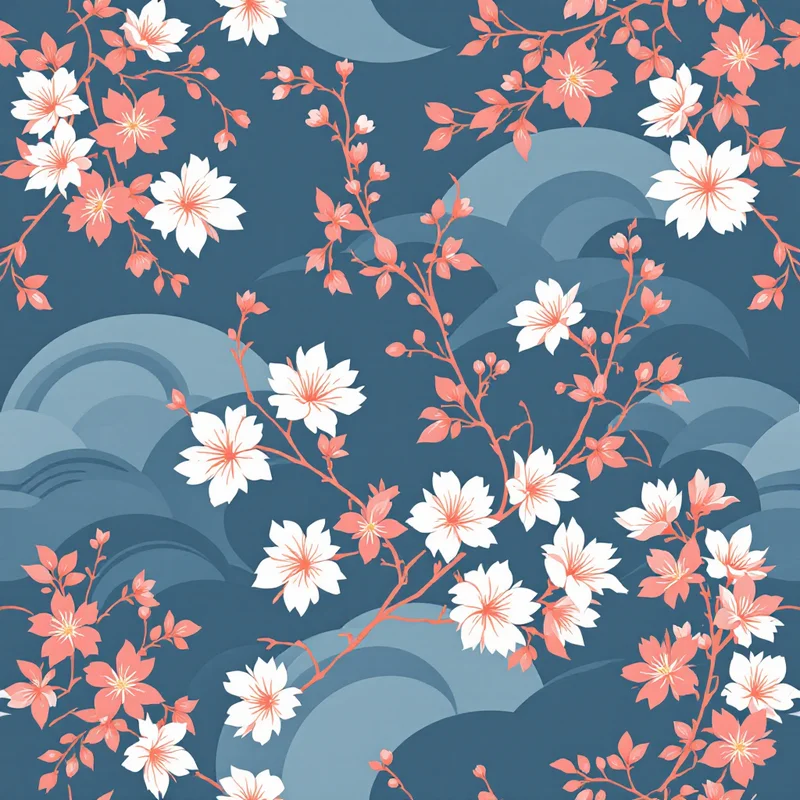
The majority of block print patterns feature plants, flowers, and botanical imagery. This reflects both aesthetic preference and the natural dye palette available (most natural dyes derive from plants, so patterns often celebrate the source of the color). Flowers (particularly marigolds, chrysanthemums, and stylized blooms), leaves, and vining patterns appear throughout block print traditions.
The patterns often reference garden and paradise garden traditions, similar to Persian design, creating compositions that suggest abundance and cultivation.
Geometric Framework
While botanical, block print patterns are typically organized within geometric frameworks. A grid structure organizes the botanical elements. Borders frame the composition. This geometric discipline prevents botanical patterns from becoming chaotic — the structure holds the ornament.
The Imperfect Print as Aesthetic Feature
One defining characteristic of block print is the visible imperfection inherent in the technique. Because each block is carved by hand and applied by hand, there is inevitable variation from print to print. Some impressions are heavier, some lighter. Registration (alignment between successive color applications) is not perfect. Wear in the block creates subtle variations as the printing process continues.
Rather than viewing these as defects, the tradition celebrates them as markers of authenticity and handcraft. A perfectly uniform pattern reads as industrial; slight irregularities signal human touch and genuine craftsmanship. This aesthetic valorization of imperfection has become increasingly important in contemporary slow fashion, where irregularity is read as proof of artisanal production.
Natural Dye Color Relationships
Block print color palettes are deeply shaped by the natural dyes available. Indigo creates blues and blue-blacks. Madder root creates reds, pinks, and terra cottas. Turmeric creates yellows. Pomegranate rind creates browns. These dyes were (and are) sourced locally, and their specific color characteristics are well understood.
The color relationships in classic block print textiles reflect centuries of dyers understanding how these dyes interact. An indigo ground with madder-red botanical motifs creates a specific, sophisticated color relationship that feels balanced. This is not accident but rather the accumulated knowledge of generations of dyers.
Repeat Structures and Rhythm
Block print patterns typically repeat in regular grids, but the repetition is rarely perfectly mechanical. A primary motif (a flower or geometric unit) repeats across the field, sometimes with secondary motifs filling spaces between primary elements. This creates visual rhythm and hierarchy.
Scale Relationships
Block print patterns tend toward medium scale — a primary flower motif at roughly 1–3 inches across, with smaller secondary elements filling spaces. This scale is practical for hand block printing (too large becomes difficult to execute; too small becomes invisible) but also visually optimal for textile applications.
Color Palettes and Natural Dye Traditions
Understanding block print color palettes requires understanding the dyes that created them.
Indigo and madder is the foundational color combination — deep blue (indigo) with red or rust motifs. This pairing appears across centuries and regions of block print production and remains contemporary bestsellers. The blue grounds with rust/terra cotta patterns feel warm, sophisticated, and inherently traditional.
Indigo with gold or mustard creates a slightly lighter variation. The yellow-gold tones suggest warmth and sunlight, particularly effective in botanical patterns where the gold motifs read as flower centers or luminous plant structures.
Madder red with indigo accent reverses the traditional pairing, with warm red grounds and indigo botanical accents. Less common than the inverse pairing, but striking and increasingly featured in contemporary interpretations.
Natural linen or cream grounds with indigo or madder patterns create lighter, more contemporary palettes. These feel less traditional than darker grounds but appeal to consumers seeking block print aesthetic with contemporary color sensibility.
Multi-color palettes employing three or more dyes (indigo, madder, turmeric, and perhaps additional plant-based dyes) create complex, layered patterns. These are more complex to produce and command higher prices.
Contemporary dyers are experimenting with synthetic alternatives to natural dyes (for consistency and range) while maintaining visual continuity with tradition. This allows for broader color exploration while preserving the essential character of block print aesthetics.
Commercial Applications and Market Strength
Indian block print patterns enjoy robust commercial demand across multiple sectors. The market is strengthened by trends toward sustainable fashion, heritage preservation, and consumer education about traditional craft.
Fashion and Apparel
Block print textiles appear consistently in fashion — from luxury fashion brands featuring block print runway pieces to mass market brands offering block print basics. Contemporary fashion designers frequently incorporate block prints as statement pieces or supporting elements. The aesthetic reads as sophisticated enough for luxury markets while remaining accessible enough for mainstream retail.
Home Furnishings and Décor
Block print textiles for home — curtains, cushion covers, bedding, wall hangings — represent substantial commercial volume. Interior designers use block print as anchoring elements in bohemian, global, or eclectic interiors. The patterns work equally well in contemporary minimalist spaces (a single block print textile as focal point) and maximalist bohemian arrangements.
Sustainable and Ethical Fashion Movement
Perhaps the strongest contemporary growth driver is the slow fashion and sustainable fashion movement. Block print represents everything that movement values: traditional craft, local artisans, natural materials, and lower environmental impact than industrial textile production. Brands positioning themselves around sustainability often feature block print textiles prominently.
Accessories and Luxury Goods
Block print appears on scarves, bags, shoes, and various accessories. The pattern's sophistication suits premium positioning, and the textile's handmade character adds perceived value.
Home Textiles and Bedding
Premium bedding, quilts, table linens, and other home textiles featuring block print patterns are growth categories, particularly among consumers seeking sustainable, artisanal home goods.
Creating Block Print-Inspired Patterns
Designing effective block print patterns requires understanding both the aesthetic tradition and the technical constraints of the medium.
Key Design Principles
Respect the grid. Block print patterns are organized on grids — this is not limitation but rather the structural principle that makes them work. Design your primary motif and establish how it repeats. Then establish secondary elements that fill remaining space. The grid should be visible in the final pattern's rhythm.
Emphasize botanical elements. While geometric frameworks are important, the visual focus should be botanical. Flowers, leaves, vining patterns — these are what draw viewers into block print aesthetics. Ensure botanical elements receive visual priority through scale, saturation, or placement.
Establish clear color hierarchy. Rather than distributing color equally, establish a primary color (typically the ground or field), a secondary color (typically one major motif), and perhaps a tertiary accent. This hierarchy creates visual order and sophisticated color relationships.
Embrace asymmetry and irregularity. Perfect alignment and mechanical perfection undermine block print aesthetic. Allow subtle variations — slightly offset registration, varying ink saturation, minor irregularities in block carving. These imperfections signal authenticity and handcraft. Modern tools like Pattern Weaver can generate botanically rich patterns, but look for options that allow subtle variation and imperfect registration rather than clinical perfection.
Scale appropriately. Primary motifs in the 1–3 inch range read as authentic block print. Smaller details create visual texture without overwhelming the composition. Avoid motifs that are too large (they read as graphic design rather than textile pattern) or too small (they lose legibility).
Limit color count for authenticity. Traditional block print rarely employs more than three or four colors. This limitation creates sophisticated harmony and reads as more authentic than a broad palette. For contemporary interpretation, three to five colors maximum maintains the spirit of the tradition.
Develop patterns that work at scale. A block print pattern should be satisfying at large scale (a full garment, a wall hanging, a large textile piece) not just at thumbnail size. The repetition and rhythm should sustain visual interest across extended surface area.
Contemporary Interpretations and Revival
Contemporary block print design is experiencing active renaissance, driven by multiple factors:
Slow fashion and sustainability — Consumers increasingly value handmade, sustainable textiles. Block print represents this movement perfectly.
Heritage preservation and cultural pride — Indian and South Asian communities and diaspora are actively supporting traditional block print makers, driving contemporary production and innovation.
Contemporary color and design innovation — While respecting traditional structures, contemporary designers are creating block print patterns in unexpected colors, with different scale relationships, and integrated with contemporary design languages.
Technology and tradition hybrid — Digital design tools are helping contemporary makers scale their production and reach while maintaining handmade character. Patterns designed digitally are being transferred to wooden blocks and printed traditionally, maintaining craft authenticity while enabling broader distribution.
Luxury market recognition — High-end fashion and design brands are increasingly featuring block print textiles, elevating the category's prestige and expanding demand.
The Imperfection Philosophy
A crucial aspect of understanding contemporary block print design is the valuation of imperfection. In industrial textile manufacturing, the goal is uniform, flawless production. In block print, slight variations and irregularities are celebrated.
This has profound implications for both production and perception. A perfectly uniform block print pattern might be technically impressive, but it loses something essential — the visible evidence of human labor and craft. Contemporary consumers increasingly value that evidence.
For designers, this means resisting the urge toward clinical perfection. Slight color variations from block application, subtle misregistrations, minor irregularities in spacing — these read as authentic. They signal that a human made this, not a machine.
Working with Indian Artisans
For designers wanting to create authentic block print work, the most respectful and commercially valid approach is direct collaboration with Indian block print artisans. These practitioners have generations of knowledge and skill. Collaborating with them — rather than extracting designs and producing elsewhere — supports living traditions and produces genuinely authentic work.
This approach requires direct relationship, fair compensation, and respect for the artisan's expertise and cultural knowledge. It is more complex than independent design, but it produces better work and builds genuine community relationships.
Indian block print pattern design offers contemporary designers the opportunity to engage with a living, sophisticated, and commercially proven textile tradition. Whether creating block print patterns directly, collaborating with traditional artisans, or designing patterns inspired by block print aesthetics, the key is approaching the tradition with genuine respect, cultural knowledge, and appreciation for the craft at its foundation.
The continuing strength of block print in contemporary fashion and design reflects something important: consumers value authenticity, tradition, and visible craftsmanship. Block print delivers on all three. For designers and brands, engaging thoughtfully with this tradition creates work that is both commercially viable and culturally meaningful.
Explore related pattern styles
Patterns for