
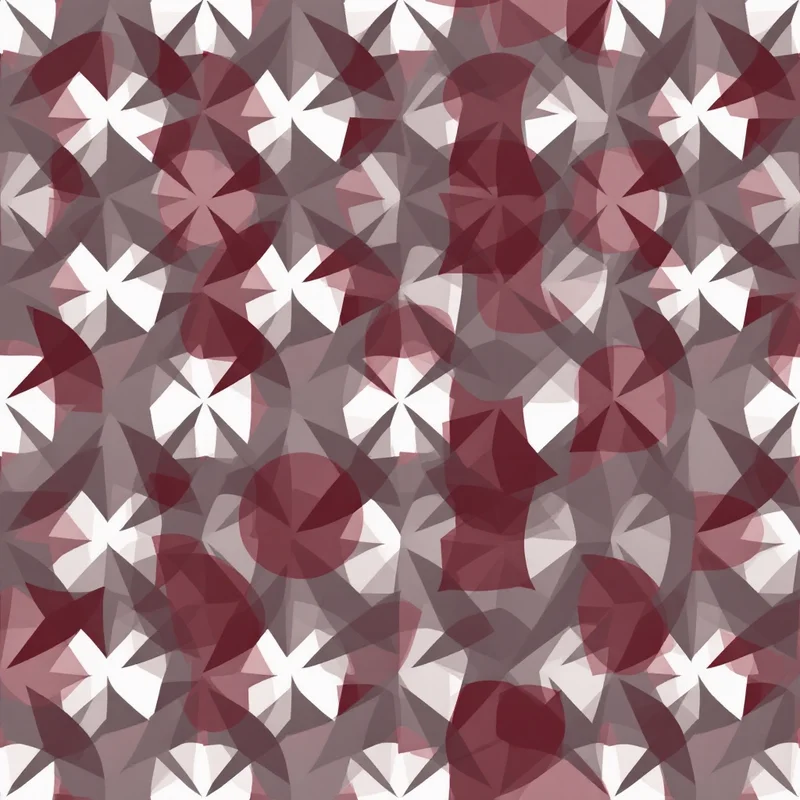
If you have ever looked at a patterned shirt, a roll of wallpaper, or a decorated gift wrap and wondered how a design can cover such a large surface without visible breaks, the answer is the seamless repeat pattern. It is one of the most fundamental concepts in design, used in virtually every industry that applies decoration to surfaces, and yet most people -- including many beginning designers -- have never had it properly explained.
Key takeaway: A seamless repeat pattern is a single rectangular tile designed so its edges match perfectly on all sides, allowing it to cover any surface of any size without visible seams -- one well-made tile is all you need.
This guide covers what seamless repeat patterns are, how they work mechanically, why seamlessness matters, the major repeat types, and where they are used in practice.
The Basic Concept
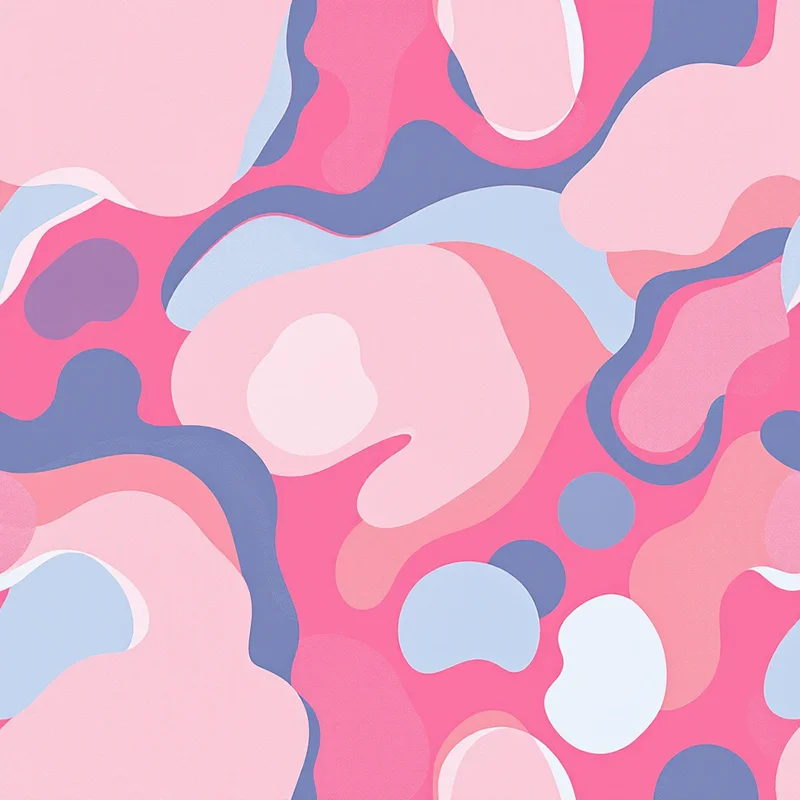
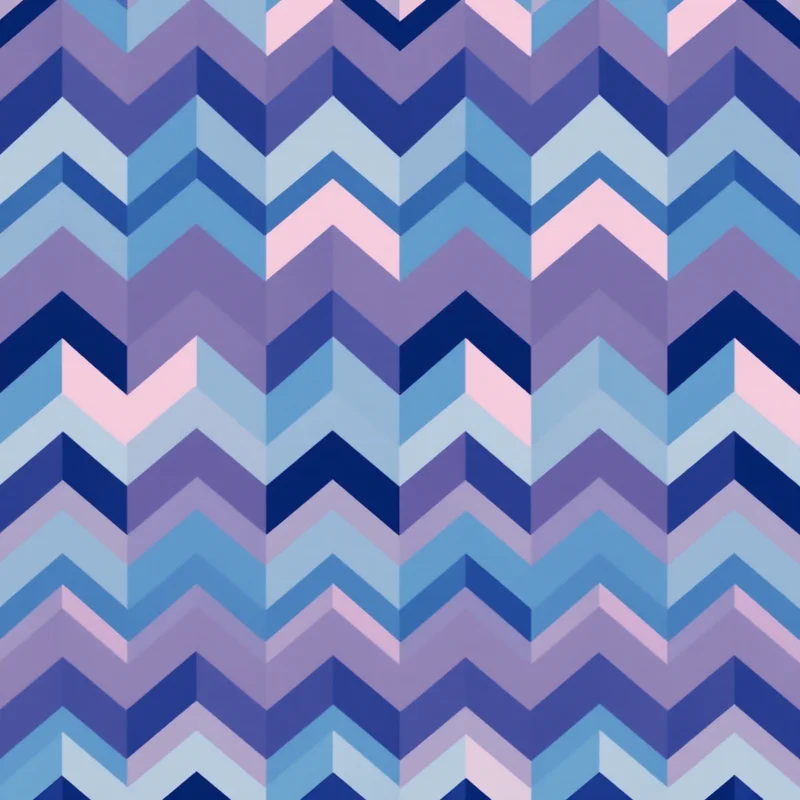
A seamless repeat pattern is a rectangular image -- called a tile -- designed so that when copies of it are placed edge to edge in every direction, the design appears to flow continuously with no visible boundaries between tiles. The left edge of the tile matches the right edge perfectly. The top matches the bottom. And critically, all four corners are consistent with each other, so diagonal tiling works too.
Imagine cutting out a square from the middle of a large floral fabric. That square, if the pattern is well designed, could be placed next to copies of itself infinitely in all directions, and the flowers, stems, and leaves would connect smoothly across every boundary. No line, gap, or misalignment would reveal where one tile ends and the next begins. That is seamless repetition.
The tile is the atom of the pattern. Everything you see across a patterned surface is that single tile, repeated. The pattern designer's job is to make the tile so well constructed that the repetition is invisible.
Why Seamlessness Matters
Seamlessness is not just an aesthetic preference -- it is a functional requirement across most applications.
Textile Production
Fabric is printed on rolls that can be 50 to 100 yards long and 45 to 60 inches wide. The pattern must cover this entire surface without interruption. A visible seam every 12 inches across a dress would look like a manufacturing defect. Seamless repetition lets a single tile design, often as small as 8 to 24 inches square, cover any amount of fabric without visible breaks.
Wallpaper
Wallpaper strips are hung side by side on a wall. Each strip shows the same pattern, and where two strips meet at a vertical seam, the pattern must align perfectly so the join disappears. A pattern that is not seamless produces visible vertical lines every strip width -- immediately noticeable and unacceptable in professional installation.
Digital Surfaces
Website backgrounds, app textures, game environments, and 3D model surfaces all use tiling textures. A texture that does not tile seamlessly produces visible grid lines when applied to any surface larger than the original image. In games and 3D rendering, where textures are mapped across surfaces of varying sizes and shapes, seamless tiling is a hard requirement.
Packaging and Product Design
Gift wrap, shopping bags, box coverings, and product surfaces all use repeating patterns. The pattern must work at the specific dimensions of each product, and seamless repetition guarantees that it can be cropped to any size without breaking the design continuity.
In every case, the principle is the same: a seamless tile eliminates the constraint of matching the design to the exact dimensions of the surface. One well-made tile covers any surface, any size, any shape.
How Seamless Tiles Work Mechanically
The mechanics of a seamless tile come down to edge continuity. Every element that exits one edge of the tile must re-enter the opposite edge at the corresponding position.
Consider a simple example: a tile with a diagonal line running from the lower left toward the upper right. If that line exits the top edge at a position 30% from the left, it must re-enter at the bottom edge at 30% from the left, continuing at the same angle. If the line exits the right edge at a position 60% from the top, it must re-enter the left edge at 60% from the top, again at the same angle.
This applies to everything in the tile -- motifs, lines, gradients, textures, shadows. A flower stem that extends past the right edge must have its continuation appearing on the left edge. A gradient that darkens toward the bottom must have that same dark value at the top of the tile, or the transition must be designed so that the tonal change wraps smoothly.
The corners are the most challenging area. Each corner of the tile is shared by four adjacent tiles when tiled. This means the corner area must work simultaneously as a junction point for tiles on all four sides. A motif that crosses a corner must be consistent across all four tiles that share that point. This is where most seamless pattern attempts fail -- the edges look fine, but the corners reveal an inconsistency.
Major Repeat Types
Not all seamless patterns use the same tiling geometry. Several repeat types exist, each producing a different visual rhythm.
Straight Repeat (Block Repeat)
The simplest type. Tiles are placed in a straight grid -- left to right, top to bottom -- with no offset between rows or columns. Each row and column aligns exactly. This produces a regular, structured rhythm that can feel orderly and intentional (for geometric patterns) or monotonous and obvious (for organic patterns where the eye catches the grid).
Straight repeats are easy to construct and work with every production process, but they expose the repeat grid most readily. The human eye is good at detecting the rectangular grid, especially when motifs are few or large.
Half-Drop Repeat
Each column is shifted vertically by half the tile height relative to its neighbor. This breaks the horizontal alignment that makes straight repeats obvious, creating a more natural distribution of motifs. Half-drop is the most common repeat type for organic patterns -- florals, botanicals, scattered motifs -- because it disguises the underlying grid effectively.
The trade-off: half-drop tiles are taller than they are wide (the full repeat unit is twice the height of the base tile), and the construction requires matching not just left-right and top-bottom, but also the mid-point offset on the left and right edges.
Brick Repeat
The horizontal equivalent of half-drop. Each row is shifted horizontally by half the tile width, like bricks in a wall. This breaks vertical alignment and works well for patterns with strong horizontal elements. Brick repeat is common in architectural patterns, tile designs, and patterns with landscape-oriented motifs.
Mirror Repeat
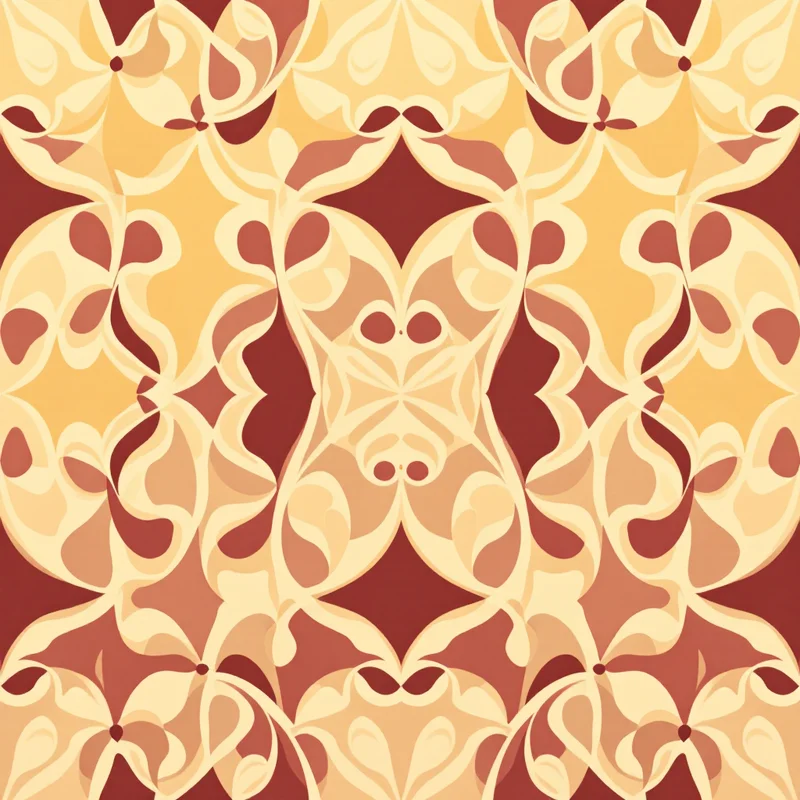
The tile is flipped (reflected) alternately, creating a symmetrical pattern. Mirror repeats produce a woven, kaleidoscopic effect where motifs face each other across the reflection axis. Common in damask patterns, traditional textiles, and decorative borders.
Diamond (Ogee) Repeat
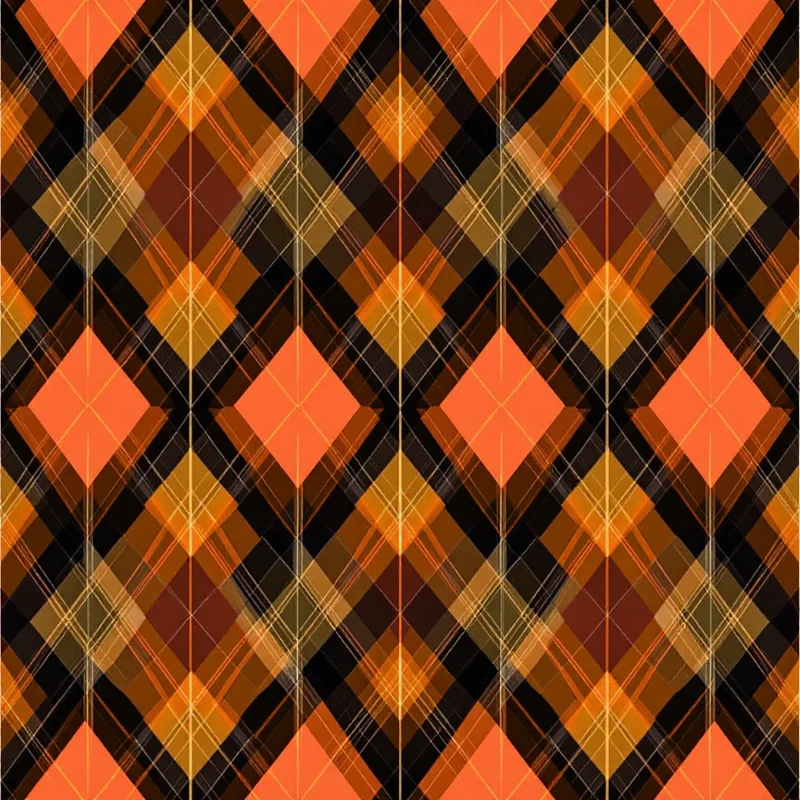
The tile is rotated 45 degrees, creating a diamond grid instead of a rectangular one. This produces a pattern with strong diagonal rhythm. It requires additional construction care because the diamond orientation changes the angle at which edges meet, but the visual result can be distinctive and elegant.
Common Pattern Density Terms
When working with repeat patterns, a few terms describe how the motifs fill the tile.
Tossed or scattered patterns distribute motifs randomly across the tile with varying orientations. This is the most natural-looking distribution and the most common for organic motifs like flowers and leaves. The irregular placement helps disguise the repeat grid.
Packed patterns fill the tile densely with little or no background showing. Packed ditsy florals, dense geometrics, and saturated textures are all packed patterns. They hide the repeat grid through sheer coverage.
Spaced or sparse patterns leave significant background between motifs. The motifs float on the background, and the background itself becomes a significant visual element. Sparse patterns make the repeat more visible because the eye can track the position of individual motifs across the tiling.
Set or placed patterns arrange motifs in a deliberate, orderly formation -- rows, columns, or diagonal lines. The regularity is intentional and part of the aesthetic, as in polka dots or geometric grid patterns.
The Anatomy of a Well-Made Repeat
A technically seamless tile is not necessarily a well-designed one. Beyond edge matching, several qualities distinguish professional repeat patterns.
Even visual weight. The density of motifs and color should feel balanced across the tile. If one corner is dense with motifs and the opposite corner is empty, the tiled result will show visible clusters and voids that betray the tile boundary.
Disguised repeat. The best patterns make it difficult to identify where the tile begins and ends. This is achieved through asymmetric motif placement, varying motif sizes, and distributing visual anchors (the largest or most distinctive elements) so they do not align in an obvious grid when tiled.
Edge discipline. Motifs that cross tile boundaries must do so cleanly and at positions that create natural-looking compositions when the tiles join. A flower that is split exactly in half at a tile edge creates an awkward visual moment when tiled. A flower that extends 20% past the edge and reappears on the opposite side feels more natural.
Scale appropriateness. The tile size and motif scale must be appropriate for the end use. A 2-inch tile with a large flower will create a visually overwhelming, densely repeating pattern. The same flower in a 24-inch tile will feel spacious and deliberate. Professional designers consider the final print size when determining tile dimensions.
Creating Seamless Repeat Patterns
Historically, creating seamless patterns required significant technical skill. Designers used manual cut-and-swap techniques, Photoshop offset filters, or Illustrator's pattern tools to ensure edges matched. Each method demanded understanding of the underlying geometry and careful construction to avoid visible seams.
AI pattern generators have simplified this process considerably. A dedicated pattern studio can produce seamless tiles automatically -- the AI generates patterns where edge continuity is built into the output. This eliminates the most technically demanding aspect of pattern design and lets designers focus on the creative decisions: style, color, density, motif selection, and composition.
Whether you are creating patterns for fabric, wallpaper, packaging, or digital surfaces, the underlying principle stays the same. One well-crafted tile, repeating seamlessly, can cover any surface in the world. Understanding how that tile works -- its edges, its corners, its internal balance -- is the foundation of surface pattern design.
Explore the pattern studio to generate your own seamless repeat patterns, or browse the style library to see how different pattern families -- geometric, botanical, cultural, abstract -- express themselves as seamless tiles.
Explore related pattern styles