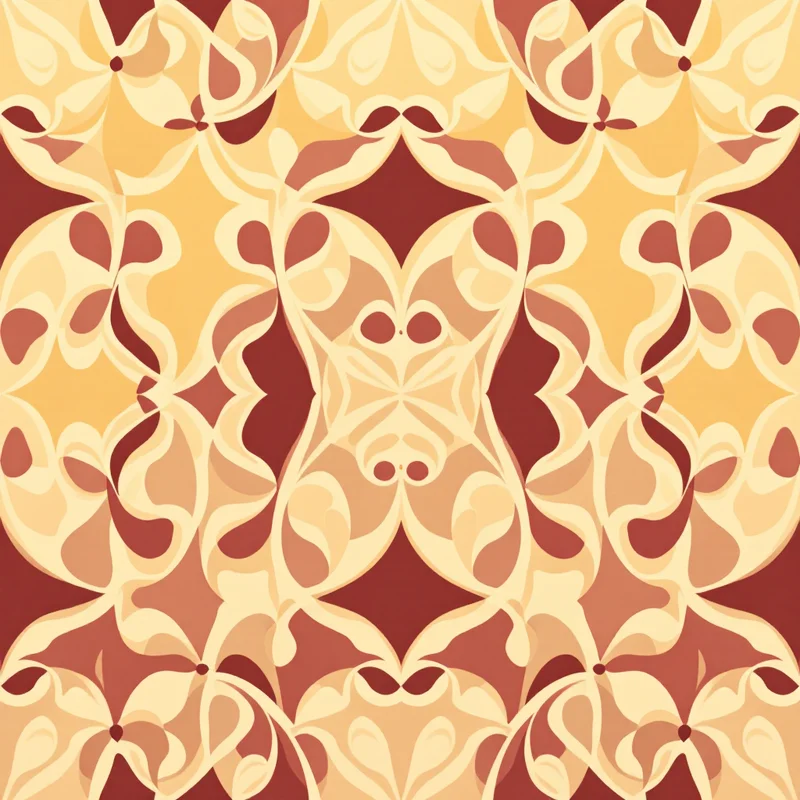

Persian pattern design represents one of the longest continuous, systematically developed ornamental traditions in human visual history. Dating back to the Achaemenid Empire (6th–4th centuries BCE) and reaching its canonical form in the Islamic period, Persian patterns synthesized geometric mathematical precision with botanical observation and spiritual symbolism. The resulting design language is so coherent that you can identify a pattern as Persian without hesitation — the hallmark vocabulary is unmistakable.
For contemporary designers, Persian pattern aesthetics offer a gateway to luxury positioning, cultural depth, and commercial longevity. Persian-inspired patterns command premium pricing across interior design, high-end textiles, and luxury goods because the tradition carries inherent associations with craft, heritage, and timeless beauty.
Historical and Cultural Context
Understanding Persian patterns requires understanding the specific cultural and historical conditions that shaped them. Persian pattern design did not emerge from a single moment but rather crystallized over centuries, influenced by trade routes, religious developments, and the genius of individual artists and craftspeople.
The foundation predates Islam. Pre-Islamic Persian (Sassanid) patterns featured geometric organization, animal motifs, and what would later become characteristic Persian color relationships. With the arrival of Islam in the 7th century and the prohibition on representational religious imagery, Persian artists channeled their decorative ambitions into sophisticated non-figural systems: geometry, arabesque, calligraphy, and stylized botanical forms.
The great flowering of Persian pattern design occurred during the Safavid period (16th–18th centuries), particularly in carpet weaving centers like Isfahan and Kashan. This is when the "classic" Persian carpet aesthetic — the one still referenced by contemporary designers — solidified. The patterns from this era established design principles that remain current: a central medallion surrounded by corner elements, a densely articulated field, sophisticated color relationships, and a marriage of geometric framing with organic botanical form.
This matters to contemporary designers because it means Persian aesthetics carry deep historical legitimacy. A pattern drawing on Persian traditions is not simply decorative; it participates in a 1400-year-old intellectual and artistic tradition.
The Defining Elements of Persian Patterns
Persian pattern vocabulary is vast, but a few core motifs appear with such consistency they become definitive.
The Medallion Layout
The classic Persian carpet structure features a large central medallion (often diamond, octagonal, or oval shaped) positioned at the center of the composition, with matching corner quarter-medallions in the four corners. This creates perfect symmetry and visual balance. The medallion itself contains intricate patterning — smaller geometric or botanical elements — while the surrounding field (the area between medallion and border) receives equally detailed patterning.
This structure is not incidental; it is the organizing principle that makes a pattern read as authentically Persian. Without the medallion frame, a pattern might be ornamental, but it loses the specifically Persian character.
Arabesques
The arabesque is a continuous flowing vine or stem that curves, spirals, and branches in mathematically governed patterns. Palmettes (fan-shaped leaf forms) and split-leaf forms branch from the arabesque vine. Arabesques create visual movement and rhythm while maintaining formal control. They appear throughout the field of Persian patterns, often interweaving with other motifs.
The arabesque is so fundamental to Persian design that the pattern style is sometimes called "arabesque pattern" as a shorthand.
Botanical Motifs and the Garden Tradition
Persian patterns draw heavily from the paradise garden (chahar bagh, or four-part garden) tradition in Islamic thought. The garden is a symbol of paradise, and Persian patterns often represent idealized gardens. Flowers (particularly roses and tulips), plants, and trees appear throughout the composition, rendered with botanical specificity but stylized for pattern purposes.
The boteh (also spelled butta) — a leaf or flame-like shape with roots or seeds at the base — is particularly characteristic. The boteh became so iconic that it evolved into the paisley motif, which dominates Western pattern tradition but originated in Persian design.
Geometric Framing and Borders
Persian patterns employ sophisticated geometric framing. Intricate borders surround central compositions, often constructed from geometric progressions, interlocking shapes, or linear patterns. These borders serve both practical (framing the composition) and aesthetic (echoing mathematical principles) functions.
Color in Persian Pattern Tradition
Persian palette choices are deeply intentional. Traditional Persian carpets employed natural dyes:
Deep crimsons and reds (from madder root) form the classic palette anchor. These are not bright reds but rather deep, complex reds with burgundy and maroon undertones.
Indigo blue (from indigo plant) provides the cool counterpoint. Rich, complex indigo — never a bright or artificial blue — appears in both large fields and as accent color.
Saffron and warm golds reference the precious spice. These warm yellows and golds create luminosity and richness.
Ivory or cream frequently serves as the background or secondary field color, providing breathing space and contrast.
Emerald and sage greens appear as accent and supporting colors.
These colors were chosen partly for their availability and partly because together they create harmony through both color theory and cultural tradition. A contemporary designer working in Persian aesthetics should respect these color relationships. A bright neon palette undermines everything the tradition stands for.
Commercial Applications in Contemporary Design
Persian patterns have substantial commercial reach, particularly in luxury segments. The challenge is navigating cultural appropriation carefully while building legitimate business.
Luxury Home Furnishings and Rugs
The traditional rug market remains strong, but contemporary interior design increasingly features Persian-inspired patterns on non-rug substrates: wallpaper, upholstery, curtains, and throw pillow textiles. High-end interior designers frequently incorporate Persian-inspired patterns as anchoring design elements in luxury residential and hospitality spaces.
The key difference between traditional and contemporary applications: modern designers often use Persian patterns in unexpected ways — large-scale wallpaper, dramatic upholstery, contemporary color interpretations — rather than recreating historic carpet designs.
Luxury Fashion and Accessories
Persian motifs appear in high-end fashion through: scarves (a traditional Persian textile application), evening wear, and luxury accessories. The patterns' formal complexity suits premium positioning. A scarf bearing a medallion and arabesque pattern reads as intentionally designed and culturally literate rather than decorative.
Packaging and Luxury Branding
Cosmetics, spirits, chocolates, and luxury goods brands frequently employ Persian-inspired patterns in their packaging to signal heritage, craftsmanship, and premium positioning. The patterns appear as borders, as background decorations, or as primary visual elements.
Wallpaper and Wall Treatments
Persian-inspired wallpaper has experienced something of a renaissance in contemporary interior design. Rather than recreating historic patterns exactly, contemporary wallpaper designers reinterpret the Persian aesthetic in ways that feel current. This might mean maintaining the medallion structure but simplifying the field pattern, or using contemporary color interpretations while preserving the geometric/arabesque vocabulary.
Creating Persian-Inspired Patterns
Designing authentic Persian patterns is complex because the tradition is so codified. However, contemporary interpretation — rather than strict reproduction — offers creative and commercial opportunity.
Design Principles
Respect the structural hierarchy. Establish a clear primary (medallion), secondary (field), and tertiary (border) structure. This three-tier organization is what makes a pattern read as Persian. Without it, you have merely ornamental patterns, not Persian patterns.
Balance geometry with organics. Persian design is not purely geometric, nor purely botanical. The most successful patterns merge strict geometric organization (the grid, the symmetry, the medallion frame) with organic-looking botanical elements (flowing arabesques, naturalistic flowers). The interplay between these two forces creates visual richness.
Employ symmetry systematically. Persian patterns are typically bilaterally symmetrical or radially symmetrical. Every element should have a mirror or rotational partner. This creates the sense of mathematical precision that reads as authentically Persian.
Use density intentionally. Persian patterns are detail-dense by design — the principle being that ornament fills space. However, variation in density prevents visual fatigue. A very intricate medallion might be surrounded by a slightly less detailed field. Subtle breathing room appears occasionally to break up pattern texture.
Integrate botanical elements realistically. While stylized, Persian botanical motifs retain recognizable connection to actual plants. A rose should read as a rose (stylized, but identifiable). This botanical specificity is part of what makes Persian patterns feel culturally grounded rather than purely abstract.
Test color relationships carefully. The harmony between crimson, indigo, gold, and cream is not accidental — these colors naturally balance each other through both hue and saturation. Substituting one primary color for something trending but less harmonious will destabilize the entire pattern. Contemporary color variations can work (deeper emerald replacing the sage, for example), but they should be intentional and tested.
Pattern generation tools like Pattern Weaver can help test variations quickly. Establish your medallion structure, select your motif vocabulary, define your color palette, and generate multiple density and scale variations to see which resonates.
Cultural Respect and Appropriation
Persian patterns originated in a specific cultural and religious context. Respectful engagement with these patterns requires acknowledging that context.
The patterns are not merely decorative but carry cultural meaning. For instance, the garden motif represents paradise — a deeply spiritual concept in Islamic tradition. Using Persian patterns because they look elegant is legitimate; using them while remaining ignorant of their meaning is dismissive.
Contemporary approach: educate yourself about Persian cultural and religious traditions. Acknowledge the patterns' origins in your marketing and design documentation. Consider supporting Persian artisans and designers. Be transparent about whether you are creating historically accurate reproductions or contemporary reinterpretations.
This is not censorship; it is professional engagement with a living cultural tradition. Persian communities and the broader design world respect designers who approach Persian aesthetics with knowledge and respect.
Contemporary Interpretations and Evolution
Contemporary designers are advancing Persian aesthetics in several directions:
Minimalist interpretation — Extracting core elements (medallion structure, select arabesque motifs) and rendering them with contemporary simplicity. A single large medallion with sparse field pattern reads as current while honoring the traditional structure.
Color reinterpretation — Maintaining geometric and botanical structure while employing contemporary color palettes. Deep jewel tones might become muted pastels, or traditional palette might be rendered in monochromatic variations.
Scale innovation — Enlarging traditional patterns far beyond their historical scale, creating dramatic modern wall treatments from historically intimate patterns.
Hybrid fusion — Merging Persian structure and vocabulary with other pattern traditions, creating something genuinely contemporary that references without appropriating.
Digital craftsmanship — Using digital tools to achieve effects impossible in hand-knotted carpets, while maintaining the aesthetic coherence of the tradition.
These interpretations are commercially valid when they demonstrate genuine engagement with the tradition rather than surface-level aesthetic borrowing.
Seasonal and Market Positioning
Persian patterns are not seasonally dependent — they work year-round, particularly in luxury home interiors. However, spring tends to see slightly higher demand for pattern-forward home goods, and "heritage design" experiences periodic trend cycles.
Consistent market truth: premium positioning, high price point products, and luxury branding consistently feature Persian-inspired patterns. The patterns work because they signal sophistication, cultural knowledge, and intentional design. Contemporary designers working in Persian aesthetics can confidently position their work as premium, craft-focused, and culturally grounded.
Persian pattern design, properly executed, combines visual sophistication with commercial validity. The tradition's 1400-year history creates inherent authority, while contemporary reinterpretation keeps the aesthetic current. This combination — respect for tradition paired with modern relevance — is what makes Persian design commercially resilient and artistically rewarding.
Explore related pattern styles
Patterns for