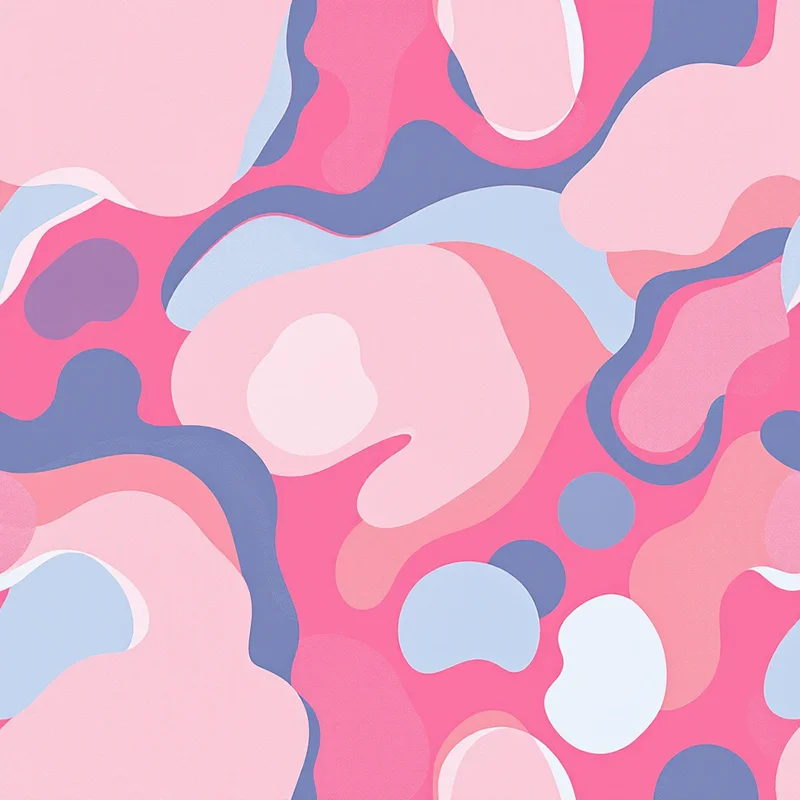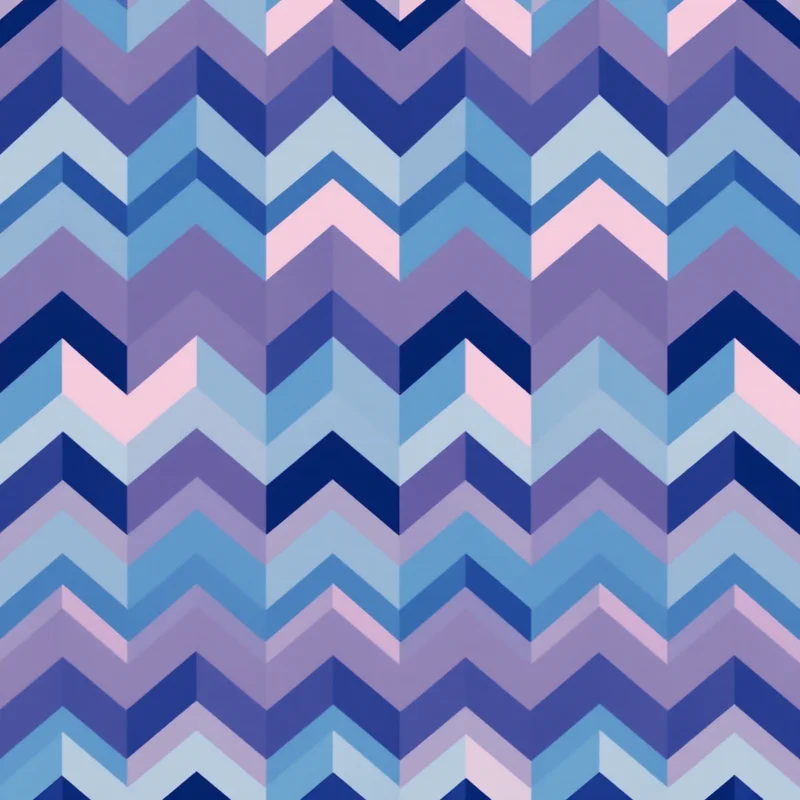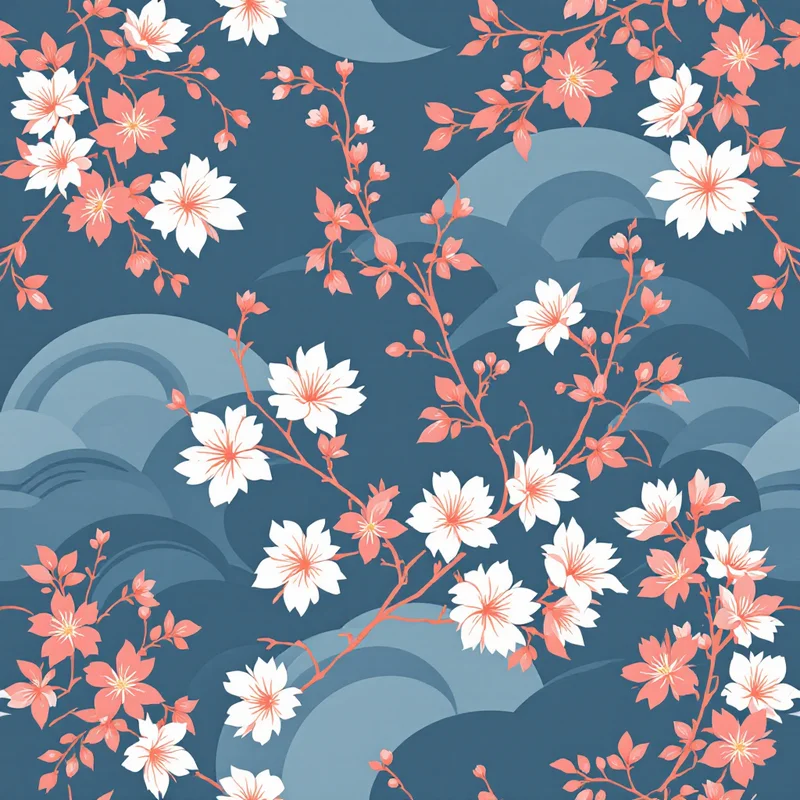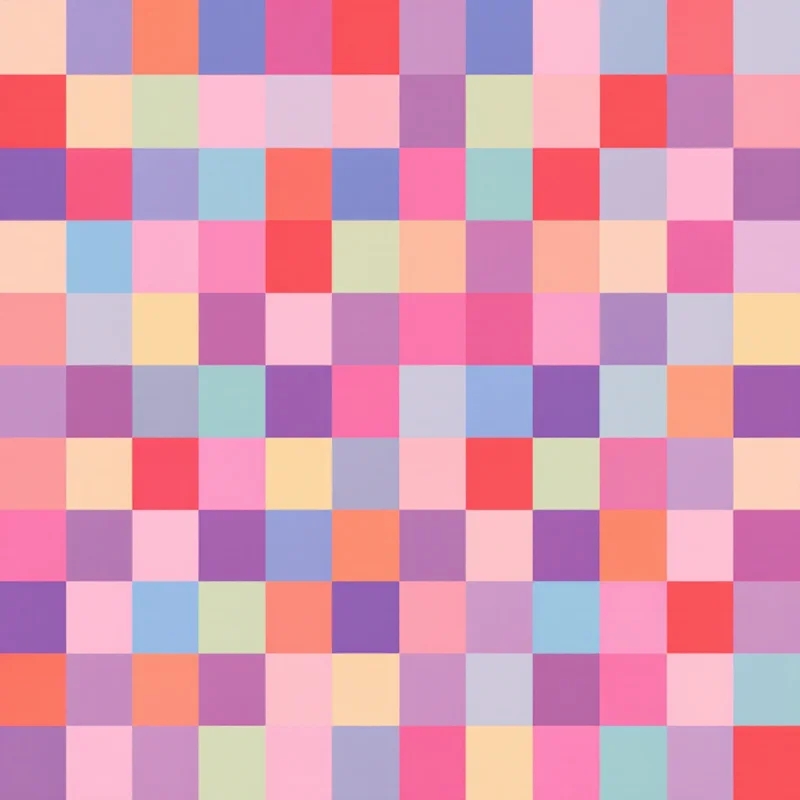

Every surface pattern begins with a single tile and a question: how should it repeat? That choice shapes everything — whether the finished design feels rigid or organic, formal or playful, predictable or endlessly surprising. Experienced designers think about repeat type before they sketch a single motif, because the repeat structure is the backbone of the whole composition.
There are seven fundamental repeat types used across textile, wallpaper, and surface design. Each one takes the same tile and gives it a completely different rhythm. Getting familiar with all seven gives you the creative vocabulary to match any brief and the confidence to execute it well.
1. Straight Repeat (Block Repeat)
The straight repeat is where it all starts — the simplest way to tile a pattern. Your tile sits in a plain grid: each copy lines up directly next to the last in neat rows and columns, no offsets, no tricks. Think of it like laying identical tiles on a kitchen floor.
How it works: The tile repeats along both axes with zero shift. The top-left corner of every tile lines up vertically and horizontally with every other tile. What exits the right edge re-enters on the left at the same height. What exits the bottom re-enters at the top at the same horizontal position.
What it looks like: You get a strong gridded structure, and the eye tends to pick up on the repeat unit pretty quickly — especially with organic motifs, since every row and column is a perfect copy. That regularity is either a feature or a flaw depending on what you are going for.
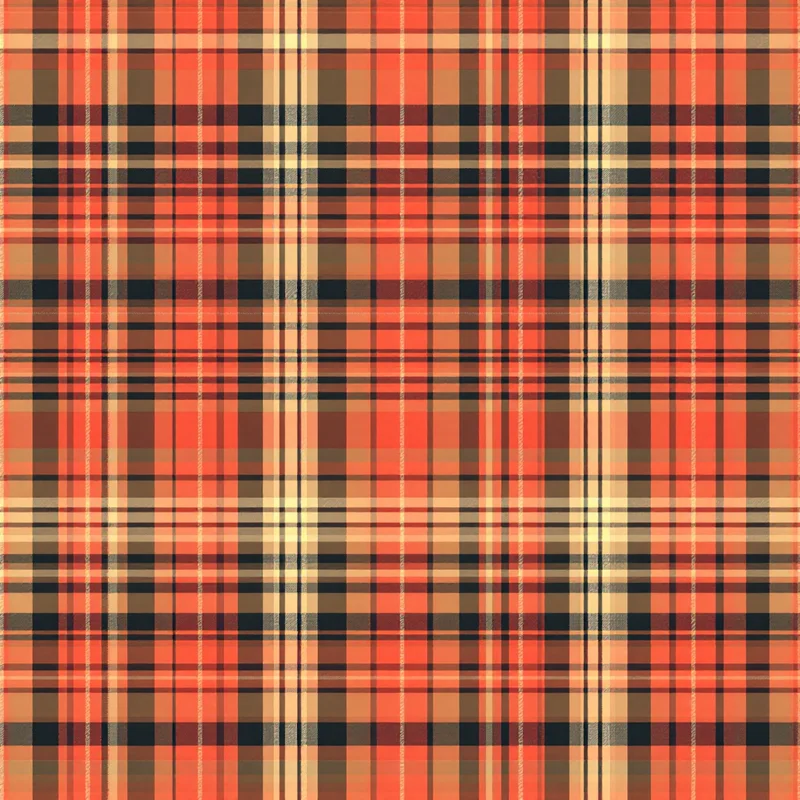
Where you will see it: Geometric patterns, plaids, gingham, checkerboards, tile-inspired designs, and anything where a visible grid is part of the aesthetic. Straight repeats are everywhere in architectural surfaces, kitchen tiles, and structured textile weaves. They also work nicely for polka dots and stripe variations where the repetition is intentional and welcome.
The straight repeat is the right call when you want order and predictability, and the wrong one when you want a pattern to feel natural — the grid will always show through.
2. Half-Drop Repeat
The half-drop is the workhorse of the textile industry — the most widely used repeat type for printed fabrics and the default choice for most professional surface designers. There is a good reason for that.
How it works: Every other column shifts downward by exactly 50% of the tile height. The first column sits at normal position, the second drops by half, the third returns to normal. This vertical offset means motifs no longer line up in tidy horizontal rows. Instead, they stagger diagonally, creating a more complex visual path for the eye to follow.
What it looks like: The grid vanishes. Because adjacent tiles are offset, the eye cannot easily lock onto a repeating row or column. Motifs appear to float in a more organic, natural-feeling arrangement. The half-drop introduces diagonal movement across the surface, adding energy and a sense of flow that a straight repeat simply cannot achieve.
Where you will see it: Floral textiles, botanical prints, fashion fabrics, wallpaper, upholstery — really, anywhere motifs should feel scattered rather than regimented. If you look at a floral dress fabric in any clothing store, there is a strong chance it uses a half-drop. The same goes for most high-end wallpaper collections.
The half-drop succeeds because it solves the fundamental tension of repeat design: the tile is mechanical, but the finished pattern needs to look effortless. That 50% vertical offset is the simplest and most elegant way to bridge the gap.
3. Brick Repeat
The brick repeat is the horizontal cousin of the half-drop — same idea, different direction. Instead of shifting columns vertically, it shifts rows sideways.
How it works: Every other row of tiles slides sideways by 50% of the tile width. The first row sits at normal position, the second shifts right by half, the third returns to normal. The name comes from actual brickwork, where each course of bricks is offset to distribute structural load. In pattern design, the principle works the same way: offset to distribute visual weight more evenly.
What it looks like: Horizontal movement and a strong lateral rhythm. Where the half-drop creates diagonal flow, the brick repeat emphasizes horizontal bands with staggered breaks. If your motifs are wide or landscape-oriented, a brick layout often gives them more room to breathe than a half-drop would.
Where you will see it: Patterns with horizontal motifs, landscape-oriented illustrations, and wide-format applications. Brick repeats show up frequently in wallpaper with scenic elements, fabric borders, and patterns inspired by architectural forms. They are also common in packaging where the printed surface is wider than it is tall.
Reach for the brick repeat when your motifs have strong horizontal energy, or when a half-drop creates too much diagonal movement for the mood you want.
4. Mirror Repeat (Reflected Repeat)
The mirror repeat brings symmetry into the picture by flipping alternating tiles along one or both axes, so motifs meet their own reflection at every boundary.
How it works: Alternating tiles are flipped horizontally, vertically, or both. A motif facing right in one tile faces left in the adjacent tile. This creates pairs of mirrored images that meet at the seam, building bilateral symmetry across the entire surface.
What it looks like: Formal, structured, and often strikingly ornate. Mirror repeats carry an inherent elegance because symmetry is one of the oldest principles of decorative design. The mirrored boundaries create natural axis lines that organize the pattern into a rhythmic, architectural framework. Depending on the motif, you might get anything from classical grandeur to kaleidoscopic energy.
Where you will see it: Damask textiles, brocade, art deco designs, traditional woven patterns, ornamental wallpaper, and luxury packaging. The mirror repeat is central to many cultural textile traditions, from European jacquard weaving to Middle Eastern tile work. It is the natural choice when a design needs to communicate sophistication, heritage, or a sense of timeless quality.
One thing to keep in mind: mirror repeats are unforgiving of asymmetry. Any unevenness in your original tile gets doubled and emphasized at the seam. Text and realistic figurative elements rarely survive the mirroring well. Abstract forms, geometric shapes, and stylized organic motifs are your best bet here.
5. Diamond Repeat (Ogee Repeat)
Diamond repeats set your motifs on diagonal lines, forming a lattice that gives even simple elements a sense of movement and rhythm.
How it works: The tile is effectively rotated 45 degrees, so the repeat grid runs diagonally rather than along horizontal and vertical axes. Motifs sit at the intersections and centers of a diamond lattice. In the ogee variation, the diamond shapes take on curved, onion-dome edges — creating that distinctive ogee arch that has been a staple of decorative design for centuries.
What it looks like: There is a strong diagonal structure with a natural sense of upward lift. The diamond grid creates focal points at the center of each cell, and the eye reads them as a series of framed vignettes. The ogee variation adds flowing curves that soften the angularity, giving you the best of both worlds — geometric structure with organic grace.
Where you will see it: Traditional wallpaper, Moroccan-inspired tiles, Gothic and Renaissance textiles, luxury home decor, and ornamental surfaces of all kinds. The ogee is one of the most enduring motifs in interior design history, appearing across cultures from Islamic geometric art to Victorian parlor wallpaper. Diamond repeats without the ogee curve show up in argyle patterns, harlequin designs, and athletic wear.
The diamond repeat is a wonderful choice when you want a pattern that feels both structured and alive. The diagonal energy keeps the eye moving while the repeating cells provide just enough order to hold everything together.
6. Tossed Repeat (Random Repeat)
The tossed repeat is designed to look like someone scattered your motifs across the surface by hand. The key word there is "look" — the tile still repeats mechanically, but the internal arrangement is carefully engineered to hide the grid entirely.
How it works: Motifs are placed at varied positions, angles, and sometimes scales within the tile. No two motifs share the same orientation. Elements are distributed across the entire tile — including right up to the edges and corners — to prevent visible clusters or empty channels when the tile repeats. The goal is to make it genuinely impossible to tell where one tile ends and the next begins.
What it looks like: Casual, organic, and full of life. Tossed repeats have a spontaneous, tossed-from-a-basket quality that structured repeats just cannot replicate. The varied rotation and placement creates visual variety even though the same tile is repeating underneath. When done well, a tossed repeat looks like a happy accident that just happens to tile perfectly.
Where you will see it: Children's textiles, conversational prints (animals, food, everyday objects), casual fashion fabrics, novelty gift wrap, and stationery. Tossed repeats dominate anywhere the pattern should feel fun and approachable rather than formal. They are also a natural fit for nature-inspired designs where a grid would undermine the organic subject matter — think autumn leaves drifting across fabric, wildflowers in a meadow, or seashells scattered along a shore.
The tossed repeat is the trickiest type to pull off by hand. You have to balance randomness with even coverage — too much clustering and you get visible holes, too much regularity and the whole thing looks stiff. This is actually one area where AI tools really shine, since algorithms are naturally good at optimizing distribution while keeping things looking casual and unplanned.
7. Ditsy Repeat
The ditsy is a close relative of the tossed layout, but defined by its tiny scale. Think miniature flowers, small dots, or simplified little shapes, scattered densely across the tile at varying angles.
How it works: Small, simplified motifs are distributed at high density across the tile. Like the tossed repeat, they vary in rotation and position. The difference is all about scale: ditsy motifs are intentionally tiny relative to the tile, so the overall impression from a normal viewing distance is more of a fine, all-over texture than a collection of distinct individual shapes.
What it looks like: Delicate, fine-grained, and incredibly versatile. Ditsy patterns are visually quiet — they add texture and visual interest without demanding attention. The small scale means they work at almost any viewing distance and on nearly any product. Up close, you can pick out the individual motifs. At arm's length, you see a rich, even-textured field.
Where you will see it: Liberty-style cotton prints, blouse fabrics, lining fabrics, stationery, phone cases, and any application where a subtle texture is preferred over a bold statement. Ditsy florals are a permanent fixture in fashion — they genuinely never go out of style because they are inherently versatile. The small scale also makes ditsy repeats forgiving in production: minor registration errors are far less visible when the motifs are so small.
If you are new to surface design, ditsy repeats are a wonderful place to start. The small motif scale means less drawing complexity, and the high density means no single motif has to carry the whole design on its own.
Which Repeat Type Should You Choose?
The right repeat depends on your motif, your market, and how the final product will be used. Here is a quick decision framework to help you navigate the choice.
For geometric or structured motifs: Start with a straight repeat. If the grid feels too obvious, try a half-drop or brick to soften the alignment while keeping the structure.
For florals and botanicals: Half-drop is the industry standard for good reason. It hides the repeat beautifully and lets organic shapes flow naturally. For small florals, a ditsy layout is worth exploring.
For formal or luxury applications: Mirror repeat. Damask, brocade, and ornamental designs depend on the bilateral symmetry that only a mirror repeat provides.
For children's products or novelty prints: Tossed repeat. The casual, scattered quality matches the playful market perfectly. Ditsy works too for smaller-scale motifs.
For wallpaper and interiors: Diamond or ogee repeats have centuries of history in interior design behind them. Mirror repeats are equally strong. Half-drop works well for contemporary wallpaper styles.
For fashion fabrics: Half-drop for medium to large motifs, ditsy for small-scale prints, tossed for conversational novelty prints. Brick repeats shine for designs with strong horizontal lines.
When in doubt: Go with the half-drop. It works with the widest range of motifs and hides the repeat more effectively than any other layout. There is a reason it is the most used repeat type in the industry.
Also consider your production method. Screen printing and rotary printing have different mechanical constraints for repeat length. Digital printing is more flexible. Always confirm repeat specifications with your printer before finalizing your tile.
Creating Repeats with AI Tools
Traditionally, setting up a repeat layout is the most technical part of pattern design. Manually cutting tiles, swapping halves, matching edges, and balancing density across seam lines can take hours — and mistakes are frustratingly easy to make.
AI-powered tools have changed the game here. Instead of engineering the repeat by hand, you describe the pattern you want and the algorithm handles the tiling math. You can generate a pattern in a half-drop layout, preview it tiled, then quickly regenerate it as a brick or mirror to compare — what used to take a full day of manual rework now takes minutes. That speed means you can treat repeat type as a creative variable to explore, not just a technical box to check.
For experienced designers, AI generation is a powerful sketching tool: generate variations quickly, find the strongest compositions, then refine in your preferred software. For newcomers, it removes the steepest part of the learning curve — the technical repeat engineering — so you can jump straight into the creative decisions that make a design yours.
Whatever tools you use, remember this: the repeat type is not a minor technical detail. It is a fundamental design decision that shapes how your pattern moves, breathes, and reads on a finished product. Knowing all seven types and when to reach for each one is what separates a surface designer from someone who just draws motifs. Master the repeat, and you master the pattern.
Explore related pattern styles
Patterns for