Macrame is the art of knotting cord into decorative and functional textiles. It requires no needles, no loom, no specialized equipment -- just cord, a dowel or ring to mount on, and your hands. That simplicity is part of its enduring appeal. From 1970s plant hangers to the modern wall hanging renaissance, macrame has remained one of the most accessible fiber arts, and its visual language of knots and negative space produces results that feel simultaneously structured and organic.
Key takeaway: The hardest part of macrame is not the knots -- it is designing the overall composition. AI-generated geometric and bohemian patterns give you the layout inspiration (diamond placements, chevron angles, negative space balance) that translates directly into knot arrangements.
The challenge for most macrame makers is not learning the knots -- a handful of core knots cover most projects. The challenge is designing the overall pattern: deciding how to arrange those knots into compositions that are balanced, visually interesting, and structurally sound. This is where pattern inspiration becomes essential.
Core Knots and the Patterns They Create
Understanding the basic knots helps you see how macrame patterns are constructed from simple building blocks.
Square Knot
The square knot is the foundation of most macrame pattern work. Two outer cords wrap around two inner filler cords in alternating directions, producing a flat, symmetrical knot. Rows of square knots create a dense fabric. Alternating the groupings -- offsetting which cords form the knot in each row -- creates the classic alternating square knot pattern, which produces an open diamond mesh that is probably the most recognizable macrame texture.
Half Hitch and Spiral
A half hitch is a single wrap of one cord around another. A series of half hitches in the same direction creates a spiral column -- a twisted rope effect that adds elegant linear elements to any design. Alternating the direction of half hitches creates a flat sinnet with a chain-like appearance.
Gathering Knot
A gathering knot bundles multiple cords together, creating a cinched point. Used structurally to create the transitions between sections of a wall hanging or the basket of a plant hanger.
Berry Knot
A sequence of square knots pushed upward to form a dimensional ball or berry shape. Berry knots add sculptural texture and focal points to otherwise flat work.
Wall Hanging Design Patterns
Wall hangings are the most popular macrame project, and their vertical orientation creates a natural canvas for pattern design.
Chevron Patterns
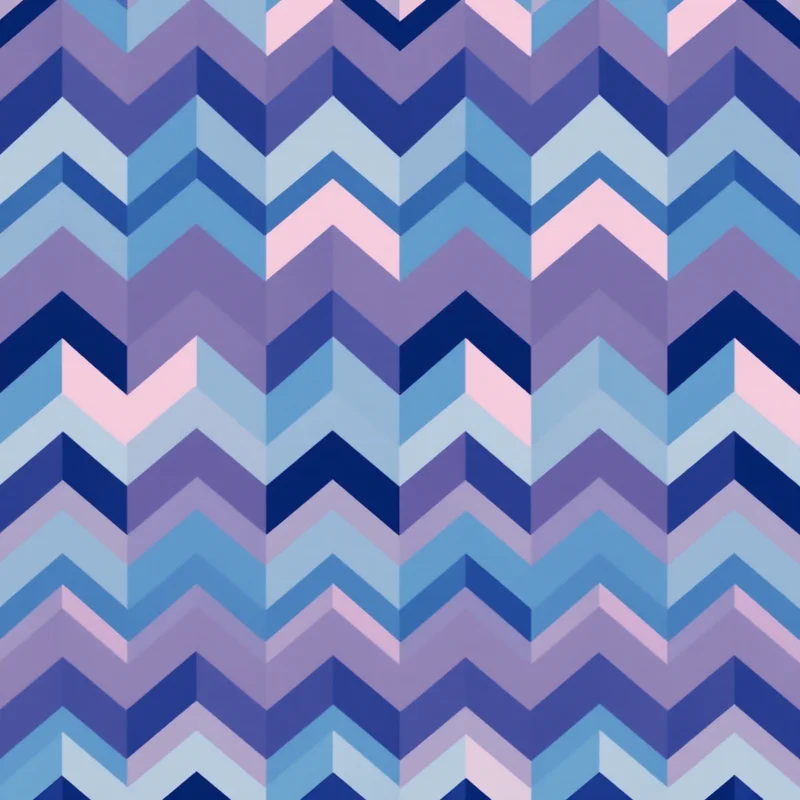
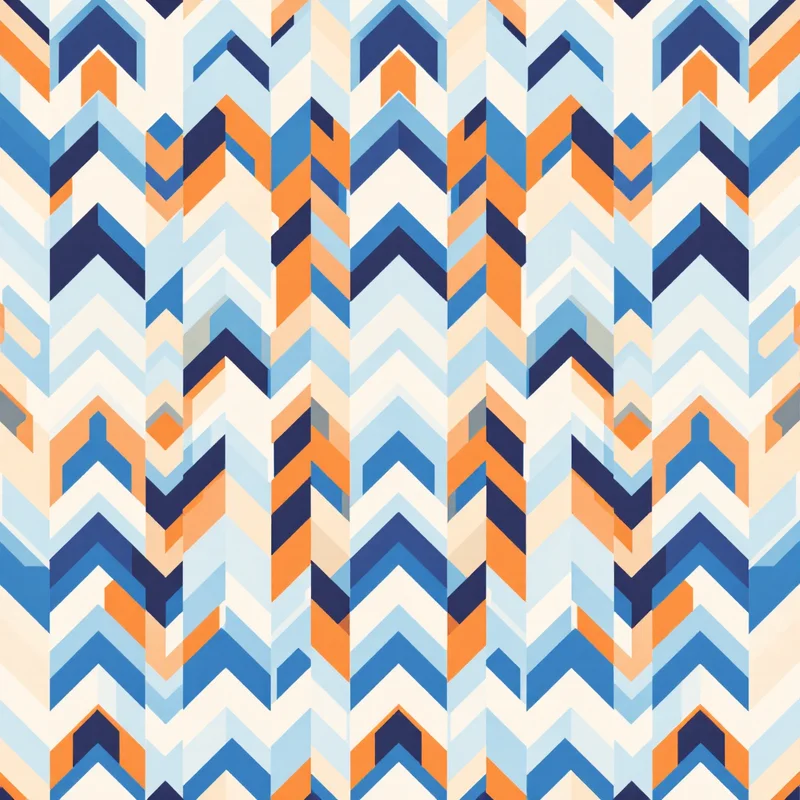
Diagonal rows of half hitch knots form V-shapes and chevrons that are among the most striking macrame patterns. By working half hitches diagonally from center to edges (or edges to center), you create crisp angled lines. Stacking chevrons creates a zigzag pattern with strong visual rhythm. Varying the spacing between chevron rows adds breathing room and changes the overall density.
Chevrons work beautifully as the central motif of a wall hanging, framed above and below by sections of alternating square knots or open mesh.
Diamond Patterns
Diamonds are created by combining two chevrons -- one pointing down, one pointing up -- to form a closed rhombus shape. The interior of the diamond can be left open as negative space, filled with square knots for a solid center, or decorated with berry knots for textural contrast. A column of connected diamonds creates a medallion effect that draws the eye vertically through the piece.
Leaf and Feather Shapes
Diagonal half hitches worked outward from a central spine create leaf or feather shapes. The angle and length of each row of knots determines the leaf's proportions. Wide, gentle angles produce broad tropical leaves. Steep angles create narrow, elongated feather shapes. These organic forms bring a botanical quality to macrame that complements the bohemian aesthetic.
Fringe and Texture Zones
The bottom edge of most wall hangings features fringe -- unworked cord ends that hang freely. But fringe is a design element, not just a finishing detail. Angled fringe (cut in a V or curve) adds shape. Brushed fringe (where the cord plies are separated and combed) creates a soft, flowing texture that contrasts with the structured knots above. Uneven, organic fringe creates a raw, natural edge.
Plant Hanger Patterns
Plant hangers are three-dimensional macrame, and their pattern design must account for structure as well as aesthetics.
The classic plant hanger alternates between knotted sections and open gaps where the cords spread apart, creating a net that cradles the pot. The pattern is typically symmetrical around the central axis, with 3 or 4 cord groups worked identically.
Spiral sinnet hangers use continuous half hitch spirals instead of square knots, creating twisted rope columns that are both decorative and strong. The spiral adds visual movement and works especially well with natural jute cord.
Multi-tier hangers stack two or three plant cradles vertically, connected by knotted or braided sections. The pattern challenge here is maintaining consistent spacing and tension across multiple levels while keeping the visual design cohesive.
Finding Pattern Inspiration with AI
While AI pattern generators do not create macrame knot charts, they are remarkably useful for macrame design inspiration. The visual language of macrame -- geometric shapes, bilateral symmetry, diamond lattices, chevron bands, organic flowing forms -- overlaps significantly with surface pattern design.
When browsing or generating patterns for macrame inspiration in the studio, focus on these elements.
Bohemian and folk styles capture the aesthetic territory of macrame naturally. The motif families -- diamonds, arrows, layered geometric bands -- map directly to knot patterns you can execute in cord.
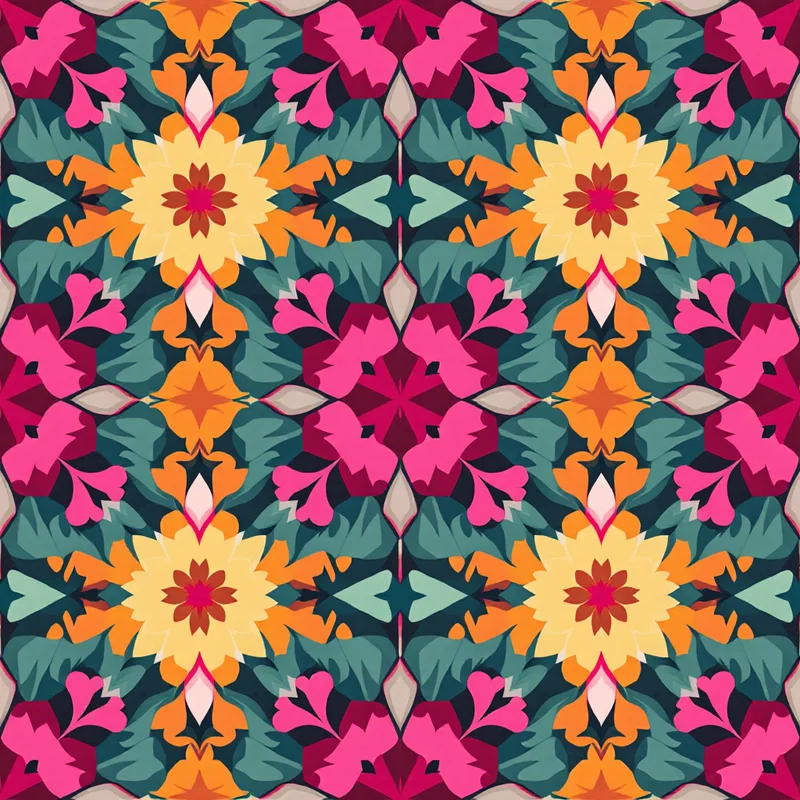
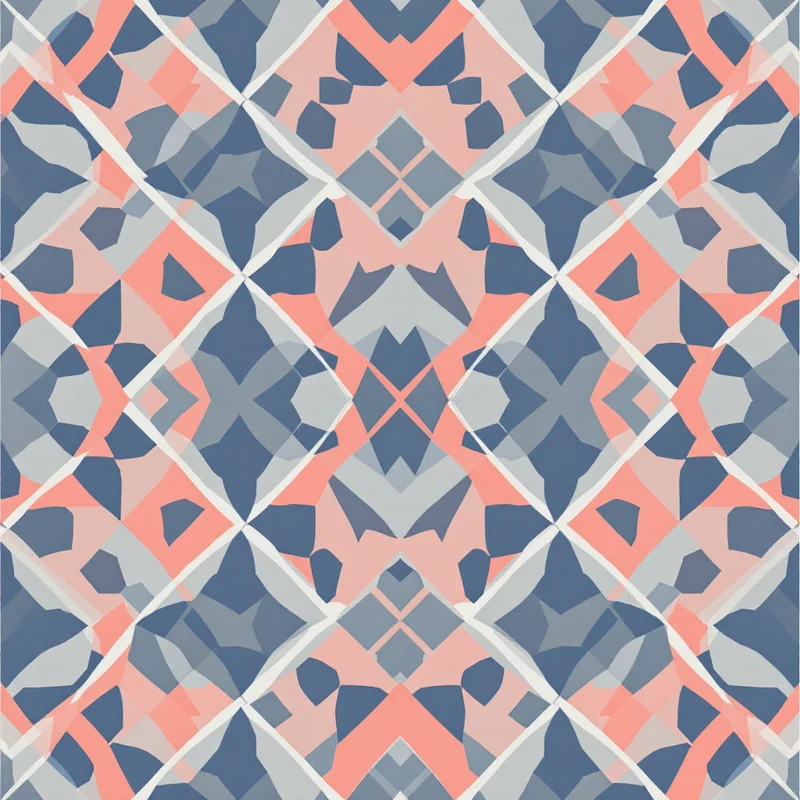
Geometric patterns with strong bilateral symmetry suggest wall hanging compositions. A pattern with a central diamond motif flanked by chevron borders translates almost directly to a macrame layout: the diamond becomes a half-hitch diamond, the chevrons become diagonal knot rows, and the spaces between become alternating square knot mesh.
Density and negative space are as important in macrame as in surface pattern design. Study how generated patterns balance filled and open areas. A macrame wall hanging that is solid knots from top to bottom looks heavy and loses the interplay between cord and air that gives the medium its character. Patterns with intentional open space -- windows, gaps, mesh sections -- suggest compositions where the wall behind the hanging becomes part of the design.
Color placement in generated patterns can inspire multi-cord-color macrame. While most macrame uses a single natural cord color, dip-dyed cord, multiple cord colors, and ombre effects are increasingly popular. A generated pattern with a two or three-color palette shows you where color transitions might work in a knotted piece.
Material Considerations
The cord you choose affects which patterns are practical.
3mm single-strand cotton cord is the most common macrame material and handles all pattern types well. It knots cleanly, holds its shape, and brushes into soft fringe.
4-5mm three-strand rope creates bolder, chunkier knots that read well from a distance. Good for large wall hangings and thick plant hangers. Less suitable for fine detail work.
Natural jute and hemp have a rougher texture and more organic appearance. They hold spiral knots especially well but are harder on the hands for extended knotting sessions.
2mm or thinner cord allows fine, detailed work with tight knot patterns. Requires patience but produces delicate, jewelry-like results suitable for small wall hangings and ornamental pieces.
Designing Your Own Macrame Patterns
The most effective approach to macrame pattern design combines visual inspiration with structural thinking.
Start with the overall shape. Most wall hangings are widest at the top and narrow toward the bottom, following the natural geometry of cords hanging from a dowel. Decide whether your piece will be triangular, rectangular, or asymmetrical.
Divide the height into zones. A typical composition has an opening section (gathering knots or a short row of square knots), a main body (where the primary pattern lives), a transition zone, a secondary pattern area, and fringe. Each zone uses different knot combinations and densities.
Sketch the pattern on paper before you cut any cord. Mark diamond positions, chevron angles, and open spaces. This sketch is your map. For symmetrical designs, you only need to draw one half.
Calculate your cord lengths generously. Macrame consumes far more cord than you expect -- a general rule is to cut cords 4 to 8 times the finished length of the piece, depending on knot density. Running out of cord mid-project is the most common macrame frustration.
Browse bohemian and geometric patterns in the style library for visual inspiration that you can translate into your next knotted creation.
Explore related pattern styles
Patterns for