Ikat represents a fundamentally different approach to pattern generation than the structured, intentional composition of toile or chinoiserie. Rather than designing a pattern and then rendering it onto fabric, ikat emerges from the physical properties of a dyeing technique: pre-patterning yarns before weaving by selectively binding and dyeing them in resist. The result is patterns with characteristic soft, blurred edges — never perfectly sharp, always slightly unpredictable.
This technical origin — embedded in the very process of creation — is why ikat patterns feel different from their printed counterparts. The visual signature is unmistakable: motifs with feathered, watercolor-like edges that seem to shift and diffuse rather than declare themselves with geometric clarity. In an era where precision and control dominate design aesthetics, ikat's embrace of blur and variation reads as deeply human and authentically handcrafted.
Ikat originated independently across multiple cultures: Indonesian ikat (particularly from Sumba, Timor, and Bali), Indian ikat (concentrated in Telangana and Gujarat), Central Asian ikat (from Tajikistan and Uzbekistan), and Japanese ikat (kasuri). Each regional tradition developed distinct visual characteristics, color palettes, and motif vocabularies. Today, ikat appears across fashion, home furnishings, textiles, and bohemian branding — commercially viable precisely because the "imperfect" aesthetic appeals to contemporary consumers seeking authenticity and handcraft values.
The Defining Characteristics of Ikat Patterns
Ikat's visual language is defined by its technical origins. Understanding the resist-dye process is essential to understanding what makes ikat aesthetically distinctive.
The Characteristic Blur and Soft Edges
The hallmark of ikat is the soft, feathered edge that defines every motif. This is not a design choice but a technical inevitability: when yarns are bound and dipped in dye, the dye penetrates unevenly at the boundaries, creating gradual color transitions rather than sharp demarcation lines. This blur is not a flaw — it is the defining visual characteristic.
In authentic ikat, the blur follows a consistent logic: it is typically symmetrical (the same degree of softness on all sides of a motif) and it corresponds to how tightly the yarn was bound during resist. Tighter binding creates sharper edges; looser binding creates more dramatic blur.
Contemporary ikat printed patterns (as opposed to woven ikats) attempt to replicate this blur through illustration or digital techniques. The most successful printed ikats embrace the blur intentionally rather than treating it as an approximation of an impossible technical ideal.
Geometric and Abstract Motifs
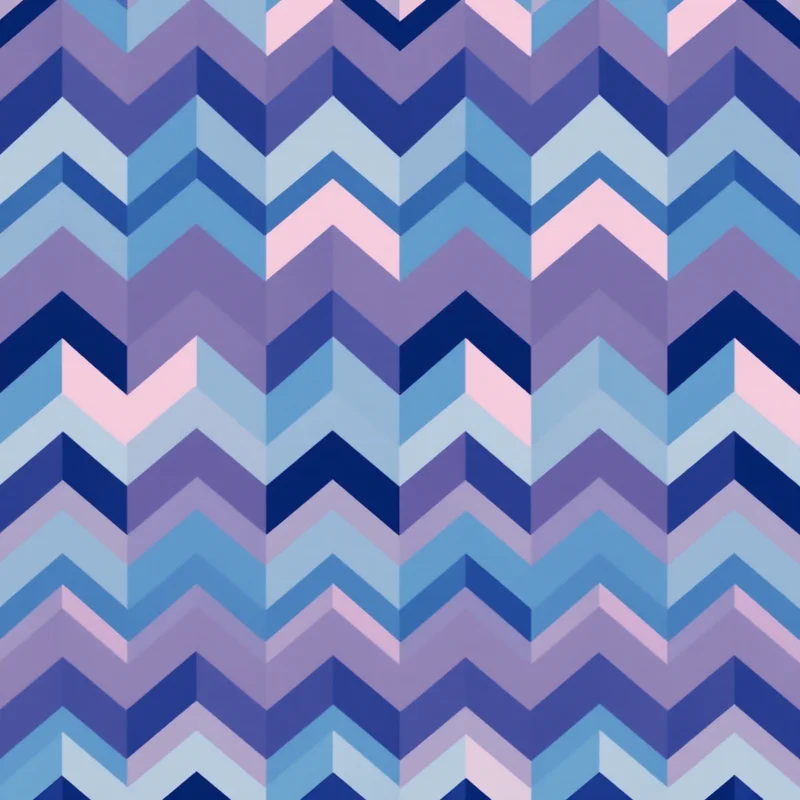
Unlike representational patterns like toile or chinoiserie, ikat patterns are almost exclusively geometric and abstract. Diamonds, stepped shapes, zigzags, chevrons, dots, and interlocking geometric forms dominate. The reason is practical: geometric shapes are easier to execute accurately in resist-dye processes than representational imagery.
However, this practical constraint became an aesthetic principle. Ikat's power comes from the interplay between geometric clarity (the intended shape) and organic blur (the dye's actual behavior). A complex representational image would lose coherence in the blur; a geometric form reads clearly even with soft edges.
Color and Dyeing Traditions
Historic ikats are typically limited in color palette, using natural dyes. Indigo (the most stable and most universal natural dye) dominates, often combined with red (from madder root), yellow (from various sources), or brown earth tones. Single-color ikats (typically indigo on cream linen) are remarkably common, particularly in Central Asian traditions.
Contemporary industrial ikat production uses synthetic dyes, enabling broader color palettes. However, the strongest contemporary ikats tend to limit themselves to three to five colors maximum — maintaining the color discipline of traditional textile work while exploiting modern dye stability.
Repeat and Pattern Structure
Ikat patterns work with seamless repeats just like any printed pattern. However, authentic ikat emphasizes that the dye-and-weave process creates variation — no two ikat pieces are perfectly identical. Even patterns from the same loom produce slight variations in color intensity, edge sharpness, and motif alignment.
Contemporary ikat printed patterns sometimes attempt perfection (identical repeats with mechanical precision). The strongest modern interpretations instead embrace slight variation, suggesting hand involvement even in industrial production. This paradoxically makes the pattern feel more authentic even though it is mass-produced.
Historical Origins: Geographies of Resist Dye
Ikat emerged independently across multiple geographic regions, each developing distinctive characteristics.
Indonesian Ikat: Sumba, Timor, and Bali
Indonesian ikat, particularly from the islands of Sumba and Timor, represents some of the world's most technically sophisticated resist-dye weaving. Sumatran women developed double ikat — where both warp and weft yarns are resist-dyed before weaving, requiring extraordinary precision. Motifs tend toward geometric diamonds, stepped forms, and interlocking patterns. Colors are traditionally limited (indigo, red, cream, sometimes brown), creating a distinctive visual character.
Balinese ikat, by contrast, tends toward more pictorial motifs and broader color ranges. Contemporary Balinese ikat production has expanded dramatically, making it the most commercially available traditional ikat globally.
Indian Ikat: Telangana, Gujarat, and Odisha
Indian ikat traditions concentrate in specific regions. Telangana and Andhra Pradesh are famous for double ikat silk sarees — extraordinarily complex works requiring months of preparation. Gujarat produces single ikat cotton and silk. These Indian traditions emphasize more pictorial possibilities within geometric frameworks — chevrons that suggest movement, diamonds suggesting flowers, interlocking forms suggesting narrative.
Indian ikat typically employs richer color palettes than Indonesian traditions, using multiple colors simultaneously. The market for Indian ikat sarees remains economically significant, particularly as heritage craft production and luxury fashion segments.
Central Asian Ikat: Tajikistan and Uzbekistan
Central Asian ikat (particularly from Tajikistan and Uzbekistan) developed distinctive geometric forms and color traditions. The iconic Central Asian ikat features bold diamond and chevron forms, often in limited color palettes (indigo, red, cream). These patterns became central to Central Asian textile traditions and continue to influence contemporary global ikat aesthetics.
Japanese Kasuri: Geometric Precision
Japanese ikat (called kasuri, meaning "blur") developed along similar lines but with distinctive characteristics. Japanese kasuri emphasizes geometric precision within the blur — motifs are clearly intentional and carefully composed, but the edges are softly blurred according to the weaving process. This combines geometric clarity with organic variation in distinctive proportion.
Color Palettes and Dye Traditions
Ikat's color story is deeply connected to available dyes and regional color preferences.
Classic Indigo: The Universal Base
Indigo appears in nearly every ikat tradition because it is chemically stable, produces rich, deep blues, and was available across multiple continents via trade routes. Single-color indigo on cream is perhaps the most iconic ikat palette globally. Its simplicity, stability (indigo doesn't fade easily), and visual elegance made it commercially dominant for centuries.
Indigo Plus Red: The Traditional Combination
Combining indigo with natural red dye (from madder root) creates burgundy, terracotta, and warm brown tones alongside blue. This two-color approach dominates traditional Indonesian and Central Asian ikats. The visual effect is warm, earthy, and distinctly textile-craft rather than mass-produced.
Multi-Hue Contemporary: Jewel Tones and Beyond
Modern ikat production uses synthetic dyes, enabling complex color combinations. Contemporary ikats might combine indigo with coral, emerald, saffron, purple, and cream simultaneously. While this departs from traditional practices, it reflects market demand for visual richness and allows ikat aesthetics to serve contemporary interior design and fashion contexts.
Earth Tones and Monochrome: Minimalist Ikat
Some contemporary ikats embrace muted earth tones (rust, ochre, taupe) or single-color approaches. These work particularly well in minimalist interiors and contemporary fashion, where ikat's blur aesthetic adds visual interest without color intensity.
Commercial Applications and Market Positioning
Ikat occupies a unique market position: it is simultaneously a heritage craft tradition and a contemporary trend. This duality makes it commercially valuable across multiple segments.
Fashion and Textile Design
Ikat appears extensively in contemporary fashion — dresses, shirts, scarves, and structured garments. The blur aesthetic reads as artisanal and handcrafted, appealing to consumers valuing authenticity. High-end fashion brands regularly incorporate ikat prints. The pattern's geometric structure makes it work well at scale and in structured garments.
Ikat is central to bohemian and ethnic fashion aesthetics. Indie fashion brands and fair-trade organizations have built significant market presence around ikat textiles, particularly Indian and Indonesian production.
Home Furnishings and Interior Design
Ikat upholstery, curtains, and decorative textiles have strong market presence in bohemian, eclectic, and global interior design contexts. The pattern's artistic appearance and cultural associations make it ideal for spaces emphasizing authenticity and handcraft. Contemporary interior designers frequently use ikat as accent textiles, mixing it with solid-colored companions.
Accessories and Artisanal Branding
Ikat scarves, bags, pouches, and decorative accessories have strong craft-market and luxury retail positioning. The pattern's visual distinctiveness makes these items feel like minor artworks — each piece is subtly unique due to the nature of resist-dye production.
Bohemian and Ethical Branding
Ikat is central to bohemian, eco-conscious, and fair-trade branding. The pattern communicates hand-work, global taste, and craft authenticity — valuable positioning for brands emphasizing ethics and cultural respect. Fair-trade organizations have built substantial market presence around ikat production, particularly from Indonesia and India.
Creating Authentic Ikat Patterns
Designing ikat patterns requires understanding both the geometric motif vocabulary and the characteristic blur that defines the aesthetic.
Motif Development
Start with clear geometric forms: diamonds, stepped shapes, chevrons, dots, or interlocking angular patterns. Avoid representational imagery — ikat's power depends on geometric clarity. Sketch multiple motif variations and arrangements, understanding how they will repeat seamlessly.
Blur and Edge Quality
The characteristic soft edge is ikat's defining visual signature. Digital illustration and printing cannot replicate the organic randomness of actual resist-dye production, but they can suggest it. Apply intentional blur/feather effects to all motif edges, creating soft transitions rather than sharp demarcation. The blur should be consistent in approach but can vary slightly in intensity to suggest handwork.
Color Application
Limit color palettes to maintain visual coherence and readability. Two to four colors maximum works best. Apply colors with attention to how they interact — ikat traditionally uses colors that have worked well historically (indigo with red, indigo with cream), but contemporary applications can depart from this if the resulting palette maintains visual harmony.
Seamless Repeat Strategy
Arrange motifs to create a seamless repeat that reads as balanced and intentional. Ikat patterns often use symmetrical arrangements or carefully offset repeats that create secondary pattern formations when multiple tiles are viewed together.
Tools like Pattern Weaver can help by generating ikat-structured patterns with appropriate motif geometry and blur characteristics, allowing designers to focus on color refinement and compositional balance.
Contemporary Ikat: Heritage Craft Meets Modern Design
Contemporary ikat design exists on a spectrum from strict traditional reproduction to self-conscious modern reinterpretation.
Heritage Production and Fair Trade
Traditional ikat production remains economically significant, particularly in Indonesia and India. Fair-trade and heritage craft organizations have created sustainable market channels for traditional ikat, positioning it as ethical, culturally-respectful production. This segment emphasizes authenticity, hand-involvement, and cultural knowledge.
Modern Printed Ikat and Digital Aesthetics
Contemporary designers create ikat-inspired printed patterns that capture the blur aesthetic while using modern production and unlimited color ranges. These patterns appear in mainstream fashion, home furnishings, and branding — they are "ikat-adjacent" rather than authentic ikat, but they democratize the aesthetic and make it commercially accessible.
Fusion and Cross-Cultural Innovation
Some contemporary designers blend ikat geometric language with other cultural traditions or contemporary illustration styles. While this departs from strict ikat traditions, it demonstrates the pattern's visual flexibility and continued cultural relevance.
The strongest contemporary ikat work respects the tradition while being unambiguous about its intentions: either faithful heritage reproduction or clearly contemporary reinterpretation. The blur aesthetic, originally a technical constraint, has become ikat's greatest strength — it reads as authentically handcrafted precisely because it is slightly imperfect. In a design world obsessed with precision and control, ikat's embrace of organic variation and soft edges positions it as fundamentally human and artisanal, a positioning that continues to drive commercial demand across fashion, home furnishings, and contemporary luxury markets.
Explore related pattern styles
Patterns for