Starting crochet can feel overwhelming. There are hundreds of stitches, dozens of techniques, and thousands of patterns to choose from. But the truth is that most beautiful crochet projects are built from a handful of basic stitches arranged in clever ways. Colorwork — using different yarn colors to create patterns and images — is one of the most rewarding places to start because even simple color changes produce dramatic results.
Key takeaway: You only need to know single crochet and how to change colors to start making colorwork patterns. Begin with 2-color geometric designs on small projects like coasters or mug rugs, then scale up as your confidence grows.
What You Need to Start
Yarn: Medium weight (worsted weight, also called #4 or aran) is the easiest to work with. It is thick enough to see your stitches clearly and widely available in every color. Choose acrylic for practice — it is inexpensive, machine washable, and comes in hundreds of colors. Cotton is excellent for coasters and kitchen items but has less stretch, which can tire your hands.
Hook: Match your hook size to your yarn. Worsted weight yarn typically uses a 5mm (H/8) or 5.5mm (I/9) hook. If your stitches feel tight and hard to insert the hook, go up a size. If they look loose and floppy, go down.
Scissors and a yarn needle for cutting yarn and weaving in ends. That is genuinely all you need to begin.
The Only Stitches You Need
For colorwork patterns, single crochet (sc) is your primary stitch. Here is why:
Single crochet produces a nearly square stitch — roughly the same width as height. This means a colorwork chart with equal-sized grid squares will look proportionally correct in single crochet fabric. Taller stitches like double crochet stretch the design vertically, distorting circles into ovals and squares into rectangles.
Single crochet is also the densest basic stitch, which means less yarn shows between stitches and color changes look cleaner. In tapestry crochet, the dense fabric hides the carried yarn strands inside.
You also need to know chain (ch) for your foundation row and turning chains, and slip stitch (sl st) if working in rounds.
That is three things: chain, single crochet, slip stitch. Everything else is optional for now.
Changing Colors
Color changes in crochet happen on the last yarn-over of the stitch before the new color begins. This is the most important technique for colorwork and it is simpler than it sounds:
- 1Insert hook into the next stitch
- 2Yarn over and pull up a loop (you now have 2 loops on the hook)
- 3Drop the old color, pick up the new color
- 4Yarn over with the new color and pull through both loops
The new color appears as the top of the stitch you just completed. Practice this on a swatch until the motion feels natural — it becomes automatic quickly.
Carrying yarn: In tapestry crochet, you do not cut the yarn when changing colors. Instead, you lay the unused color along the top of the previous row and crochet over it. This traps it inside the fabric, ready to be picked up when you need it again. The result is a thick, sturdy fabric with no loose strands on the back.
Your First Colorwork Projects
1. Two-Color Striped Coaster
The simplest colorwork project. Chain 20, single crochet for 2 rows in Color A, then 2 rows in Color B. Repeat until square. You will practice color changes at the beginning of rows without worrying about mid-row switches.
What you learn: Foundation chain, single crochet rows, color changes at row beginnings, counting stitches, maintaining straight edges.
2. Checkerboard Coaster
Work blocks of 5 stitches in alternating colors across each row. Offset the blocks every 5 rows to create a checkerboard. This introduces mid-row color changes, which are the foundation of all graphical colorwork.
What you learn: Mid-row color changes, carrying yarn, reading a simple chart, maintaining consistent tension across color changes.
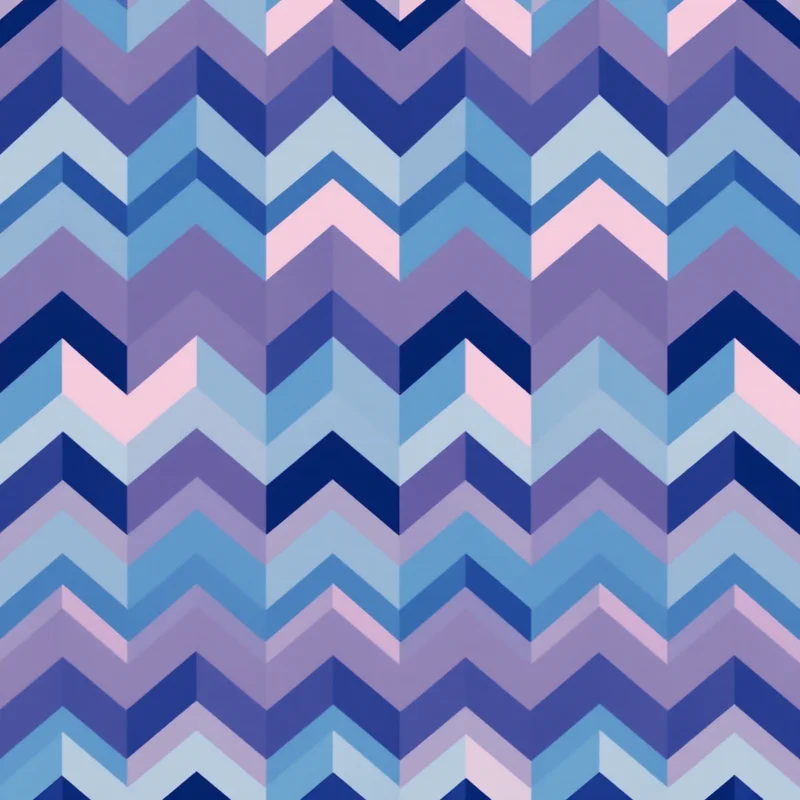
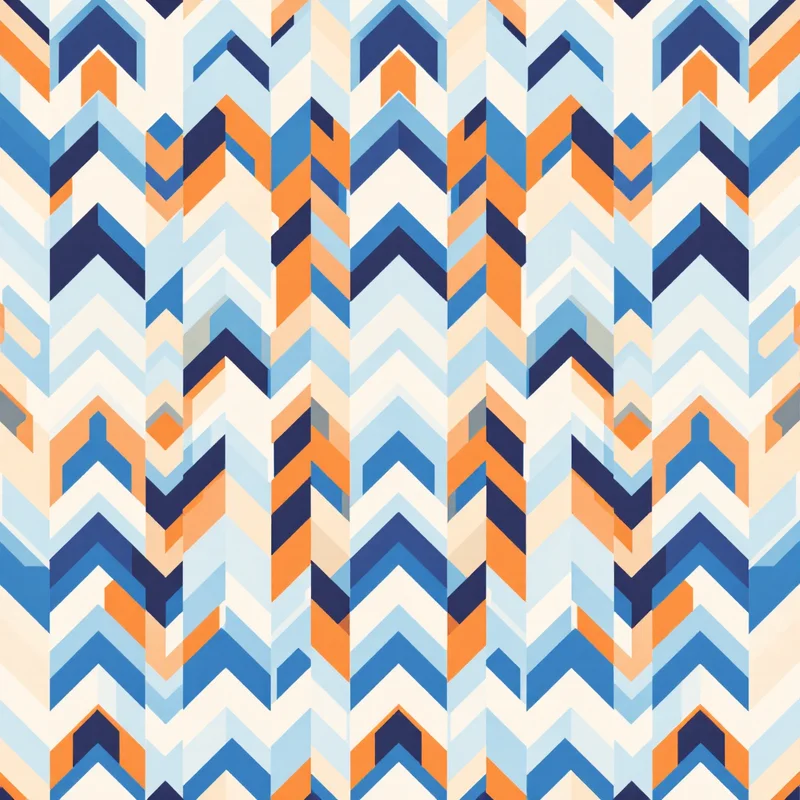
3. Simple Chevron Scarf
Chain a multiple of 12 plus 3. Work the chevron pattern by increasing 2 stitches at the peak of each zigzag and decreasing 2 stitches at each valley. Change colors every 2-4 rows for a striped zigzag effect.
What you learn: Increases (2 sc in same stitch), decreases (sc2tog), shaping, how increases and decreases create geometric shapes.
4. Granny Square
The classic beginner project. Chain 4, slip stitch to form a ring, then work rounds of 3-double-crochet clusters separated by chain spaces. Change colors each round for a colorful square. Make several and join them into a scarf, pillow cover, or small blanket.
What you learn: Working in rounds, chain spaces, stitch clusters, joining rounds, changing colors between rounds, joining squares.
5. Geometric Chart Mug Rug
This is where AI-generated patterns become useful. Generate a simple geometric pattern — diamonds, crosses, or a simple star — in pixel-art or mosaic style with just 2 colors. Use the pattern as a chart: each pixel is one single crochet stitch. Work the chart row by row in tapestry crochet.
Start small: 25 stitches wide, 25 rows tall. This produces a coaster or mug rug and gives you real experience reading and following a colorwork chart.
What you learn: Reading a chart, tapestry crochet technique, carrying yarn across multiple stitches, translating a digital pattern to yarn.
Choosing Colors That Work
Color choice makes or breaks a crochet project. Here are rules that prevent disappointment:
High contrast first. Your first colorwork project should use a dark and a light color — navy and cream, black and white, dark green and pale yellow. High contrast ensures the pattern is visible. Low-contrast combinations (like two pastels) look subtle on screen but muddy in yarn.
Squint test. Display your color palette on screen and squint. If the colors blur into each other, they are too close in value. Each color in your pattern needs to be clearly distinguishable at arm's length — which is how people will see your finished project.
Solid yarns only. Avoid variegated, self-striping, or speckled yarn for colorwork. The color variations compete with your pattern and make it illegible. Save fancy yarns for single-color projects where their variation is the star.
Three colors maximum for your first charted project. Two is ideal. Each additional color adds complexity — more ends to weave in, more yarn to carry, more chances for tension inconsistencies.
Reading Crochet Charts
A crochet chart is a grid where each cell represents one stitch. Colored cells tell you which yarn color to use.
Right side rows (odd numbers) are read right to left. Wrong side rows (even numbers) are read left to right. This matches the direction you are crocheting — right to left on right-side rows, left to right when you turn.
If working in the round (tubes, bags, hats), every row is read right to left because you never turn the work.
Row 1 is the bottom of the chart. You build upward, just as you crochet upward from the foundation chain.
Most AI-generated pattern tiles show one complete repeat. If your project is wider than one repeat, you simply continue the chart from the beginning again when you reach the right edge. A 20-stitch repeat on a 60-stitch project means you work the chart 3 times across each row.
Common Beginner Mistakes
Accidentally adding or losing stitches. Count your stitches at the end of every row until counting becomes automatic. Your stitch count should stay constant (except in shaping patterns like chevrons).
Tight color changes. When switching colors, do not pull the new yarn too tight. The transition stitch should be the same size as every other stitch. Practice maintaining even tension through color changes.
Forgetting which row you are on. Use a row counter, a tally on paper, or a stitch marker that you move up each row. Losing your place in a chart means frogging (ripping out) rows, which is frustrating.
Not weaving in ends as you go. Every color change creates yarn tails. Weave them in every few rows rather than saving them all for the end. A finished blanket with 200 unwoven ends is demoralizing.
Where to Find Free Patterns
Free crochet patterns are available across dozens of platforms — Ravelry, AllFreeCrochet, Yarnspirations, and individual designer blogs. For colorwork specifically, look for patterns tagged as tapestry crochet, C2C (corner to corner), or mosaic crochet.
AI pattern generators add another dimension. Instead of searching for a pattern someone else designed, you generate exactly what you want — your colors, your motifs, your scale. The generator handles the design; you handle the making. For beginners, this means you can start with patterns perfectly calibrated to your skill level: simple geometrics in 2 colors at a manageable scale, getting more complex as your skills grow.
The most important thing is to start. Pick up the hook, chain 20, and make your first row of single crochet. Everything else follows from there.
Explore related pattern styles
Patterns for