
Fabric patterns are the visual language of textile design. Whether you are choosing upholstery for a living room, selecting a print for a dress, or designing your own repeating pattern for production, knowing the vocabulary of fabric patterns gives you a serious advantage. A "floral" is never just a floral -- it might be a ditsy, a chintz, a liberty, or a botanical, and each carries a different visual weight, history, and best use case.
This guide catalogs more than 50 fabric pattern types across seven major categories. For each pattern, you will find a concise description and typical applications.
Classic Patterns
Classic patterns are the backbone of the textile industry. They have endured for centuries because their geometry is simple, their production is efficient, and their appeal is universal.
Stripes
Parallel lines running in a single direction, varying in width, spacing, and color count. Vertical stripes elongate, horizontal stripes widen, and diagonal stripes (bias stripes) add movement. Common in shirting, upholstery, awning fabric, and casual fashion.
Plaid and Tartan
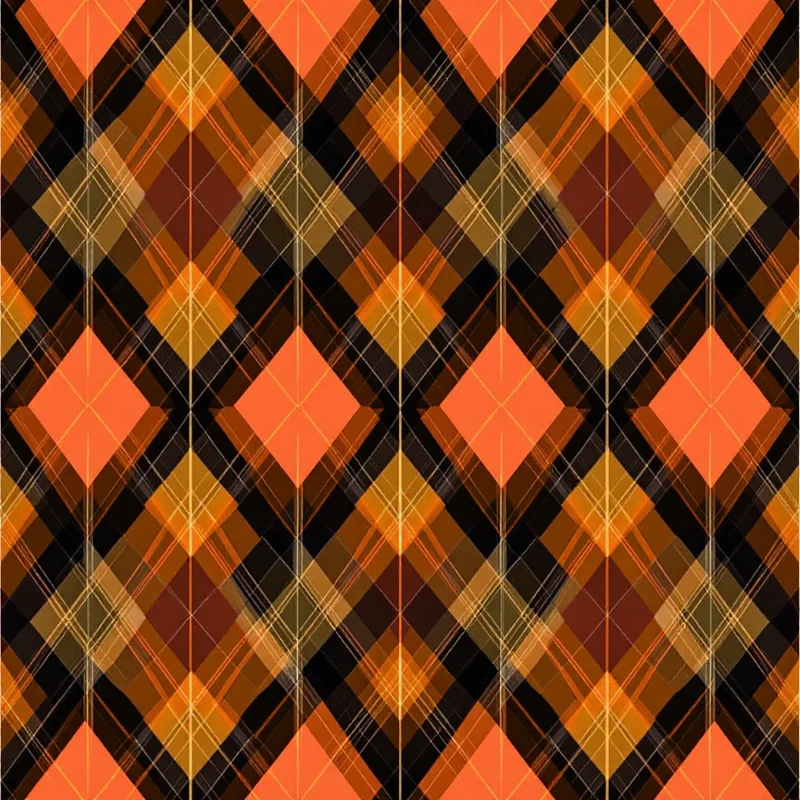
A grid of intersecting horizontal and vertical stripes that form colored blocks where the bands overlap. Tartan is a specific subset originating from Scottish clan traditions, where each color combination (called a sett) identifies a family or region. Used extensively in flannel shirts, blankets, school uniforms, and winter fashion.
Gingham
A checked pattern formed by equal-width stripes in two colors (one always white) intersecting at right angles, producing a third blended color at each crossing. A staple of summer dresses, kitchen textiles, picnic tablecloths, and country-style home decor.
Houndstooth
A broken check pattern formed by abstract four-pointed shapes that tessellate in alternating dark and light tones. Strongly associated with tailored fashion -- blazers, coats, trousers, and accessories. The classic version uses black and white.
Herringbone
A V-shaped weaving pattern resembling the skeleton of a herring fish. The zigzag columns alternate direction, creating a distinctive broken chevron effect. Common in suiting, tweed, wool coats, and upholstery where structured elegance is needed.
Polka Dot
Evenly spaced, uniformly sized circles on a contrasting background. Polka dots range from pin dots (tiny, formal) to coin dots (large, playful). Used in dresses, blouses, scarves, childrenswear, and whimsical home textiles.
Floral Patterns
Florals are the largest and most diverse family of fabric patterns, spanning every price point from fast fashion to haute couture.
Ditsy Floral
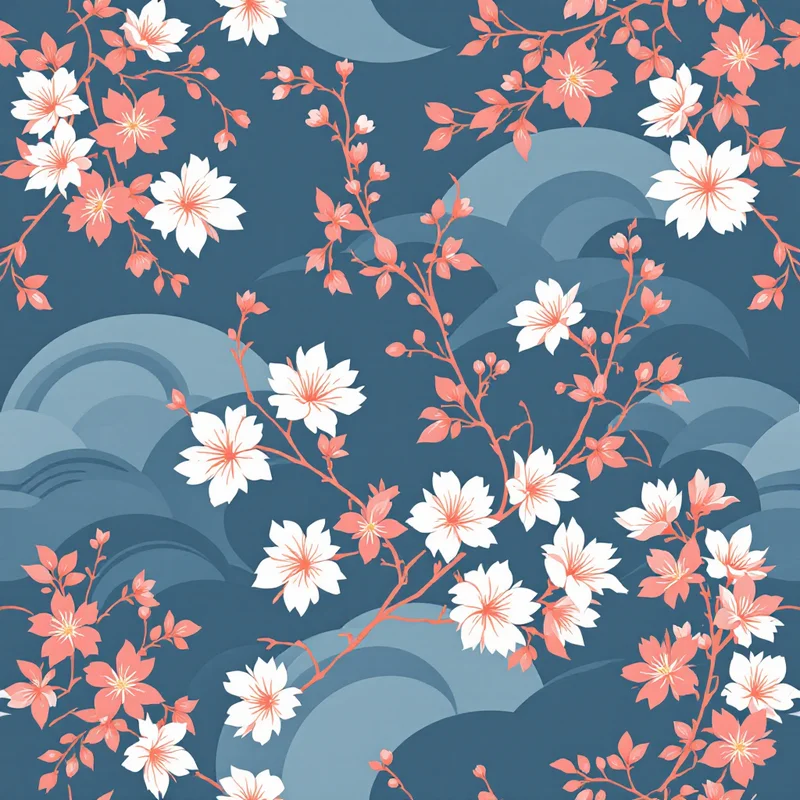
A dense scatter of tiny, simplified flowers distributed randomly across the fabric surface. The motifs are small enough that the pattern reads as texture from a distance. Versatile across quilting cotton, flowing dresses, casual fashion, and childrenswear.
Liberty Print
A style of dense, intricate, small-scale floral printing associated with Liberty of London. Liberty prints use finely detailed flowers, rich palettes, and tight repeat layouts. More refined than ditsy, more compact than botanical. Used in premium shirting, dresses, and quilting.
Chintz
Large, realistic flowers -- often roses, peonies, or chrysanthemums -- rendered in a painterly style. Traditional chintz originated in India and became enormously popular in European interiors during the 17th century. A cornerstone of English country decor, used in drapery, slipcovers, and cushions.
Botanical
Detailed, often scientifically accurate illustrations of plants, flowers, leaves, and sometimes insects. Botanical patterns draw from the tradition of herbarium art and carry a sense of educated refinement. Used in premium home textiles, stationery, wallpaper, and naturalist fashion.
Tropical
Bold, large-scale depictions of exotic foliage -- monstera leaves, palm fronds, hibiscus, bird of paradise. Saturated color palettes and loose, overlapping compositions evoke resort wear and warm-weather living. Common in Hawaiian shirts, swimwear, and outdoor cushions.
Watercolor Floral
Flowers rendered in a soft, translucent style that mimics watercolor painting. Edges are diffused, colors bleed into one another, and the effect is dreamy and painterly. Popular for wedding stationery, bridalwear, soft furnishings, and high-end fashion prints.
Geometric Patterns
Geometric patterns rely on mathematical shapes, symmetry, and repetition. They read as modern and structured, though many geometric motifs have ancient origins.
Chevron
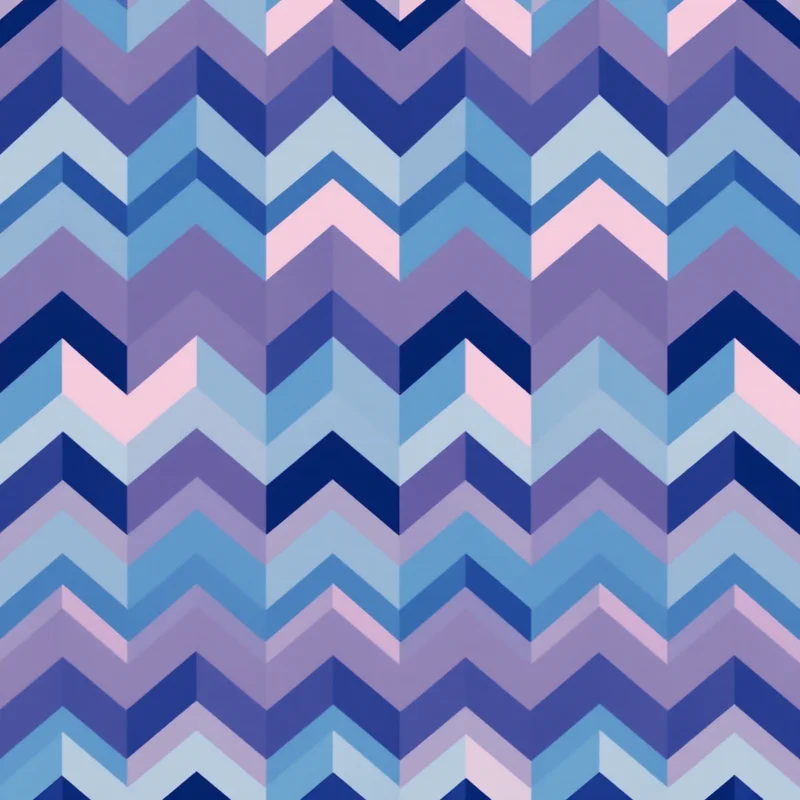
A zigzag pattern formed by V-shapes stacking vertically or horizontally. Unlike herringbone, chevron lines are continuous and unbroken. Popular in knit textiles, home decor throws, and contemporary fashion, especially in two-color combinations.
Hexagonal
Patterns built on a honeycomb grid of six-sided polygons. Hexagonal tessellations can be simple outlines, filled cells, or complex compositions where each hexagon contains a different motif. Used in quilting, geometric fashion prints, and modern interiors.
Tessellation
Shapes that interlock to fill a plane with no gaps or overlaps -- think M.C. Escher's morphing birds and fish. The interlocking itself is the visual feature. Popular in contemporary surface design, geometric fashion, and architectural textiles.
Greek Key (Meander)
A continuous line folded into a repeated rectangular motif resembling a labyrinth. Dating to ancient Greece, it conveys classical elegance and is used as a border on luxury textiles, towels, robes, and high-end fashion accessories.
Trellis
A lattice of intersecting diagonal or curved lines forming a repeating diamond framework, often with a secondary motif at each intersection. Trellis patterns evoke garden architecture and are a mainstay of traditional home decor -- drapery, wallpaper, and bedding.
Ogee
An S-curve framework where two opposing arcs form a pointed oval motif repeating in a grid. A foundational shape in Islamic art and Renaissance ornament. In fabric, ogee patterns feel formal and rhythmic -- used in damask-style prints, drapery, and formalwear.
Cultural Patterns
Cultural patterns carry the visual heritage of specific regions and craft techniques. They bring depth and narrative to textiles.
Paisley
A teardrop-shaped motif with a curved upper end, originating in Persia and industrialized in the Scottish town of Paisley in the 19th century. One of the most globally recognized fabric patterns, used in scarves, ties, bandanas, bohemian fashion, and upholstery.
Ikat
A resist-dyeing technique applied to yarn before weaving, producing motifs with characteristically blurred, feathered edges. Ikat traditions span Central Asia, Southeast Asia, and Latin America. The slight imprecision gives ikat its handcrafted warmth. Used in home decor, boho fashion, and cushion covers.
Batik
A wax-resist dyeing technique from Java, Indonesia, producing intricate patterns with characteristic crackle lines where dye seeps through fractures in the wax. Traditional motifs carry symbolic meaning. Batik-inspired prints are used in fashion, home textiles, and artisanal accessories worldwide.
Shibori
A Japanese manual resist-dyeing technique where fabric is folded, twisted, bound, or stitched before dyeing. Common styles include arashi (pole-wrapped) and itajime (folded and clamped). The resulting patterns are organic and meditative. Used in indigo fashion, home textiles, and minimalist decor.
Kente
A strip-woven cloth from the Akan people of Ghana, characterized by bold, brightly colored geometric blocks in horizontal strips. Each color combination carries specific meaning. Kente-inspired prints are used in fashion, accessories, and celebratory garments.
Damask
A reversible pattern woven on a jacquard loom where the motif is created by contrasting satin weaves. Traditional motifs include scrolling florals, acanthus leaves, and medallions. Tone-on-tone, relying on light and shadow rather than color contrast. Synonymous with formal elegance in table linens, drapery, and bridal fabrics.
Nature-Inspired Patterns
Nature-inspired patterns draw from the organic world -- animals, landscapes, celestial bodies, and the textures of the outdoors.
Animal Print
Patterns replicating the markings of animals -- leopard spots, zebra stripes, snakeskin scales, cheetah rosettes. Animal prints carry connotations of boldness and luxury. Used in fashion, accent cushions, and statement upholstery.
Toile (Toile de Jouy)
A single-color scenic print, traditionally in blue, red, or black on cream, depicting pastoral landscapes or historical scenes. Originating in 18th-century France, toile is closely associated with French country decor. Used in drapery, bedding, wallpaper, and upholstery.
Woodland
Forest motifs -- trees, mushrooms, ferns, foxes, owls, deer, pinecones. Woodland prints range from realistic to whimsical. Popular in childrenswear, nursery decor, quilting cotton, and rustic home textiles.
Nautical
Motifs from maritime life -- anchors, ropes, sailboats, lighthouses, shells, compasses. Nautical patterns use a restricted palette of navy, white, and red. Perennial in summer fashion, coastal home decor, and resort collections.
Celestial
Stars, moons, suns, constellations, and cosmic motifs. Celestial prints range from mystical (crescent moons in gold on dark backgrounds) to modern (constellation maps). Used in fashion, bedding, stationery, and interior accent textiles.
Modern and Abstract Patterns
Modern patterns break from representational motifs, embracing color, movement, and spontaneity.
Abstract
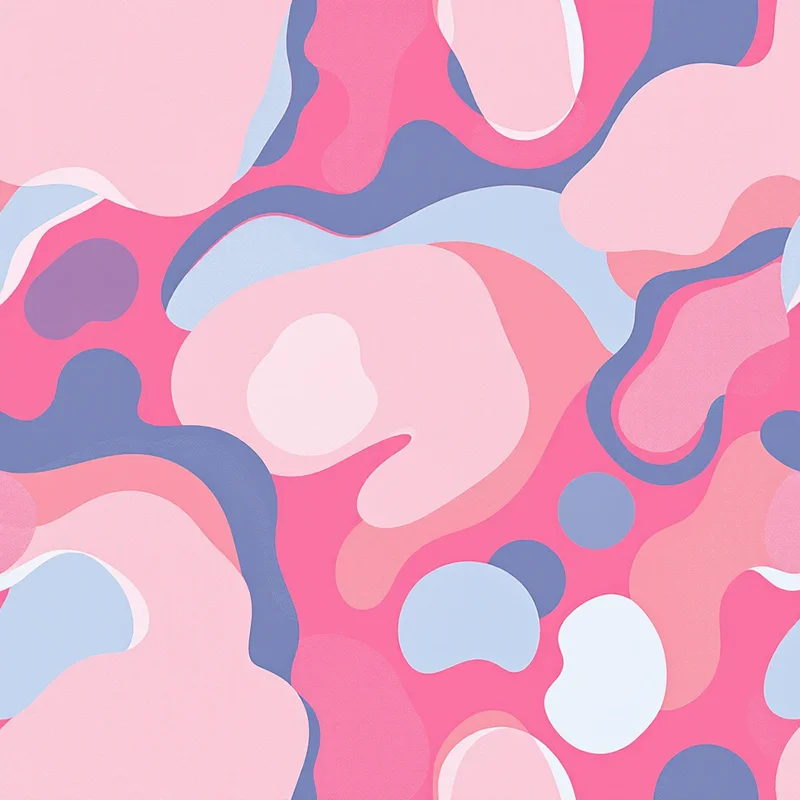
Non-representational compositions using freeform shapes, lines, and gestures. Abstract fabric patterns draw from mid-century modern art and contemporary graphic design. Used in statement fashion, art-forward interiors, and commercial surface design.
Color Block
Large, flat areas of solid color in bold, graphic arrangements. Color blocking translates modernist art principles (Mondrian, color field painting) into textile form, relying on color relationships rather than motifs. Used in contemporary fashion, activewear, and minimalist home textiles.
Tie-Dye
Radiating spirals, bullseyes, and organic blotches of color created by tying and dyeing fabric. Associated with 1960s counterculture, modern tie-dye prints (digitally rendered) are used in streetwear, activewear, and festival-inspired collections.
Marble (Marbling)
Patterns replicating the veined appearance of natural marble stone or the swirling ink effects of paper marbling. Sinuous color flows with fine veining convey luxury and natural beauty. Used in fashion, stationery, home decor, and product packaging.
Terrazzo
A pattern inspired by the composite flooring material -- irregularly shaped speckles and chips scattered across a solid background. Playful yet sophisticated. Popular in contemporary stationery, packaging, fashion accessories, and home textiles.
Textured Patterns
Textured patterns replicate the visual appearance of woven or finished fabrics, adding tactile depth without altering the actual fabric construction.
Linen Texture
Mimics the irregular, slubby weave of natural linen -- fine crosshatch lines, slight color variations, organic unevenness. Used as backgrounds in surface design and on non-linen substrates to suggest a natural hand.
Denim Texture
Replicates the twill weave and indigo color variation of denim -- diagonal ridges, subtle fading, white weft threads showing through. Used on non-denim substrates where the denim aesthetic is desired without the weight.
Tweed Texture
Mimics the multicolored, nubby surface of tweed wool -- flecked yarns, visible fiber blends, coarse warmth. Communicates heritage and British countryside styling. Used in fashion prints, packaging, and digital design.
Corduroy Texture
Replicates the raised parallel ridges (wales) of corduroy fabric. The visual effect is vertical ribbing with subtle shadow variation. Used in digital applications and alternative substrates to evoke corduroy's cozy, tactile quality.
How to Choose the Right Fabric Pattern
Selecting the right fabric pattern involves more than personal taste. Consider these practical factors.
Scale and End Use
The physical size of the finished product dictates appropriate pattern scale. A large-scale chintz looks stunning on drapery but becomes unrecognizable cut into a baby bib. Small-scale patterns (ditsy, pin dot, fine stripes) work for garments and accessories. Medium-scale patterns suit most applications. Large-scale patterns (oversized botanicals, scenic toiles) need large, uninterrupted surfaces.
Color Count and Printing Method
Every additional color increases production cost in screen printing. Rotary screen printing is cost-effective at 6-8 colors. Digital printing handles unlimited colors at a higher per-unit cost. Two-color patterns (gingham, houndstooth, toile) are the most economical to produce.
Pattern Direction and Matching
Directional patterns require careful cutting to ensure correct orientation on every piece. Non-directional patterns (polka dots, ditsy florals) can be cut in any orientation, reducing waste. Stripes and plaids require precise alignment at seams, adding time and material cost.
Context and Audience
Formal settings favor tone-on-tone textures, damasks, and subtle geometrics. Casual environments welcome bold florals and tie-dye. Children's products lean toward whimsical motifs. Browse the style catalog to survey options before narrowing your selection.
Creating Custom Fabric Patterns
The barrier to creating original fabric patterns has dropped dramatically with modern design tools.
Traditional Design Software
Adobe Illustrator and Photoshop remain industry standards. Illustrator excels at vector-based geometrics, Photoshop handles painterly patterns. Both require significant skill investment and manual repeat engineering.
AI-Powered Pattern Generation
AI pattern generators use machine learning to produce production-ready repeating patterns from parameter selections or text descriptions. the pattern generator is built for this workflow -- select a style category, substyle, color palette, density, and scale, and the AI generates a seamless, tileable pattern optimized for textile production. The Pattern Studio provides controls for fine-tuning motif type, surface finish, and layout.
AI generation is particularly valuable for:
- Rapid prototyping -- generating dozens of variations in the time it takes to sketch one manually
- Style exploration -- testing combinations of cultural styles, palettes, and motif families
- Production-ready output -- seamless, tileable files ready for fabric printing without manual repeat correction
From Digital File to Fabric
Once designed, create your tile at the correct repeat dimensions, test it by tiling digitally, adjust colors for the target printing method, export in the required format, and upload to a print-on-demand service or send to a print house for sampling.
Fabric Pattern Printing: What You Need to Know
Getting the technical specifications right is essential for translating digital pattern files into physical fabric.
Resolution (DPI)
Digital fabric printing requires a minimum of 150 DPI at print size, with 300 DPI being the industry standard. Fine-detail patterns (liberty prints, detailed botanicals) need 300 DPI. Soft-edge patterns (watercolor florals, marble) can work at 150 DPI. Calculate file dimensions by multiplying repeat size (inches) by DPI -- a 12-inch repeat at 300 DPI needs a 3,600-pixel tile.
File Formats
- TIFF (.tif) -- preferred for production. Supports CMYK, high bit depth, lossless compression.
- PNG (.png) -- accepted by print-on-demand services. Supports transparency, limited to RGB.
- JPEG (.jpg) -- acceptable for proofing but introduces compression artifacts. Avoid for production.
- PSD/PSB -- accepted by some high-end print houses for in-house color separation.
Color Modes: RGB vs. CMYK
Screens display RGB. Fabric printers use CMYK or spot colors. RGB files contain colors that cannot be reproduced in print -- vivid blues and magentas will shift during conversion. Design in CMYK from the start for print work, or soft-proof RGB designs against a CMYK profile before finalizing. Always order a fabric swatch before committing to a full production run.
Repeat Size and Tiling
Your pattern tile must repeat seamlessly -- left edge matching right, top matching bottom, pixel for pixel. Common repeat sizes are 8, 12, 16, or 24 inches. Half-drop and brick repeats create more natural distributions for organic motifs but require specific file setup. The pattern creation workflow handles seamless repeat generation automatically.
Quick Reference: Pattern Types at a Glance
| Category | Patterns | Best For |
|---|---|---|
| Classic | Stripes, Plaid, Gingham, Houndstooth, Herringbone, Polka Dot | Apparel, suiting, home basics |
| Floral | Ditsy, Liberty, Chintz, Botanical, Tropical, Watercolor | Fashion, bedding, drapery, stationery |
| Geometric | Chevron, Hexagonal, Tessellation, Greek Key, Trellis, Ogee | Modern interiors, fashion, quilting |
| Cultural | Paisley, Ikat, Batik, Shibori, Kente, Damask | Artisanal fashion, statement decor, accessories |
| Nature-Inspired | Animal Print, Toile, Woodland, Nautical, Celestial | Seasonal fashion, themed decor, childrenswear |
| Modern/Abstract | Abstract, Color Block, Tie-Dye, Marble, Terrazzo | Streetwear, contemporary interiors, packaging |
| Textured | Linen, Denim, Tweed, Corduroy | Backgrounds, mixed-media prints, digital design |
Where to Go From Here
Knowing the names and characteristics of 50+ fabric patterns puts you ahead of most designers and buyers. The next step is applying that knowledge -- whether you are specifying patterns for a product line, sourcing fabric for a project, or creating original patterns for production.
Explore the style library to see how these pattern types translate into AI-generated designs, or head to the Pattern Studio to start generating your own custom fabric patterns. Every pattern type covered in this guide is available as a starting point for your designs.
Explore related pattern styles
Patterns for