Crochet patterns come in endless varieties — from simple granny squares to complex intarsia landscapes — but they all share one thing: a grid-based structure where each stitch occupies one cell. This grid nature makes crochet one of the crafts most naturally suited to digital pattern design, and increasingly, to AI-generated pattern inspiration.
Key takeaway: Every crochet colorwork pattern is fundamentally a pixel grid. AI pattern generators that produce geometric, pixel-art, or mosaic-style outputs create designs that map directly to crochet charts with minimal conversion.
Whether you are a beginner looking for your first colorwork project or an experienced crocheter wanting fresh motif inspiration, understanding how pattern design works will transform how you approach your craft.
Understanding Crochet Pattern Structure
A crochet pattern is a set of instructions that tells you which stitch to make, where to make it, and in what color. For colorwork — the type most relevant to pattern design — the pattern is essentially a grid where each cell represents one stitch and one row.
Single crochet (sc) produces the most square stitches, making it the best match for grid-based pattern charts. Each single crochet stitch is roughly as wide as it is tall, so a 40x40 chart produces a nearly square fabric. Double crochet stitches are taller than they are wide, which stretches the design vertically. Half-double crochet falls in between.
This matters because when you generate a pattern digitally, you need to know how it will distort when translated to yarn. A perfect circle on screen becomes an oval in double crochet. A square becomes a rectangle. Single crochet keeps things closest to what you see.
Pattern repeats are the building blocks. A repeat is the smallest unit that tiles to create the full design. A simple chevron might have a 10-stitch repeat. A complex Fair Isle-inspired band might need 24 stitches. Knowing your repeat width determines how many stitches to chain for your foundation row — it must be a multiple of the repeat width, plus any edge stitches.
Types of Crochet Patterns
Colorwork Charts
The most visually striking crochet patterns use color changes to create images and geometric designs. These include:
Tapestry crochet — carrying multiple yarns and crocheting over the unused colors. Best for geometric designs with 2-4 colors per row. The fabric is thick and sturdy, perfect for bags, pouches, and coasters.
Intarsia crochet — using separate yarn bobbins for each color section, twisting yarns at color changes. Better for large blocks of color and picture designs. The fabric is thinner than tapestry crochet because unused colors are not carried.
Overlay crochet — working stitches on top of a base fabric using front post stitches. Creates a raised, textured pattern with a mandala-like quality. Usually worked from the center outward.
Corner-to-corner (C2C) — working diagonally using small blocks of double crochet. Each block is one pixel. Excellent for graphgan (graphic afghan) designs because the diagonal construction makes it easy to follow a pixel chart.
Stitch Patterns
Not all crochet patterns rely on color. Texture-based patterns use stitch variations to create visual interest:
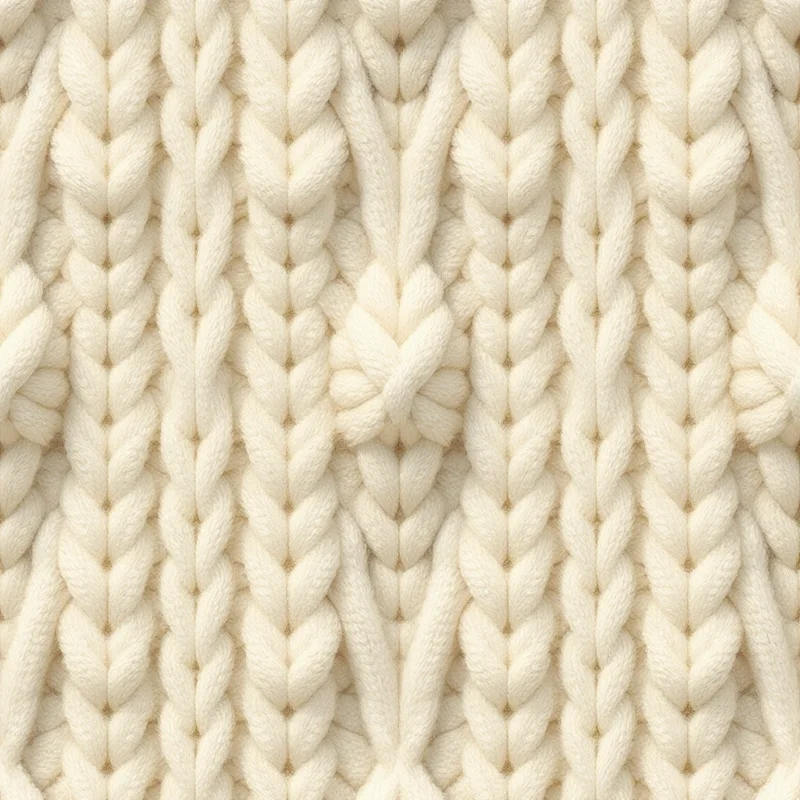
Cable patterns use front post and back post stitches to create raised, twisting columns that mimic knitted cables. Shell patterns cluster multiple stitches into one space to create fan-shaped motifs. Bobble and popcorn patterns create dimensional dots by working multiple stitches into one stitch and gathering them together.
These texture patterns are harder to generate digitally because they rely on three-dimensional stitch manipulation rather than a flat color grid. Color-based patterns remain the sweet spot for AI-assisted design.
Designing Crochet Patterns with AI
AI pattern generators are particularly effective for crochet because the output — a tiled, repeating image — maps naturally to a stitch chart. Here is how to get the best results.
Choose the Right Render Style
Pixel art is the closest match to crochet charts. Each pixel becomes one stitch. The generator automatically enforces clean color boundaries and eliminates gradients.
Mosaic style produces bold geometric patterns with strong contrast, similar to mosaic crochet where you work two-color rows with slipped stitches to create the illusion of complex colorwork.
Flat design and vector styles produce clean, sharp-edged motifs that translate well to colorwork because there is no shading or texture to confuse the chart conversion.
Avoid watercolor, oil paint, or photorealistic styles for crochet charts. The soft edges and color blending will not survive the translation to discrete stitches.
Set Your Colors Intentionally
Crochet yarn has practical constraints that digital design does not. Keep these in mind:
Limit to 2-4 colors per row for tapestry crochet. More colors means more yarn ends to weave in and more bulk from carried strands.
Choose high contrast. Colors that look distinct on screen may blend together in yarn, especially at small stitch sizes. Test your palette by squinting at the screen — if colors merge when blurred, they will merge in stitches too.
Match to available yarn. There is no point designing a pattern around a specific teal if you cannot find that teal in your preferred yarn brand. Start with colors you know you can source, then design around them.
Scale to Your Project
The number of stitches in your pattern repeat determines how the design maps to your project:
- Coasters and mug rugs: 20-30 stitches wide
- Bags and pouches: 40-60 stitches around
- Pillows and cushions: 60-100 stitches wide
- Blankets: 150-250 stitches wide (but the repeat unit may be much smaller)
- Garments: varies by size, typically 80-120 stitches for a sweater body panel
Generate your pattern at a resolution that divides evenly into your stitch count. A 20-stitch repeat works perfectly for a 60-stitch bag (3 repeats) or a 200-stitch blanket (10 repeats).
Popular Crochet Pattern Motifs
Certain motifs have become classics in crochet because they work well within the grid constraints of the craft.
Granny squares are the most iconic crochet motif. Traditionally worked from the center outward in rounds, they produce a square unit with a characteristic lattice of chain spaces between stitch clusters. AI generators can help plan granny square color arrangements — generate a pattern, divide it into a grid, and assign each cell's dominant color to the corresponding granny square position in your blanket layout.
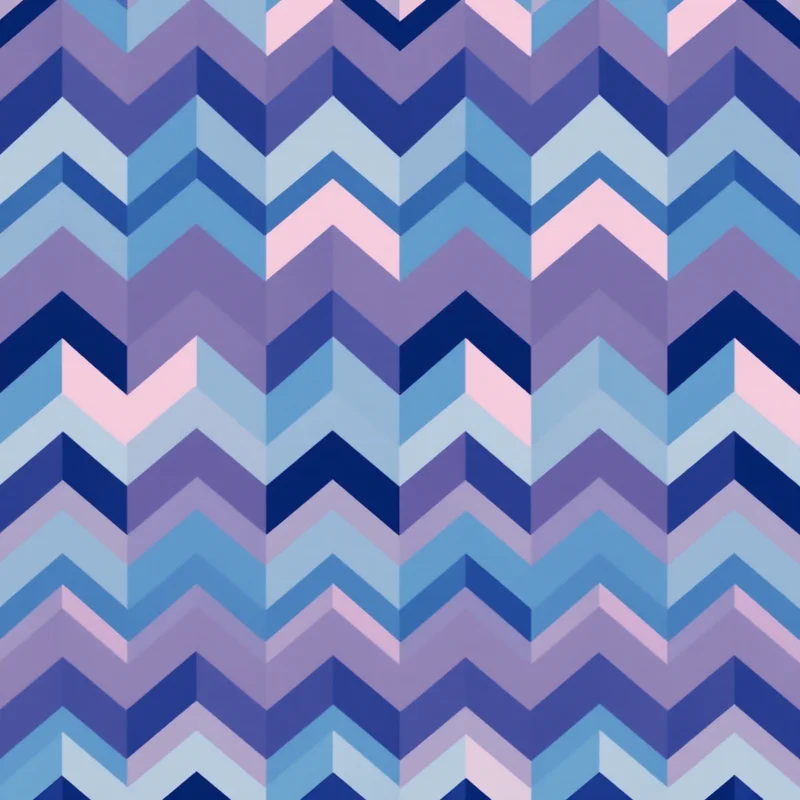
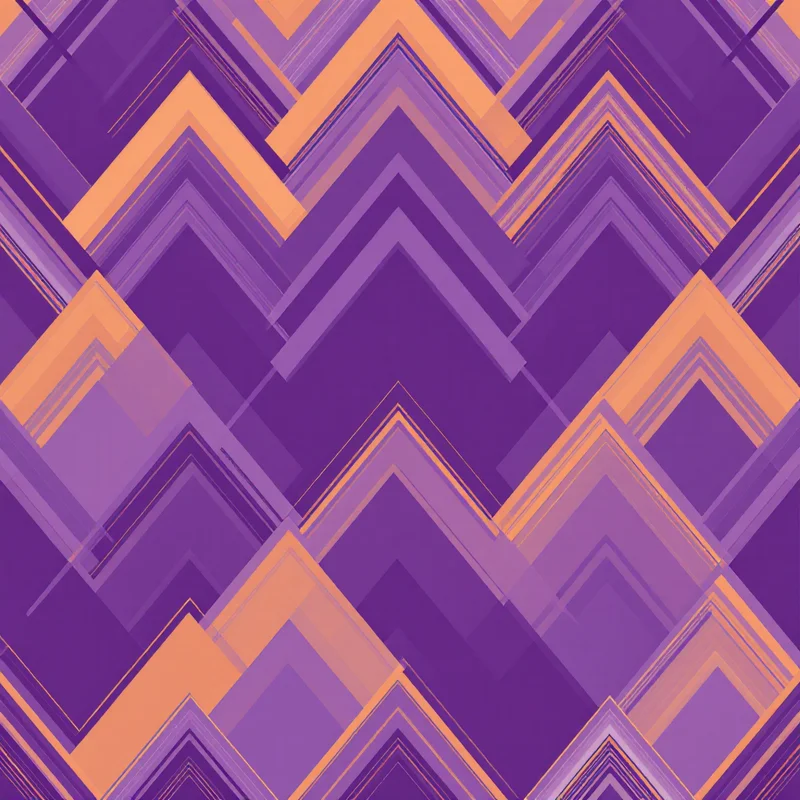
Chevrons and zigzags are formed by strategic increases and decreases that create peaks and valleys. They work in any stitch type and any number of colors. A two-color chevron blanket is often the first colorwork project for new crocheters.
Mandala designs radiate from the center in concentric rings of stitches. Each ring typically introduces a new stitch pattern or color. The circular construction means the stitch count increases with each round, so the pattern naturally becomes more detailed toward the edges.
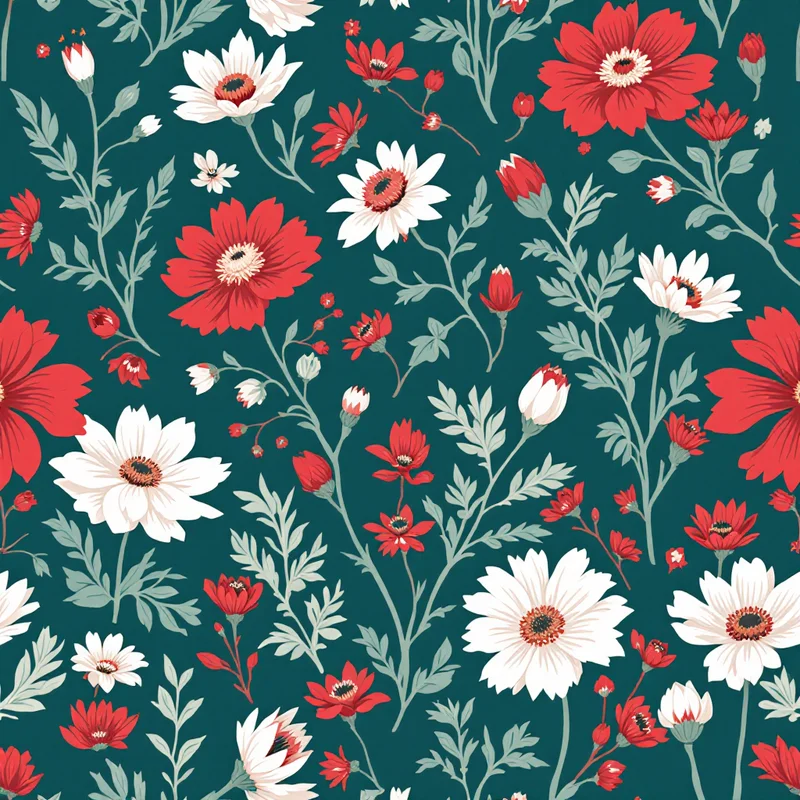
Floral motifs — roses, daisies, sunflowers — appear in crochet through clever shaping with increases, decreases, and chain spaces. For colorwork charts, simplified flower silhouettes at 15-25 stitches wide read clearly in yarn.
Geometric tiles — hexagons, octagons, diamonds, and interlocking shapes — are native to crochet. The craft's modular nature (make units, join them together) makes geometric tiling patterns especially practical.
Converting AI Patterns to Crochet Charts
The workflow from generated image to crochet chart is straightforward:
Step 1: Generate your pattern. Use a geometric, pixel-art, or flat-design style with your target color count. Set the density and scale to match your stitch gauge.
Step 2: Screenshot or download the pattern tile. You need one complete repeat unit.
Step 3: Open in a charting tool. Software like Stitch Fiddle, Crochet Charts, or even a spreadsheet with colored cells works. Set the grid dimensions to your target stitch count.
Step 4: Reduce colors. If the generator produced more colors than you want, merge similar shades. Most charting tools have a color reduction feature.
Step 5: Clean up the chart. Look for single-stitch color changes (tedious to crochet, invisible in the finished piece) and smooth them out. Check diagonal lines for even stepping. Ensure that no color span is longer than 5-7 stitches if working tapestry crochet.
Step 6: Add border and joining instructions. If making modular pieces (squares, hexagons), plan your edge stitches and joining method.
Project Ideas
Mosaic crochet blanket. Generate a geometric pattern in 2 colors with strong diagonal lines. Mosaic crochet creates the illusion of complex colorwork by working only one color per row and using dropped stitches to reveal the color beneath.
Tapestry crochet tote bag. Generate a cultural or tribal-inspired geometric pattern with 3 colors. Work in continuous rounds at a tight gauge for a sturdy, dense fabric.
C2C graphgan. Generate a large-scale motif — a landscape, animal silhouette, or floral design — and use it as a corner-to-corner chart. Each pixel block is 3 double crochets, so a 100-pixel-wide design produces a roughly 50-inch-wide blanket.
Granny square sampler blanket. Generate a collection of small geometric motifs (10x10 to 15x15 pixels each) and use each as the center chart for an overlay crochet granny square. Assemble into a blanket where every square is different but all share the same palette.
Colorwork beanie. Generate a narrow horizontal band pattern (20 stitches tall, any width) and work it in tapestry crochet around the body of a beanie. The repeat tiles around the circumference automatically.
The beauty of combining AI pattern generation with crochet is speed. Traditional pattern design for colorwork involves hours of sketching on graph paper, erasing, redrawing, and hoping the proportions work at stitch scale. AI generation compresses the design phase to minutes. You still pick up the hook and work stitch by stitch — that part remains entirely yours.
Explore related pattern styles