Design characteristics
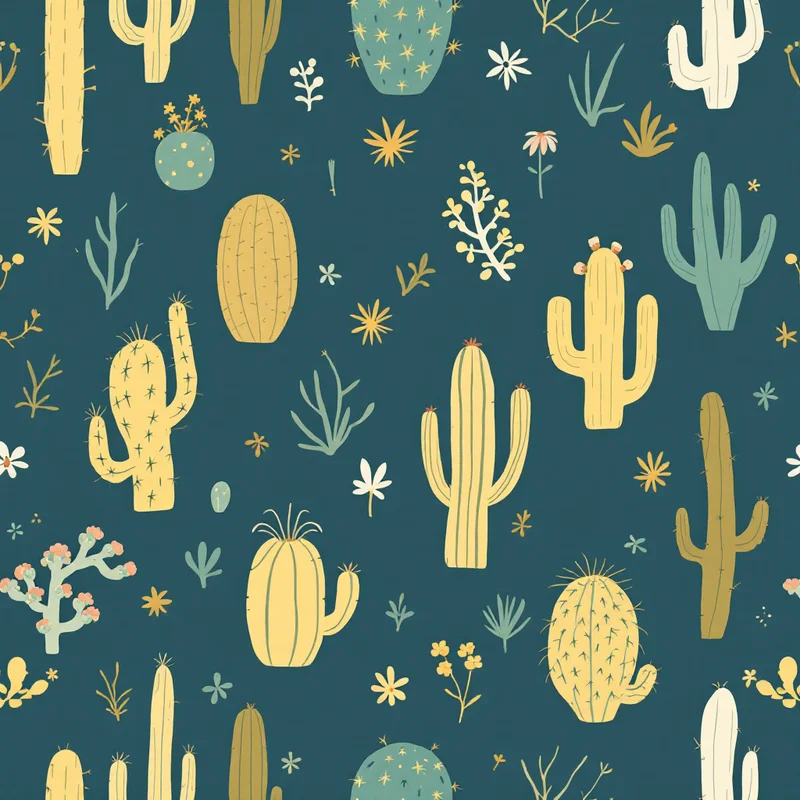
The color story is what people search for most. Classic succulent palettes lean on sage, eucalyptus, olive, and dusty teal greens, often paused against terracotta, sand, cream, or charcoal backgrounds that echo a potting-soil and clay-pot setting. Trendier takes push into mauve, mint, and powder blue for a soft, modern look, while desert-themed versions add rust, ochre, and warm browns. Because succulents grow in dense clusters, the patterns usually favor a packed, tessellated arrangement where rosettes nestle edge to edge, though airier scattered layouts on a solid ground are just as popular for apparel.
Commercial applications
Who looks for these designs? Plant lovers and the houseplant community drive a lot of the demand, alongside designers serving boho, southwestern, and modern-minimalist home aesthetics. Print-on-demand sellers want succulent art for shirts, totes, and phone cases. Wedding and event stylists pull desert-green motifs for invitations and table settings, and small skincare or candle brands use them on packaging to signal natural, plant-based products. The search intent is usually practical: someone needs a tile that repeats cleanly, in a specific green range, sized for a real product.
Where to use succulent patterns patterns
The concrete uses run wide. On textiles, succulent prints work for quilting cotton, upholstery, throw pillows, and bedding. In fashion, they suit summer dresses, kids' apparel, swimwear, scarves, and leggings. For interiors, they make calm, organic wallpaper, kitchen towels, and shower curtains. On the stationery and packaging side, they cover gift wrap, planter labels, soap boxes, and greeting cards, and they translate cleanly onto accessories like enamel pin backing cards, tote bags, and ceramic-style mugs.
Customization & export
Pattern Weaver builds each succulent tile as a true seamless repeat, so it tiles edge to edge with no visible seam no matter how large you print it. You control the variables that matter for this motif: which species mix appears (rosette-heavy, cacti-forward, or mixed desert garden), how densely the plants pack together, the scale of individual rosettes, and the exact palette, whether you want muted eucalyptus tones or a brighter mint-and-coral pop. Swap the background from clay terracotta to cream to deep charcoal in a couple of clicks and watch the whole mood shift.
When the design is right, export it the way your project needs. The studio outputs resolution up to 8K (8192x8192) so a repeat stays sharp on large-format wallpaper or a king-size duvet. Save a transparent or flat PNG for digital mockups and print-on-demand uploads, a layered-friendly TIFF for fabric mills and professional print shops, or a scalable vector SVG when you need to resize without any quality loss. PDF export suits proofing and packaging artwork, while JPG and WEBP keep file sizes light for web and store listings. Free, Starter, Pro, and Max plans cover everything from a one-off test tile to a full commercial collection.