


Design characteristics
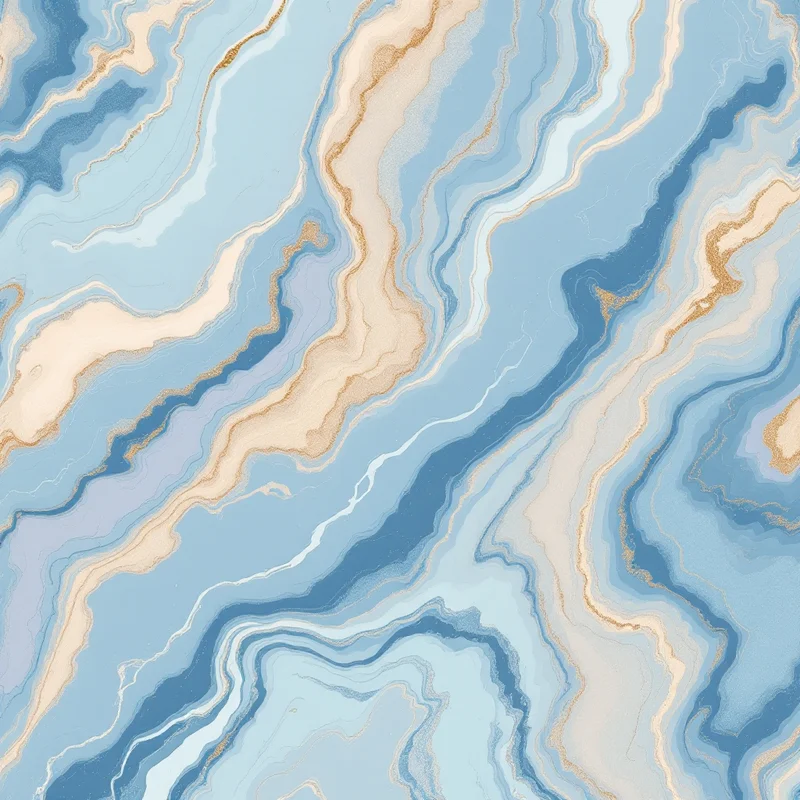
The motifs tend to be either the metal itself or shapes dressed in it. Common forms include foil-stamped geometrics, art-deco fans and sunbursts, hammered or beaten textures, fine pinstripe metallics, marbled gold veining, sequin and paillette scatters, chainmail and scale grids, and damask or filigree scrollwork rendered as if embossed in precious metal. Historically the look descends from gilded illuminated manuscripts, Byzantine mosaics, lacquerware inlay, and the gold-and-black glamour of 1920s and 1930s deco interiors, all of which still feed the modern vocabulary.
Commercial applications
Color is where metallics live or die. Warm families run through champagne, antique gold, brass, bronze, rose gold and copper; cool families cover silver, platinum, chrome, gunmetal and pewter. Designers usually anchor these against a high-contrast ground such as black, charcoal, deep navy, oxblood or ivory, because the dark field is what makes the sheen pop. Iridescent and holographic variants push further, shifting between teal, magenta and gold depending on the implied viewing angle, which suits cosmetic and youth-oriented branding.
Where to use seamless metallic patterns for luxe surfaces patterns
The commercial reach is wide because shimmer signals premium. In fashion and textiles, metallic repeats appear on eveningwear, lining silks, swimwear and activewear with a wet-look finish. In interiors they cover statement wallpaper, cushions, upholstery and rugs, while home decor uses them on candles, ceramics and trays. Packaging and stationery lean on them heavily, from gift wrap and luxury box wraps to wine labels, cosmetic cartons and wedding invitations. Accessories such as scarves, phone cases, bags and jewelry display complete the range, since a tight metallic repeat scales cleanly from a thumbnail tile to a full bolt of fabric.
Customization & export
Pattern Weaver builds these as true seamless tiles, so the highlight rhythm continues across the join with no visible seam break, which matters most on large wallpaper drops and continuous fabric yardage. You control density to decide whether the metal reads as a sparse scatter of foil flecks or a dense all-over shimmer, adjust scale so a hammered texture stays delicate on a label yet bold on a feature wall, and tune the color so gold can swing toward green-gold brass or pink rose gold without changing the underlying motif. Substyle choices let you move between deco sunbursts, brushed-metal sheens, marbled veining and sequin scatters in a few clicks.
When the design is right, export at up to 8K (8192x8192) and choose the format that fits the job: PNG for crisp web mockups and print-on-demand, TIFF for high-fidelity textile and wide-format printing, and PDF for press-ready packaging and stationery, with JPG, WEBP and SVG also available. The studio keeps the file seamless at every size, so the same metallic pattern you proof on screen is the one that tiles flawlessly across the finished product.