






Design characteristics
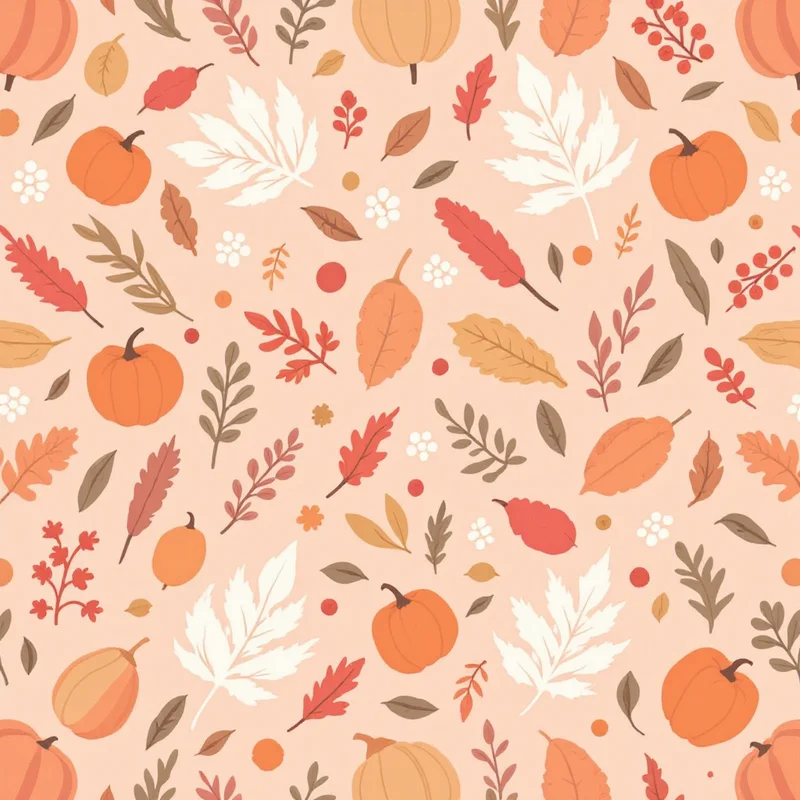
The tradition draws from Celtic Samhain, when people carved turnips and lit fires to ward off wandering spirits, and from the later American Halloween that swapped turnips for pumpkins and added trick-or-treat candy culture. That history shows up in the visual vocabulary: harvest gourds, autumn leaves, candy corn stripes, haunted houses, and the recurring orange-and-black color pair that signals the holiday from across a store aisle. Designers lean on that recognition because shoppers decode a Halloween print in a fraction of a second.
Commercial applications
Color is where these patterns earn their seasonal punch. The classic palette pairs pumpkin orange with deep black, then layers in acid green, blood red, and royal purple for contrast. Vintage takes lean toward muted ochre, sepia, and dusty teal for a retro 1950s feel, while moody gothic versions go nearly monochrome with charcoal, bone white, and a single blood-red accent. Glow-in-the-dark and metallic foil effects are popular for novelty packaging and party goods. The structure matters as much as the colors: a tossed, non-directional scatter of small icons reads as casual and playful, while a regimented grid of repeating skulls or a damask-style mirrored layout signals a more upscale, design-forward product.
Where to use halloween patterns for festive, spooky surface design patterns
Commercially, Halloween patterns drive a huge seasonal market. They wrap candy bags, gift boxes, and tissue paper; they print on costume fabric, leggings, and oversized tees; they cover throw pillows, table runners, tea towels, and disposable plates; they paper accent walls for parties and seasonal pop-up shops. Print-on-demand sellers stock dozens of variations every September because demand spikes hard and short, so a deep, ready-to-print library converts directly into sales during the narrow buying window. The same artwork often gets resized across products, so a print that works as fine gift wrap also has to hold up scaled large on a costume or a tablecloth without losing its seamless edges.
Customization & export
Pattern Weaver turns a quick brief into a tileable Halloween repeat in seconds. Choose a substyle, set the density slider so motifs sit sparse and airy or pack tight like a confetti scatter, lock your palette to classic orange-black or a custom party scheme, and dial scale up for bold throw pillows or down for fine gift wrap. Every result tiles seamlessly, so there are no broken bats or sliced pumpkins at the edges. When a design is right, export it from the studio at up to 8K (8192x8192) in PNG for digital mockups, TIFF for fabric mills and print houses, or PDF for packaging proofs.
Because Pattern Weaver builds true seamless repeats, you can generate a whole coordinated Halloween collection in an afternoon: a hero print of carved pumpkins, a small-scale bat blender, a spiderweb texture, and a candy-corn stripe that all share one palette. That kind of matched set is what lets a small brand ship a polished seasonal line on time, whether the destination is a fabric bolt, a wallpaper roll, or a shelf of holiday packaging.