Design characteristics
Goblincore emerged from the same internet culture that produced cottagecore, but where cottagecore romanticizes the sunny cottage garden, goblincore finds magic in the damp, the muddy, and the overlooked. It is an aesthetic of appreciation for nature's oddities — the beauty in a shelf fungus, the charm of a garden snail, the wonder of a rotting log full of life. This anti-precious sensibility resonates with consumers who want nature-inspired designs that feel authentic rather than prettified.
Commercial applications
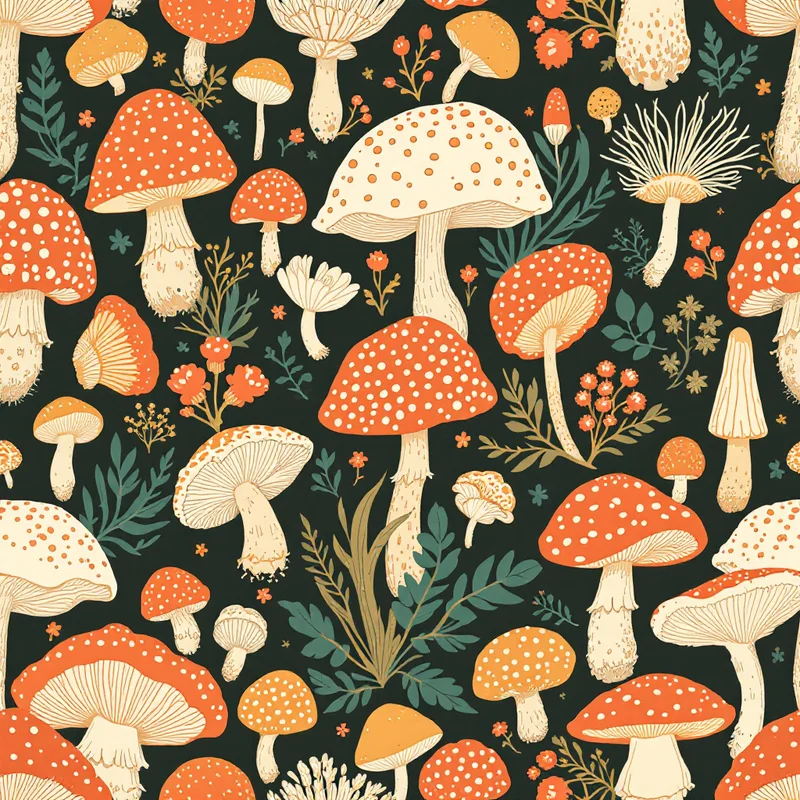
In fashion and accessories, goblincore patterns appeal to buyers seeking earthy, whimsical alternatives to conventional florals. Mushroom prints, frog motifs, and snail patterns are consistent bestsellers on Etsy and Spoonflower. The motifs work on dresses, overalls, tote bags, scarves, and socks — products where playful, nature-loving identity drives purchasing. Stationery applications are equally strong: journals, sticker sheets, washi tape, and digital paper packs with goblincore themes target a loyal niche audience.
Where to use goblincore patterns
Home decor in the goblincore style — throw pillows, kitchen towels, wall art, and accent wallpaper — appeals to consumers creating cozy, nature-immersed living spaces. The earthy palette integrates easily with natural wood furniture and warm interior schemes. For artisan brands, goblincore patterns communicate handmade, small-batch values that align with conscious consumer preferences.