
Design characteristics
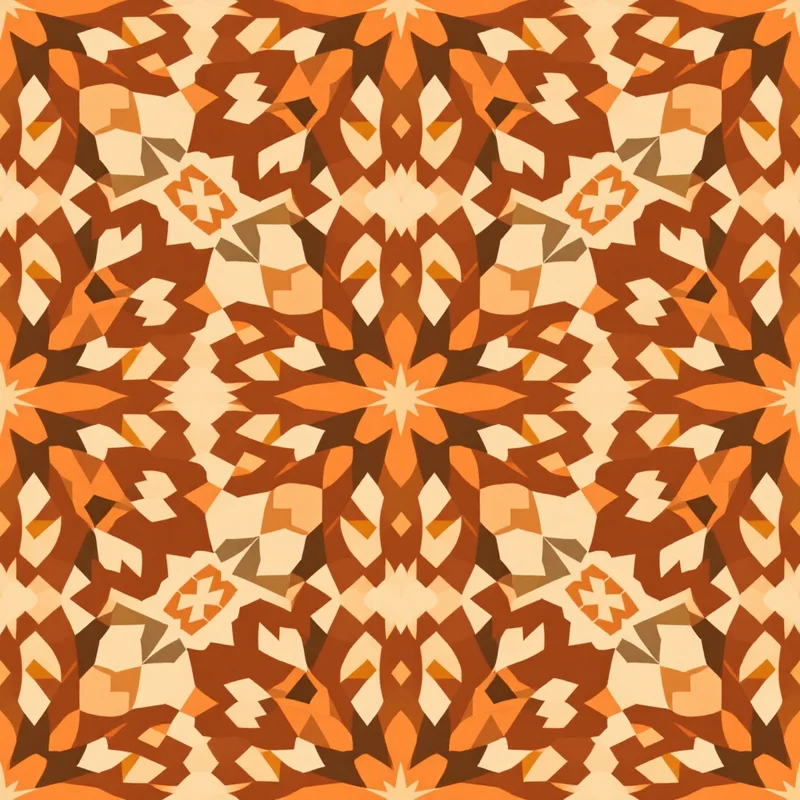
The visual hallmarks are easy to recognize once you know them. Earth tone designs lean on abstract organic blobs, arches, and brushstrokes; mudcloth-style lines and dashes; block-printed geometrics; sun and mountain silhouettes; dried botanicals like pampas grass and wheat; and grainy, washed textures that mimic plaster or raw linen. The motifs are usually spaced with breathing room and tonal contrast kept gentle, so nothing jumps. That restraint is the whole point: the pattern grounds a space or product without competing with it.
Commercial applications
The people searching for earth tone patterns are usually chasing a specific mood: warm, lived-in, and natural. Interior decorators and wallpaper studios use them for boho, Scandinavian, and Japandi rooms. Fashion and surface designers build them into autumn apparel, scarves, and slow-fashion collections. Print-on-demand sellers want neutral repeats that sell year-round without feeling loud. Packaging designers reach for earthy palettes on organic food, skincare, candles, and coffee, where the colors signal sustainability and craft. Home-decor makers apply them to ceramics, rugs, cushions, and bedding.
Where to use seamless earth tone patterns for textiles, decor, and print patterns
In Pattern Weaver you start from a base earth tone style and then shape it to your project. Pick a substyle such as mudcloth, terracotta arches, or dried botanicals, then tune the palette toward desert rust, muted olive, or soft clay neutrals. Density controls how packed the surface feels, from a few spaced motifs on an open ground to a dense all-over print. Scale decides whether shapes read as a fine texture or as large statement forms. Every design is generated as a true seamless tile, so it repeats edge to edge with no break across any surface size.
Customization & export
When the look is right, export at the size your project needs. The studio outputs files up to 8K (8192x8192 pixels), large enough for full-width wallpaper drops, upholstery yardage, and oversized wall art. PNG keeps crisp edges and transparency for digital mockups and web use. TIFF preserves maximum quality for professional fabric printing and large-format jobs. PDF is ready for print shops and packaging proofs, while JPG, WEBP, and SVG cover lighter web files and scalable vector needs.
Earth tone patterns also slot neatly into a wider collection because the palette plays well with so many styles. Pair a mudcloth tile with a bohemian floral, a minimalist geometric, or a vintage botanical for a cohesive, grounded set. Since every tile is built to repeat, you can mix scales and densities across a range and still have each piece line up cleanly in production. Whether you are designing a candle-and-coffee packaging line, a Japandi wallpaper range, an autumn apparel capsule, or a set of natural-fiber home textiles, earth tone patterns give you a flexible, evergreen foundation. Choose the variation that fits your mood, tune the colors and density to your brand, and export the exact format and size your manufacturer requires.