Design characteristics
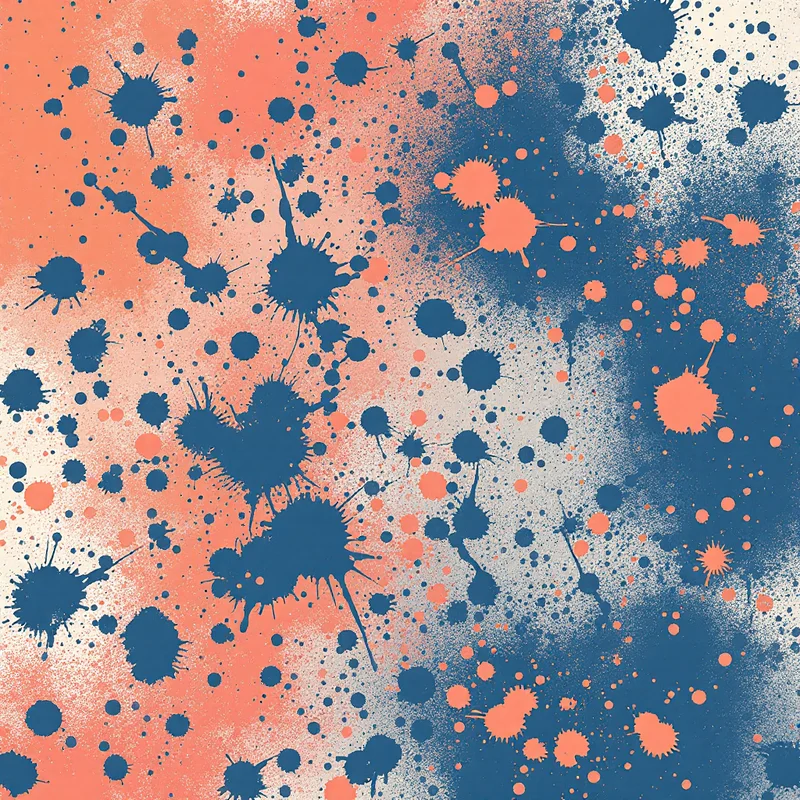
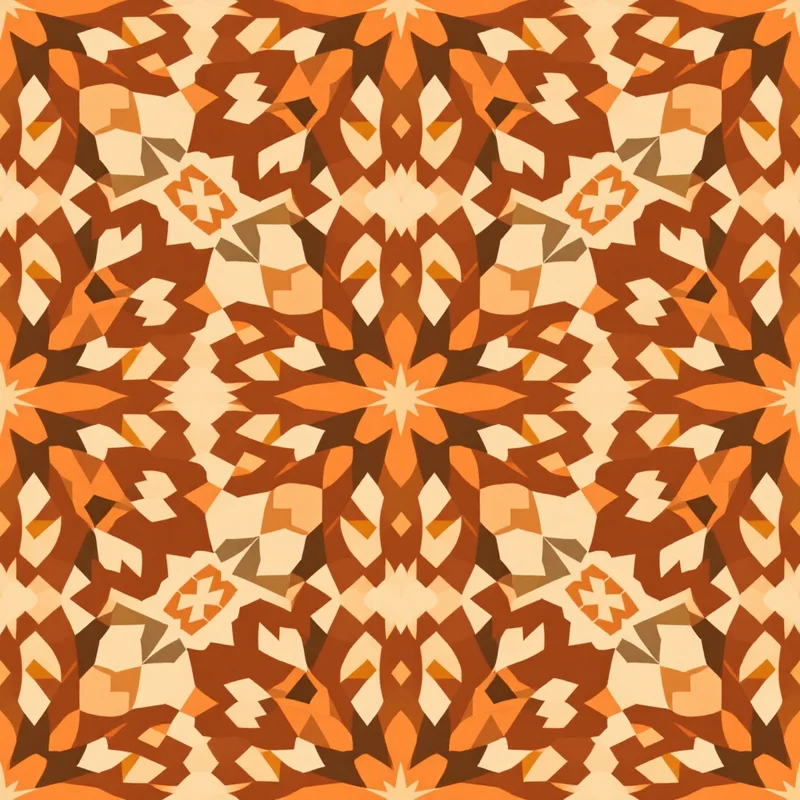
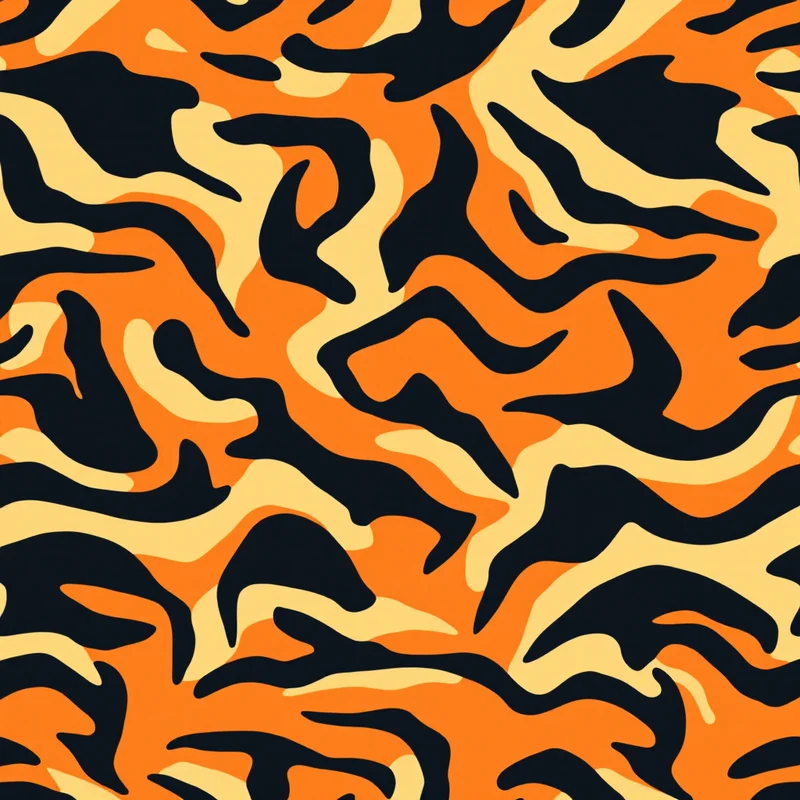
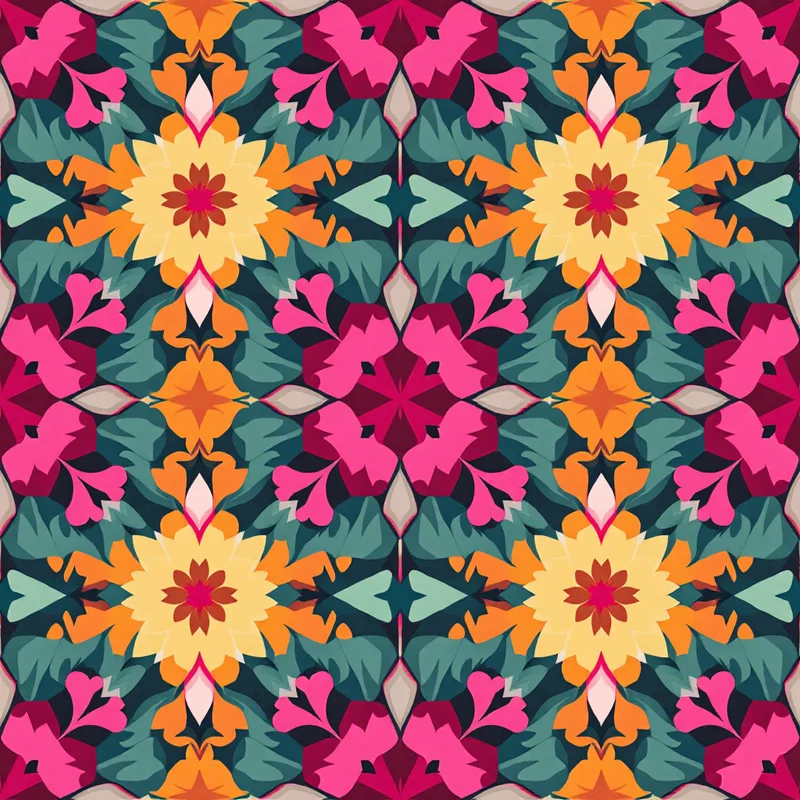
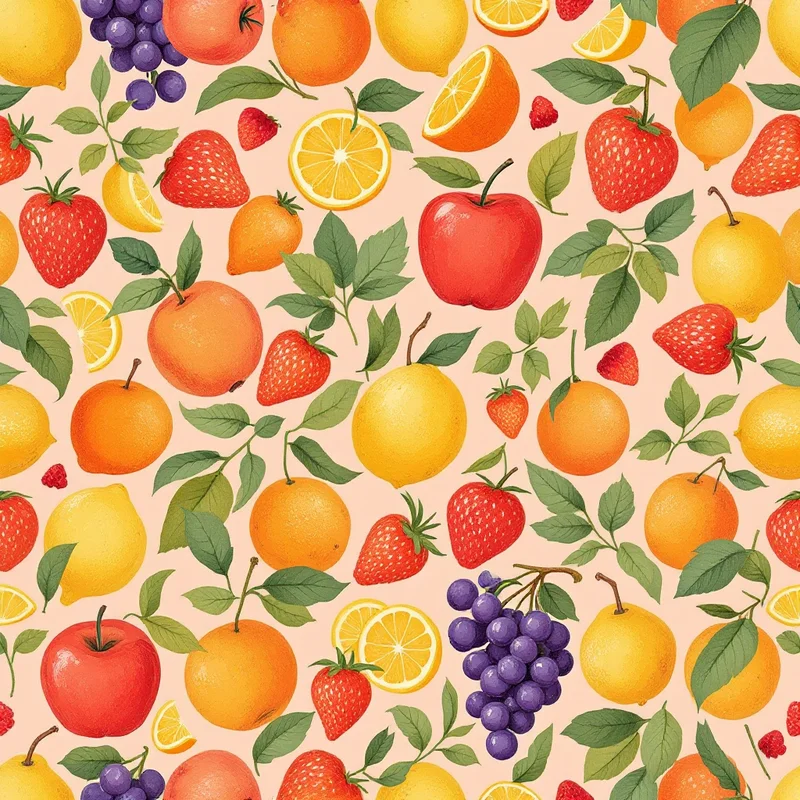
The motifs that show up most often in orange patterns track the color's two main moods. The bright, saturated end favors fruit slices, marigold blooms, poppies, abstract sunbursts, and mid-century geometric shapes, while the muted, desaturated end leans into fall foliage, fox and tiger figures, paisley, terracotta tile geometry, and 1970s retro waves. Orange also pairs predictably well with specific accent colors: navy and teal for contrast-driven graphic looks, cream and beige for soft tonal repeats, and deep brown or olive for vintage palettes. That predictability makes it a forgiving color to design around.
Commercial applications
Designers reach for orange when a product needs warmth and visible energy without the aggression of pure red. It signals appetite and freshness, which is why it dominates food and beverage packaging, and it carries strong seasonal associations with autumn and harvest that retailers lean on from late summer through Thanksgiving and Halloween. In fashion and interiors, a burnt-orange repeat can anchor a boho or mid-century scheme, while a clean tangerine geometric reads modern and upbeat.
Where to use orange patterns for textiles, wallpaper, and packaging patterns
Across products, orange patterns shift register cleanly. On apparel and scarves they bring a citrus or sunset feel; on cushions, throws, and upholstery they add a cozy autumnal layer; on wallpaper and wrapping paper they create immediate visual warmth in a room or on a shelf. Print-on-demand sellers use orange repeats for fall-season phone cases, tote bags, mugs, and stationery, and packaging teams use them for juice cartons, snack boxes, and cosmetic labels where the color does instant shelf-marketing work.
Customization & export
Pattern Weaver gives you direct control over every variable that makes an orange pattern work. You can dial the exact hue and saturation to move between fresh tangerine and dusty terracotta, set density to keep motifs sparse and airy or pack them edge to edge, and adjust scale so the same design works as a tiny accessory print or a room-filling wallpaper. Every output is built as a true seamless tile, so the repeat continues without visible seams when it wraps a bolt of fabric or a long roll of paper.
When the design is finished, Pattern Weaver exports it at resolutions up to 8K (8192x8192) in PNG, JPG, WEBP, TIFF, PDF, and SVG. Use PNG or WEBP for web mockups and print-on-demand uploads, TIFF or PDF for professional textile and packaging printing where color fidelity matters, and SVG when you need to rescale a geometric orange pattern without any loss. That range lets one orange design move from a small label to a full upholstery yardage without redrawing anything.