Design characteristics
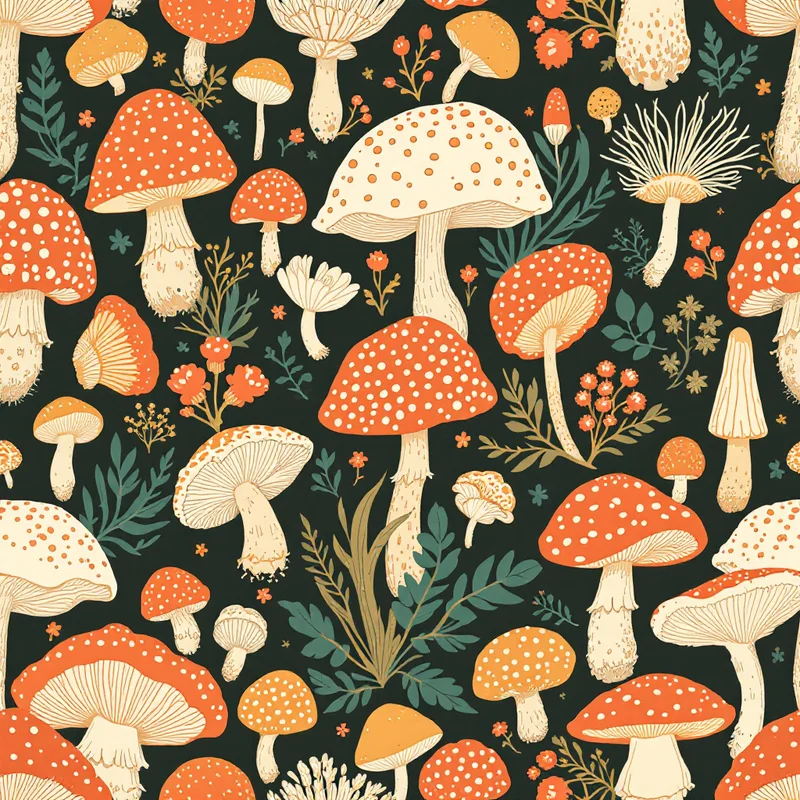
The mushroom motif sits at the intersection of several powerful design trends. Cottagecore aesthetics have driven massive demand for woodland and foraging imagery across fashion, home decor, and stationery. The broader nature illustration trend values detailed, scientific-style renderings of flora and fauna. And the whimsical fairy tale aesthetic uses stylized toadstools and magical forest scenes for children's products, gift items, and novelty fashion. Mushroom patterns serve all three markets.
Commercial applications
Commercially, mushroom patterns perform exceptionally well on print-on-demand platforms. Kitchen textiles — tea towels, aprons, oven mitts — featuring fungi illustrations are consistent sellers. Stationery lines with mushroom motifs target the nature journaling and cottagecore communities. Fashion accessories like tote bags, scarves, and socks with mushroom prints appeal to the novelty gift market. In home decor, mushroom wallpaper and cushion fabrics tap into the earthy, nature-forward interior trend.
Where to use mushroom patterns
Pattern Weaver gives you control over mushroom species, arrangement style, color palette, and rendering finish. Choose detailed watercolor illustration for a field guide aesthetic. Use flat vector for modern graphic prints. Try vintage engraving style for heritage-inspired products. Add secondary forest floor elements — moss, ferns, acorns, beetles — for rich, layered woodland compositions. Export at up to 8K resolution for any application.